U.S. Central Command (CENTCOM) announced on Thursday that American forces maintain aerial dominance through naval operations, simultaneously releasing new video footage showcasing efforts to dismantle the Iranian regime's mobile missile launch infrastructure. This declaration underscores a robust U.S. military posture in the region, aimed at neutralizing specific threats. Concurrently, in a separate but related development highlighting escalating regional tensions, Azerbaijani President Ilham Aliyev confirmed that his nation's armed forces were mobilized following an alleged drone attack by Iran. According to President Aliyev, these unmanned aerial vehicles (UAVs) targeted civilian sites within Azerbaijan, prompting an immediate defensive response. The dual incidents, reported on the same day, paint a picture of heightened instability and active military engagements involving Iran, both directly and through its proxies or capabilities, against regional adversaries and U.S. interests.
The ongoing U.S. military activities are part of an extensive initiative named Operation Epic Fury, which sees the Gerald R. Ford Carrier Strike Group conducting continuous, round-the-clock operations from its position in the Mediterranean Sea. This significant deployment, alongside another carrier strike group already present in the broader Middle East, is strategically positioned to exert considerable pressure on Iran from maritime fronts, a tactic described by U.S. officials as 'squeezing Iran from the sea.' The sustained presence and operational tempo of these formidable naval assets signal a long-term commitment to regional security and deterrence against potential aggressors. The focus on eliminating mobile missile capabilities is particularly noteworthy, as such systems pose a dynamic and challenging threat due to their ability to be rapidly relocated and concealed, making them difficult to track and neutralize.
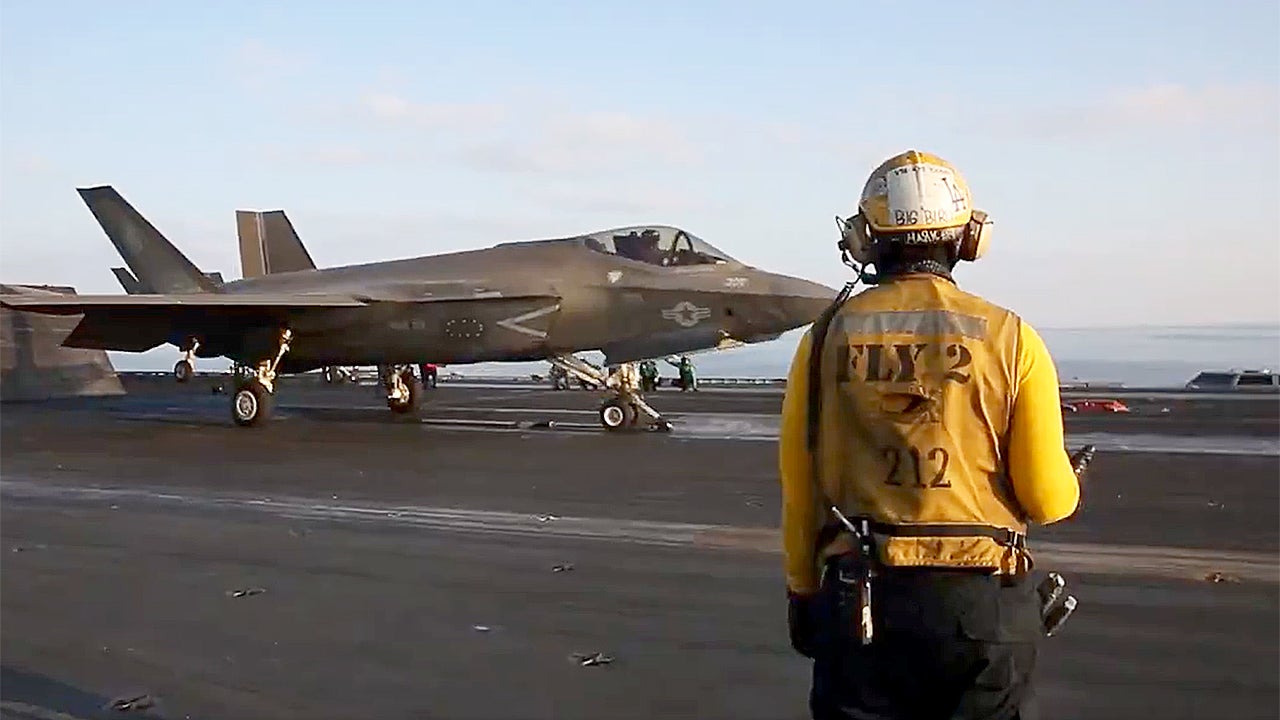
The recently released video by CENTCOM specifically illustrates the precision with which U.S. forces are identifying and neutralizing these Iranian threats. Accompanying the footage, a statement attributed to CENTCOM on the social media platform X emphasized the 'lethal precision' employed in locating and destroying these targets. In addition to the video, several photographs depicting operations from the Gerald R. Ford Carrier Strike Group were also made public, further illustrating the scale and intensity of the ongoing military presence and activities. Meanwhile, the incident involving Azerbaijan saw President Aliyev publicly confirm the mobilization of his country's military in response to what he described as an Iranian drone assault. The Azerbaijani leader explicitly stated that the unmanned aerial vehicles had targeted civilian infrastructure, indicating a direct act of aggression against non-military objectives and escalating tensions between the two nations.
The assertive declaration by U.S. Central Command regarding its control of the skies, coupled with the explicit targeting of Iran's mobile missile capabilities, signifies a clear message of deterrence and operational dominance. Analysts suggest that the emphasis on 'mobile' systems highlights a strategic effort to degrade Iran's ability to launch surprise attacks or rapidly deploy offensive weaponry, thereby enhancing regional stability by limiting immediate threats. The deployment of two carrier strike groups, effectively creating a dual-front maritime pressure, underscores a significant escalation in the U.S. posture aimed at containing Iranian influence and military proliferation. This robust military presence is likely intended to reassure allies and deter further aggressive actions by the Iranian regime. The simultaneous report of Iran's drone attack on civilian targets in Azerbaijan further complicates the regional security landscape, demonstrating Iran's willingness to engage in direct military actions against neighboring states, which could provoke wider instability and potential retaliatory measures.
In summary, the recent developments underscore a period of heightened military activity and geopolitical tension in the Middle East. U.S. Central Command has publicly affirmed its aerial control and demonstrated its capacity to neutralize critical Iranian military assets, specifically mobile missile launchers, through ongoing operations by the Gerald R. Ford Carrier Strike Group. This assertive stance is complemented by a strategic naval deployment designed to exert significant pressure on Iran. Concurrently, the reported Iranian drone attack on civilian targets in Azerbaijan signals a concerning willingness by Tehran to engage in direct aggression against its neighbors. Moving forward, observers will closely monitor the continued operational tempo of U.S. forces, any further responses from the Iranian regime, and the evolving situation between Iran and Azerbaijan, all of which hold significant implications for regional peace and security.