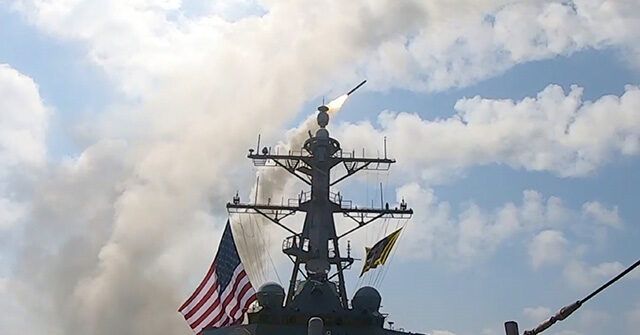
United States Central Command (CENTCOM) announced on Monday a significant military achievement, stating that Iran's naval presence in the strategically vital Gulf of Oman has been entirely eradicated. According to official declarations, every Iranian warship operating in the waterway at the commencement of 'Operation Epic Fury' has been neutralized. This decisive action, which saw American forces strike more than 1,250 targets within the initial 48 hours of the campaign, marks a profound shift in regional maritime security. CENTCOM, in a statement posted on social media on the third day of the operation, explicitly noted the dramatic reduction: "Two days ago, the Iranian regime had 11 ships in the Gulf of Oman, today they have ZERO." This swift and comprehensive destruction underscores a clear objective to dismantle Tehran's capacity to threaten international shipping lanes, a long-standing point of contention in the region.
The Gulf of Oman holds immense global strategic and economic importance, serving as a critical maritime link between the Arabian Sea and the Strait of Hormuz. This narrow strait is a choke point through which approximately one-fifth of the world's total oil supply transits daily, making unimpeded navigation essential for global energy markets and economic stability. For decades, as officials have highlighted, the Iranian regime has been accused of harassing and attacking international commercial shipping in these waters, frequently employing its naval assets and other capabilities to disrupt trade and project influence. The recent U.S. military campaign, dubbed Operation Epic Fury, directly addresses these historical grievances, with CENTCOM asserting that "Those days are over." The command emphasized the enduring American commitment to upholding the principle of freedom of maritime navigation, a cornerstone of global economic prosperity for over eight decades, pledging continued defense of this vital right.
Reports from CENTCOM indicate that all Iranian naval vessels present in the Gulf of Oman when Operation Epic Fury commenced on Saturday have since been sunk. These destroyed assets reportedly included a range of naval capabilities, from significant surface combatants to various support vessels, which Tehran had historically utilized for activities such as harassing commercial shipping and conducting drone and missile operations within regional waters. The announcement was accompanied by newly released video footage, which appeared to depict precision strikes targeting Iranian vessels docked at naval facilities and other shoreline infrastructure. President Donald Trump, speaking on Monday, underscored the campaign's objectives, stating that U.S. forces were "annihilating their navy" and systematically dismantling Iran's missile capabilities "hourly." He framed the maritime offensive as a critical and decisive blow aimed at crippling Tehran's ability to pose a threat to international shipping lanes, aligning with the broader strategic goals of the operation.
The complete eradication of Iran's naval fleet in the Gulf of Oman carries immediate and far-reaching strategic implications for regional stability and global commerce. Experts suggest that this decisive action significantly diminishes Tehran's capacity to project power and interfere with maritime traffic in one of the world's most critical waterways, potentially altering the geopolitical landscape of the Persian Gulf. The destruction of these naval assets, which have long been a tool for Iranian influence and intimidation, is seen as a substantial blow to the regime's regional military posture. This naval campaign is understood to be a component of a much broader assault, indicating a comprehensive strategy to counter Iran's various military capabilities. The swiftness and scale of the operation signal a robust commitment from the United States to enforce maritime security and protect global economic interests against perceived threats in the region.
In summary, the U.S. Central Command's declaration of 'ZERO' Iranian ships remaining in the Gulf of Oman marks a significant military outcome, effectively neutralizing a long-standing source of regional maritime instability. With over 1,250 targets struck in the initial 48 hours of Operation Epic Fury, the campaign has demonstrably curtailed Iran's ability to threaten international shipping and project naval power in the critical waterway. As the broader assault continues, observers will be closely watching for further developments and the long-term impact on regional security dynamics, particularly concerning the Strait of Hormuz. The U.S. commitment to defending freedom of navigation remains a central tenet of its engagement in the region, with this operation serving as a forceful affirmation of that principle.