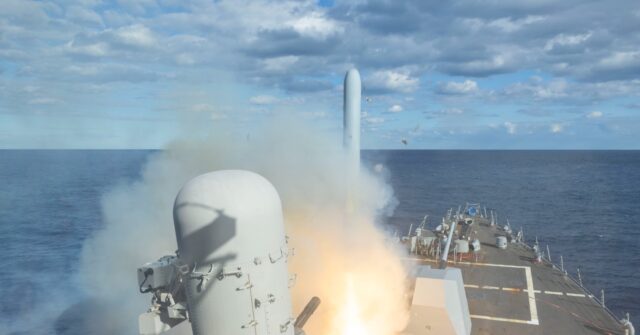
The United States military has concluded the initial phase of 'Operation Epic Fury,' a significant military undertaking targeting the security apparatus of the Islamist Iranian regime, with U.S. Central Command (CENTCOM) reporting no American casualties or combat-related injuries. This large-scale operation, which CENTCOM described as the 'largest regional concentration of American military firepower in a generation,' commenced early Saturday morning at 1:15 am ET. U.S. and allied forces engaged targets within Iran, focusing on locations deemed to pose an immediate threat. Despite retaliatory strikes launched by Iranian forces, which CENTCOM stated involved hundreds of missiles and drones, U.S. military installations in the area sustained only minimal damage, and operational capabilities remained unaffected. Conversely, reports from the Times of Israel, citing the state-backed Iranian Red Crescent Society NGO, indicate a substantial human cost on the Iranian side, with at least 201 individuals reportedly killed and 747 wounded as a result of the strikes.
Operation Epic Fury was initiated following what officials described as an opening salvo, with the U.S. response aimed at dismantling key components of the Iranian regime's security infrastructure. The strategic objective, according to CENTCOM, was to neutralize facilities that presented an imminent danger to regional stability and U.S. interests. This extensive deployment of military assets, encompassing air, land, and sea-launched precision munitions, underscored the gravity of the situation and the scale of the American commitment. The President's directive for 'bold action' was executed by a broad spectrum of U.S. service members, including Soldiers, Sailors, Airmen, Marines, Guardians, and Coast Guardsmen. A notable aspect of this operation, as confirmed by CENTCOM, was the inaugural combat deployment of 'low-cost one-way attack drones' as part of a specialized unit dubbed 'Task Force Scorpion Strike,' marking a significant evolution in military tactics and technology utilization in the region.
The targeted strikes focused on critical elements of the Iranian military infrastructure, including Islamic Revolutionary Guard Corps (IRGC) command and control centers, various Iranian air defense systems, missile and drone launch sites, and military airfields. These locations were specifically chosen due to their perceived role in posing immediate threats, as indicated by U.S. intelligence. CENTCOM further elaborated that the initial hours of the operation involved the precise deployment of munitions from multiple platforms, showcasing a coordinated and multi-faceted approach. While U.S. forces were engaged in these offensive actions, they simultaneously faced and successfully defended against numerous incoming missile and drone attacks from Iranian forces. Admiral Brad Cooper, the CENTCOM commander, praised the effectiveness of these defensive measures, emphasizing that despite the intensity of the Iranian response, no American personnel suffered casualties or combat-related injuries, and the operational integrity of U.S. assets remained intact.
The sheer scale of Operation Epic Fury, characterized by CENTCOM as the largest regional concentration of American military power in a generation, carries profound implications for the geopolitical landscape of the Middle East. The stated objective to 'dismantle the Iranian regime’s security apparatus' signals a significant escalation in the U.S. approach to containing Iranian influence and capabilities. Experts suggest that the successful defense against hundreds of Iranian projectiles, coupled with zero U.S. casualties, demonstrates a substantial technological and strategic advantage held by American forces, potentially reshaping deterrence calculations in the region. Furthermore, the introduction of 'low-cost one-way attack drones' in a combat scenario could herald a new era in military engagement, offering cost-effective and adaptable solutions for future conflicts. The stark contrast between the reported U.S. and Iranian casualty figures, while requiring independent verification, underscores the asymmetric nature of the conflict and the devastating impact of modern precision warfare.
In summary, Operation Epic Fury represents a pivotal moment in regional dynamics, showcasing a substantial projection of U.S. military power aimed at degrading Iran's security capabilities. CENTCOM's assertions of zero American casualties and minimal damage to U.S. installations, alongside the successful defense against numerous Iranian attacks, highlight the operational effectiveness and advanced defensive systems employed by U.S. forces. However, the reported high number of Iranian casualties, as cited by the Times of Israel from the Iranian Red Crescent Society, underscores the severe human cost of such military confrontations. As the situation evolves, the international community will be closely observing any further responses from the Iranian regime, the long-term impact on regional stability, and the potential for continued escalation or de-escalation in this highly volatile area.