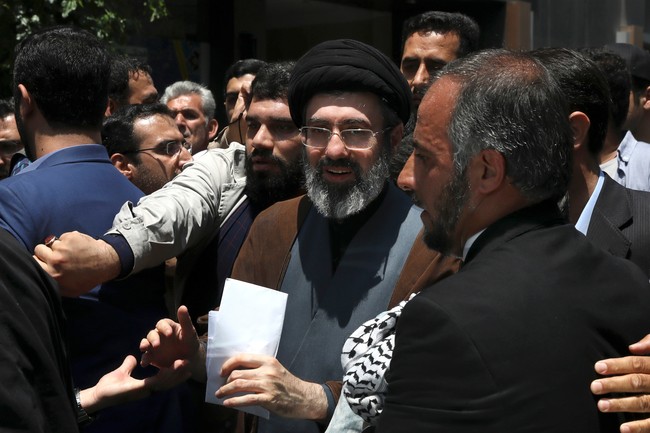
A profound internal power struggle has erupted within Iran's highest echelons, pitting the clerical establishment, represented by the Assembly of Experts, against the powerful Islamic Revolutionary Guard Corps (IRGC). This escalating conflict centers on the crucial succession to the nation's Supreme Leader, a position left vacant following the death of Ayatollah Ali Khamenei during recent joint US-Israeli military actions. Reports indicate that the IRGC is forcefully advocating for the immediate appointment of Khamenei's son, Mojtaba, a move that has met significant resistance from within the Assembly of Experts. While IRGC-controlled news outlets prematurely announced Mojtaba's ascension, other state-affiliated media and the Assembly itself have refuted these claims, asserting that no decision has been finalized. This public disagreement, confirmed by Reuters, signals a critical juncture for the Islamic Republic, highlighting deep divisions over the future leadership of the state and the very nature of its governance.
The vacuum created by the passing of the Supreme Leader is particularly destabilizing for Iran, given the immense authority vested in the position. The Supreme Leader is not merely a ceremonial head of state but holds ultimate control over all national policy, strategic actions, and commands the entirety of the Islamic Republic's armed forces. Crucially, this role is underpinned by a perceived divine and theological legitimacy, which is considered paramount within the Iranian system. Historically, any prolonged absence at the apex of power in dictatorial regimes tends to exacerbate internal tensions exponentially. Following Ayatollah Khamenei's death, which occurred in the initial moments of what has been termed 'Operation Epic Fury,' the expectation was for the Assembly of Experts to swiftly designate a new Supreme Leader to ensure continuity and stability. While figures like Ali Larijani and Masoud Pezeshkian have reportedly been issuing directives from temporary offices, they inherently lack the profound spiritual and political gravitas essential to the Supreme Leader's role, underscoring the urgency of a legitimate succession.
The intensity of this internal conflict has been laid bare by recent developments. According to a Thursday report from Iran International, which cited two distinct sources within the offices of the Assembly of Experts, the body has been plagued by significant infighting concerning the proposed announcement of Mojtaba Khamenei as the next Supreme Leader. This detailed account highlights the direct pressure exerted by the Revolutionary Guards to secure Mojtaba's appointment. Further illustrating the depth of the dissent, the Assembly of Experts reportedly planned an online meeting for Thursday, yet eight out of its 88 members have allegedly refused to participate. These members are reportedly protesting what they describe as "heavy pressure" from the Revolutionary Guards, aimed at coercing the Assembly into endorsing Mojtaba Khamenei. This refusal to attend underscores a clear defiance within the clerical body against the IRGC's assertive demands, transforming what might have been a private deliberation into a public display of internal discord.
This public eruption of conflict signifies more than just a disagreement over a specific candidate; it represents a fundamental struggle for ultimate control within the Iranian regime. Analysts suggest this is a critical test of whether the traditional authority of the mullahs, embodied by the Assembly of Experts, will prevail, or if the increasingly powerful and militarized IRGC will assert its dominance over the state's future direction. The IRGC's aggressive push for Mojtaba Khamenei, perceived by some as an attempt at a dynastic succession rather than a religiously sanctioned selection, challenges the very theological underpinnings of the Supreme Leader's role. This scenario, unfolding against the backdrop of 'Operation Epic Fury,' could have profound implications for Iran's stability, potentially redefining the balance of power between its clerical and military institutions and shaping its domestic and foreign policies for years to come. The outcome will likely determine whether the Islamic Republic continues its established governance model or shifts towards a more militarized, IRGC-centric leadership.
In summary, Iran is currently navigating a perilous leadership vacuum, exacerbated by a fierce power struggle between its clerical elite and the Revolutionary Guards over the succession to the Supreme Leader. The IRGC's forceful advocacy for Mojtaba Khamenei has been met with significant resistance and infighting within the Assembly of Experts, bringing the regime's internal divisions into public view. The coming days, particularly around the Assembly's planned online meeting, will be crucial in determining the immediate trajectory of this conflict. The resolution of this struggle will not only decide who holds the ultimate authority in Iran but also signify whether the nation's future is guided by its traditional religious institutions or increasingly by its powerful military apparatus. Observers will be closely watching for further developments, as the stability of the Islamic Republic hangs in the balance.