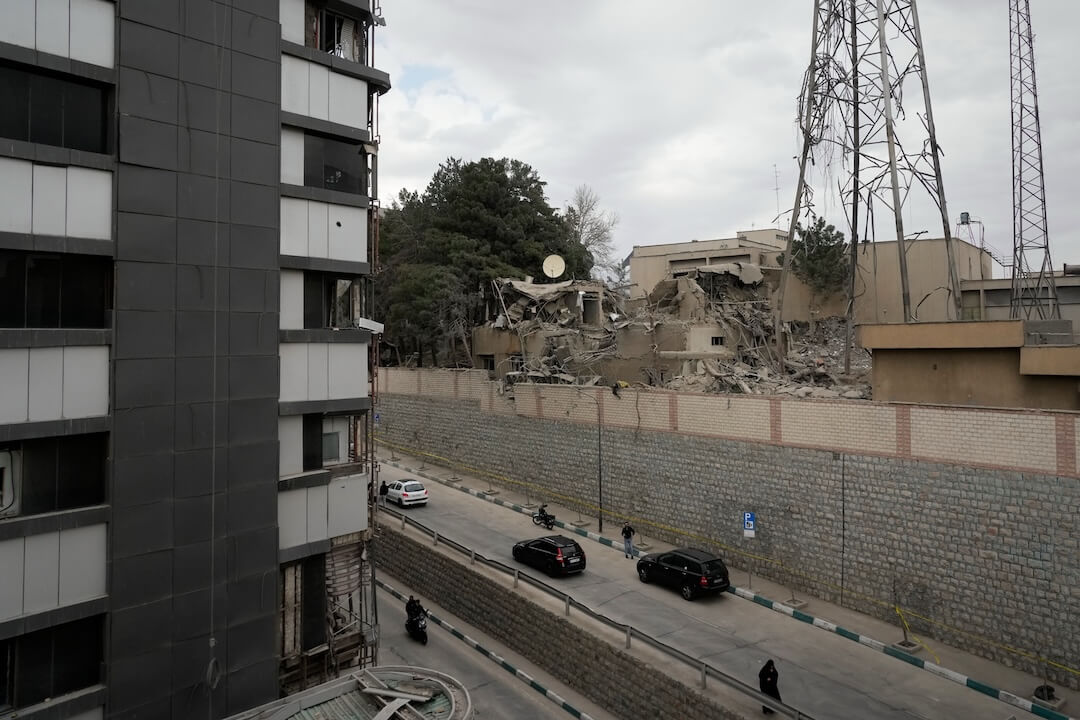
The recent deployment of U.S. air attacks against targets in Iran on February 28 has ignited a critical debate among policymakers and defense strategists regarding the efficacy of aerial campaigns in achieving fundamental political transformation. As the United States potentially navigates a path towards altering the existing governmental structure in Iran, skepticism has mounted over whether such an objective can be realized through military airpower alone. Senator Chris Murphy, a Democrat representing Connecticut, articulated a widely echoed sentiment during a March 1 interview on CBS News’ "Face the Nation," asserting that the establishment of a more favorable political system is highly improbable without the direct involvement of ground forces. According to Murphy, historical precedent offers no instance where an air campaign, in isolation, has successfully led to a positive regime change, particularly without at least the credible threat of a ground invasion—a prospect the administration had initially appeared to discount. This perspective suggests a significant gap in American military history regarding such outcomes.
The ongoing discussions surrounding the effectiveness of airstrikes in facilitating regime change are deeply rooted in a complex history of U.S. foreign policy and military interventions, particularly in the Middle East. For decades, the relationship between Washington and Tehran has been characterized by periods of intense tension and confrontation, making any military action a subject of profound international scrutiny. The notion that the U.S. might be contemplating or inadvertently pursuing regime change in Iran carries significant geopolitical weight, recalling past interventions that have yielded mixed results and often unforeseen consequences. Historically, the United States has engaged in various forms of military action, from targeted strikes to full-scale invasions, each with distinct objectives and outcomes. The current debate, therefore, is not merely about military tactics but about the broader strategic goals and the long-term stability of a volatile region. Understanding the limitations and capabilities of airpower in this context is crucial for assessing the potential trajectory of U.S. engagement and its implications for both regional dynamics and global security. This historical lens provides essential context for evaluating Senator Murphy's claims and the expert consensus that has emerged.
Senator Murphy's assertion regarding the historical ineffectiveness of air campaigns in achieving positive regime change has found substantial corroboration from a panel of military experts and historians. Out of seven specialists consulted for this analysis, the overwhelming majority concurred with the Connecticut senator's viewpoint. Barbara Slavin, a distinguished fellow at the Stimson Center, a prominent foreign policy think tank, underscored this consensus, stating unequivocally that while airpower possesses immense destructive potential, it has not demonstrably led to regime change in the absence of ground troops or a clear, credible threat of invasion. While a limited number of experts did propose one or two historical instances that they believed might challenge Murphy’s argument, their interpretations were met with significant counter-arguments and skepticism from other specialists, who largely dismissed these cases as not meeting the strict criteria for air-only regime change. Interestingly, despite initial indications, President Donald Trump later signaled a shift in stance on March 2, telling the New York Post that he would not rule out the deployment of ground troops, contrasting with the typical presidential rhetoric of precluding "boots on the ground." This position was echoed by Defense Secretary Pete Hegseth, who also refrained from taking ground troops off the table when questioned by the press.
The broad agreement among military historians and foreign policy experts regarding the limitations of airpower alone in achieving regime change carries profound implications for contemporary U.S. strategic planning, particularly concerning nations like Iran. This consensus suggests that any ambition to fundamentally alter an authoritarian government's structure through aerial bombardment without the accompanying presence or credible threat of ground forces is likely to face significant hurdles and may ultimately prove futile in realizing its political objectives. Experts highlight that while airstrikes can degrade military capabilities, disrupt infrastructure, and exert immense pressure, they often fall short of dismantling a regime's internal power structures or fostering the conditions necessary for a "democratic rebirth." The very act of regime change, particularly in complex geopolitical environments, typically requires a sustained presence, the ability to control territory, and direct engagement with local populations and political factions—elements that air campaigns inherently lack. This analytical framework underscores the strategic dilemma faced by policymakers: balancing the desire for limited intervention with the often-demanding requirements for achieving deep-seated political transformation, thereby cautioning against an overreliance on airpower as a standalone solution for complex geopolitical challenges.
In conclusion, the ongoing debate surrounding the effectiveness of airstrikes as a singular tool for achieving regime change has been decisively shaped by historical precedent and expert consensus. Senator Chris Murphy's assertion that American history offers no examples of positive regime change solely through air campaigns, particularly without the threat of ground invasion, is largely affirmed by military historians and foreign policy specialists. While the U.S. has recently engaged in air attacks against Iran, the prevailing expert opinion suggests that such actions are unlikely to lead to a fundamental political overhaul without a more comprehensive strategy involving, or at least threatening, ground forces. The Trump administration's subsequent refusal to definitively rule out ground troops indicates an evolving consideration of these strategic realities. Moving forward, observers will closely monitor whether U.S. policy in Iran aligns with this historical understanding, potentially signaling a shift towards more robust or nuanced approaches if regime change remains a latent objective. The lessons from history, according to these experts, are clear: political transformation from the air is an aspiration rarely met.