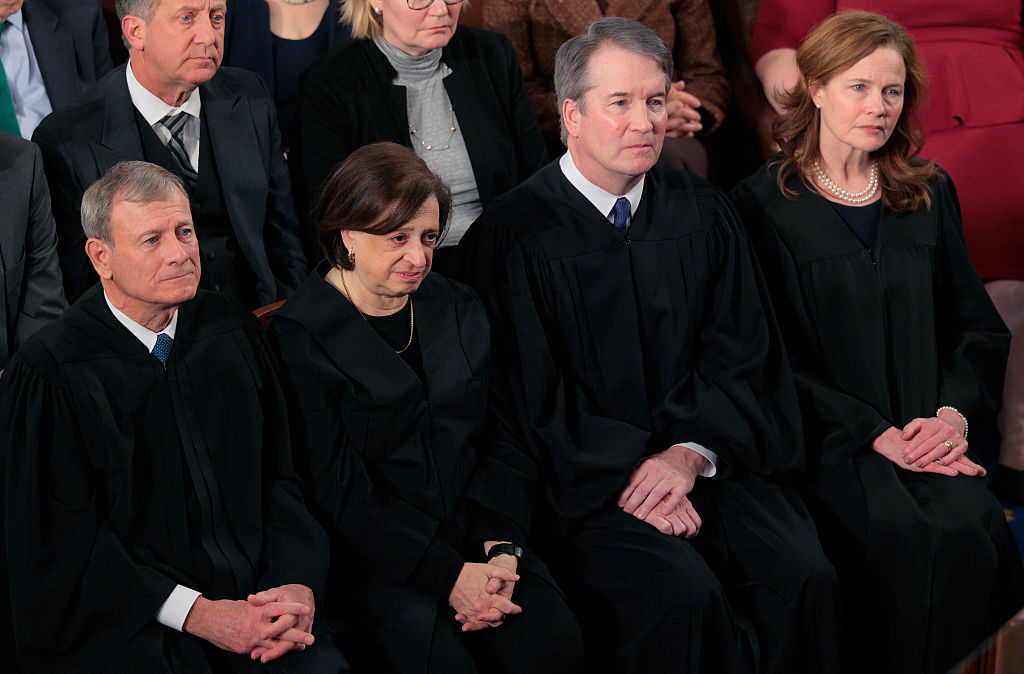
The United States Supreme Court recently delivered a significant ruling on February 20, deciding against the Trump administration in the case of *Trump v. Learning Resources, Inc.* The high court determined that the former president had exceeded his constitutional authority by imposing the extensive "Liberation Day" tariffs under the 1977 International Emergency Economic Powers Act (IEEPA). This 6-3 decision, which saw a coalition of three conservative and all three liberal justices, concluded that the power to regulate trade and taxation is fundamentally vested in the legislative branch, not the executive. While the immediate repercussions for the broader tariff landscape might be minimal, reports suggest the ruling's more profound impact lies in bolstering the conservative legal movement and its ongoing efforts towards deregulation, signaling a crucial re-evaluation of executive authority in economic policy.
The context surrounding this landmark decision involves a long-standing debate over the scope of presidential power, particularly concerning economic measures. The International Emergency Economic Powers Act (IEEPA), enacted in 1977, grants the President certain authorities to regulate international commerce during declared national emergencies. However, the Supreme Court's recent judgment underscores a critical distinction, asserting that these powers do not permit the executive to unilaterally impose sweeping tariffs that constitutionally belong to Congress. The "Liberation Day" tariffs, which were the subject of this legal challenge, represented a broad application of presidential discretion that many legal observers had anticipated would face judicial scrutiny. This ruling reinforces the framers' original intent, as articulated by Chief Justice John Roberts, to deliberately place control over trade and taxation within the legislative branch, ensuring a system of checks and balances on economic policy.
The specifics of the court's 6-3 majority opinion highlight a rare alignment across the ideological spectrum, with Chief Justice John Roberts reportedly authoring the decision. The majority's reasoning centered on the principle that the President had improperly usurped a power explicitly allocated to Congress, thereby upholding a fundamental constitutional allocation. This judicial stance directly challenged the former administration's interpretation of executive authority under IEEPA. The reaction from former President Trump was swift and highly critical, with statements describing the justices in the majority as "a disgrace to our nation" and accusing them of being "very unpatriotic and disloyal to the Constitution." Such strong condemnation underscores the contentious nature of executive power disputes and the deep partisan divisions they often ignite, even when the court's decision garners bipartisan support among its members.
Analysts suggest that the true significance of this Supreme Court ruling extends beyond the immediate fate of the "Liberation Day" tariffs. According to various reports, the decision is unlikely to dismantle the entirety of the administration's existing tariff regime. Instead, its enduring legacy may be its contribution to the conservative legal movement's broader agenda, particularly its emphasis on deregulation and limiting the administrative state. By reining in presidential power and reaffirming congressional authority in economic matters, the court has, in effect, provided a significant boost to those who advocate for a narrower interpretation of executive and agency powers. This ruling could serve as a precedent for future challenges to executive actions, potentially encouraging a more robust congressional role in areas traditionally influenced by presidential decrees, thereby strengthening a key deregulatory tool favored by conservative legal scholars.
In conclusion, the Supreme Court's decision on the "Liberation Day" tariffs represents a pivotal moment in the ongoing discourse regarding the separation of powers in the United States. While directly addressing a specific set of tariffs, its broader implications, according to legal observers, point towards a reassertion of congressional authority over trade and taxation, limiting the executive's capacity for unilateral economic action. This ruling, therefore, not only serves as a check on presidential power but also significantly empowers the conservative legal movement's long-term objectives of deregulation and a more constrained administrative state. Future legal challenges and legislative debates surrounding executive authority in economic policy will undoubtedly reference this decision, making it a critical precedent to watch in the evolving landscape of American governance.