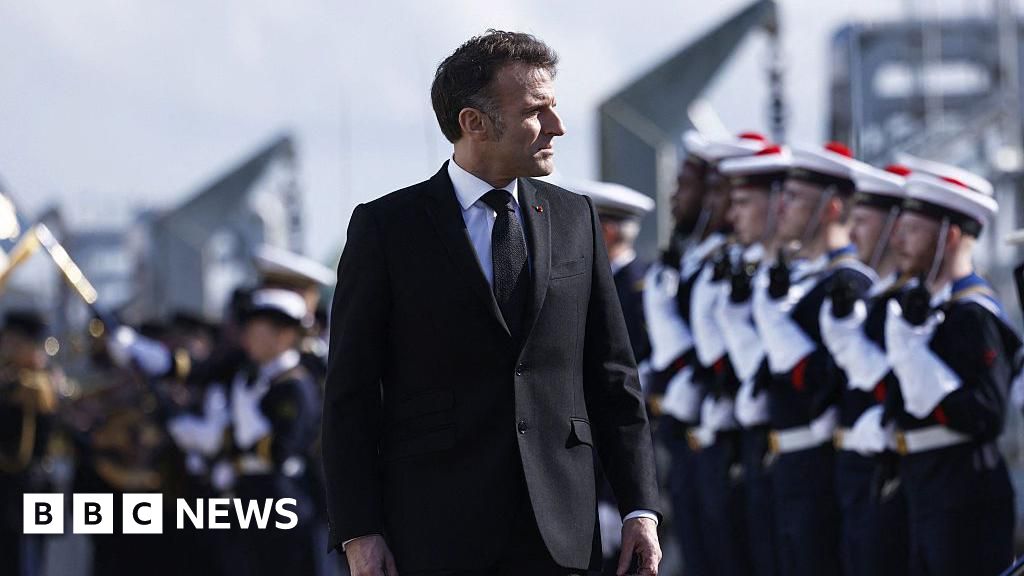
France is set to significantly enhance its nuclear capabilities and broaden its deterrent umbrella to encompass several other European nations, marking a pivotal shift in its defense policy. This strategic evolution was unveiled by President Emmanuel Macron during a recent address in Brittany, where he articulated the decision as a direct response to an increasingly unpredictable global security landscape. According to official statements, the plan involves an increase in the number of French nuclear warheads, which currently stands at approximately 300, alongside the introduction of a new state-of-the-art nuclear-armed submarine, anticipated for launch in 2036. Eight European countries – the United Kingdom, Germany, Poland, the Netherlands, Belgium, Greece, Sweden, and Denmark – have reportedly consented to participate in this novel "advanced deterrence" framework, signaling a deeper integration of European defense strategies under French nuclear protection. This development underscores a renewed emphasis on nuclear weapons as a cornerstone of security in the coming decades, as articulated by the French head of state.
The decision to bolster France's nuclear arsenal and extend its deterrent reach comes against a backdrop of escalating geopolitical tensions and a perceived erosion of global stability. Historically, France has maintained an independent nuclear deterrent, known as the 'force de frappe,' distinct from NATO's integrated command structure, though it remains a key member of the alliance. President Macron's remarks, delivered to naval officers at the Ile Longue base near Brest, underscored his conviction that the next half-century will be characterized by the enduring presence and strategic importance of nuclear armaments. This perspective reflects a growing concern among European leaders regarding regional security, particularly in light of ongoing conflicts and shifting power dynamics on the continent's eastern flank. The move is seen by some observers as an effort to reinforce European strategic autonomy and provide a credible defense mechanism in an era where traditional security assurances may no longer suffice, prompting a re-evaluation of collective defense postures across the continent.
Specifics of the announced policy include a planned increase in France's nuclear warhead count beyond its current approximate total of 300, though precise new figures were not disclosed in initial reports. A cornerstone of this expansion is the scheduled launch of a new nuclear-armed submarine, christened 'The Invincible,' in 2036, which will undoubtedly augment France's naval projection capabilities. The advanced deterrence strategy involves eight key European partners: the United Kingdom, Germany, Poland, the Netherlands, Belgium, Greece, Sweden, and Denmark. These nations are slated to engage in joint exercises utilizing France's air-launched nuclear capacity, often referred to as the 'force de frappe.' Furthermore, these participating countries could potentially host air bases for French nuclear bombers, a measure designed to allow France's Strategic Air Forces (FAS) to deploy and operate more broadly across the European landmass. Reacting to the announcement, Polish Prime Minister Donald Tusk conveyed his nation's commitment via social media, stating, "We are arming up together with our friends so that our enemies will never dare to attack us," underscoring the collaborative spirit behind this defense initiative.
This significant recalibration of France's nuclear doctrine carries profound implications for the future of European security architecture and international relations. Analysts suggest that by extending its nuclear umbrella, France aims to solidify its leadership role within Europe's defense landscape, potentially offering a more robust and continent-centric deterrent alongside, or in complement to, NATO's existing framework. The participation of key non-nuclear states like Germany and Poland in exercises involving French nuclear assets could signal a deeper strategic alignment and a willingness to embrace a more integrated, albeit complex, defense posture. While strengthening European autonomy, this initiative also raises questions about its potential impact on global non-proliferation efforts and how it might be perceived by other nuclear powers. Experts will be closely watching to see how this 'advanced deterrence' strategy integrates with existing security alliances and whether it fosters greater stability or introduces new geopolitical complexities in an already volatile environment, especially concerning its long-term effects on regional power balances.
In summary, France's announcement to boost its nuclear arsenal and extend its deterrent capabilities to eight European allies represents a monumental shift in its defense policy, driven by a perception of increasing global instability. President Macron's vision for the next half-century emphasizes the enduring relevance of nuclear weapons as a cornerstone of national and continental security. The plan includes an increase in warheads and the deployment of a new submarine, 'The Invincible,' by 2036, alongside joint exercises and potential host nation support for French nuclear assets across Europe. This collaborative approach, endorsed by nations like Poland, aims to fortify European defense. The coming years will reveal the full scope of implementation and the strategic impact of this ambitious initiative on European security and global power dynamics, marking a critical juncture in the continent's defense posture.