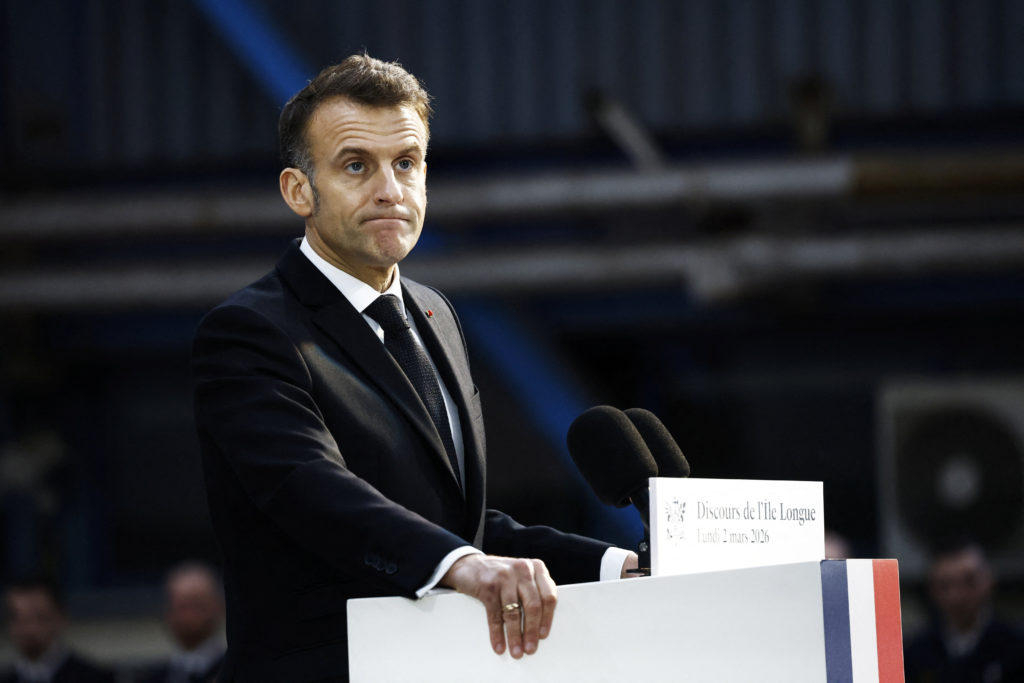
President Emmanuel Macron has unveiled a significant shift in France's defense posture, announcing a new strategy that will permit the temporary deployment of elements of its strategic air forces to allied countries. This declaration, made as part of a broader re-evaluation of national security, signals a potentially transformative approach to European collective defense and France's role within it. The move is understood by observers to underscore Paris's commitment to strengthening regional security frameworks and enhancing interoperability with its partners. While specific details regarding the nature and timing of these deployments remain to be fully articulated, the announcement itself marks a notable evolution in French military doctrine, traditionally characterized by a highly independent strategic deterrent. This initiative emerges amidst heightened geopolitical tensions across the continent, prompting a renewed focus on robust defense capabilities and shared security responsibilities among European nations, with France, as a key nuclear power, taking a proactive stance.
France stands as the sole nuclear-armed power within the European Union following the United Kingdom's departure, granting its strategic decisions particular weight in the continent's defense landscape. For decades, French nuclear doctrine has been anchored in the principle of 'strict sufficiency' and an independent deterrent, primarily aimed at protecting France's vital interests. The nation's strategic air forces, comprising advanced platforms like the Rafale fighter jets, are integral to this doctrine, capable of delivering long-range strike capabilities. This latest announcement, allowing for the temporary presence of these strategic assets on allied soil, represents a nuanced expansion of how France projects its security guarantees. It builds upon ongoing discussions within European capitals regarding strategic autonomy and the need for greater self-reliance in defense, particularly in the wake of evolving threats and the imperative to bolster collective deterrence against potential aggressors. The historical context of France's independent nuclear posture makes this willingness to deploy strategic elements to allies a noteworthy development, suggesting a more integrated approach to regional security.
The practical implications of temporarily deploying elements of France's strategic air forces to allied nations are multifaceted. Such deployments could involve joint training exercises, familiarization missions, and enhanced logistical cooperation, all designed to improve interoperability and mutual understanding of strategic doctrines. While the source material refers to 'elements of our strategic air forces,' the inherent capabilities of these forces, particularly in the context of a nuclear power, suggest a strong message of deterrence and solidarity. These temporary presences could serve to reassure allies, demonstrate France's commitment to their security, and potentially contribute to a broader European 'extended deterrence' framework without altering France's fundamental nuclear doctrine. Officials are expected to clarify which allied countries would participate and the specific modalities of these deployments, which could range from short-term visits to more extended periods of joint operations, fostering deeper military integration and shared strategic awareness across the continent.
Analysts suggest that this strategic shift by President Macron could have profound implications for European security architecture and the dynamics within NATO. By offering to temporarily deploy strategic air forces, France is potentially enhancing the visible and tangible aspects of its deterrence posture across the continent, thereby contributing to collective security in a more direct manner. This move could be interpreted as a pragmatic response to the current geopolitical climate, aiming to strengthen European defense capabilities and foster greater strategic cohesion. While France maintains its independent nuclear command and control, the presence of its strategic assets on allied territory could serve as a powerful symbol of commitment and a deterrent signal to potential adversaries. However, such deployments also raise questions about command structures, rules of engagement, and the political sensitivities involved, requiring careful diplomatic navigation to ensure all parties understand the scope and intent of these new arrangements. The initiative is likely to spark further debate on the future of European defense and the role of nuclear deterrence within it.
In conclusion, President Macron's announcement regarding the temporary deployment of France's strategic air forces to allied countries marks a significant evolution in French defense policy, signaling a more outward-looking and integrated approach to European security. This initiative, rooted in France's unique position as the EU's sole nuclear power, aims to bolster collective deterrence and enhance interoperability among European partners. The coming months will likely bring further details on the implementation of this new strategy, including specific agreements with allied nations and the nature of these deployments. Observers will be closely watching how this move reshapes strategic dialogues within Europe and influences the broader security landscape, as France seeks to reinforce its leadership role in a continent grappling with evolving threats and the imperative for robust, unified defense.