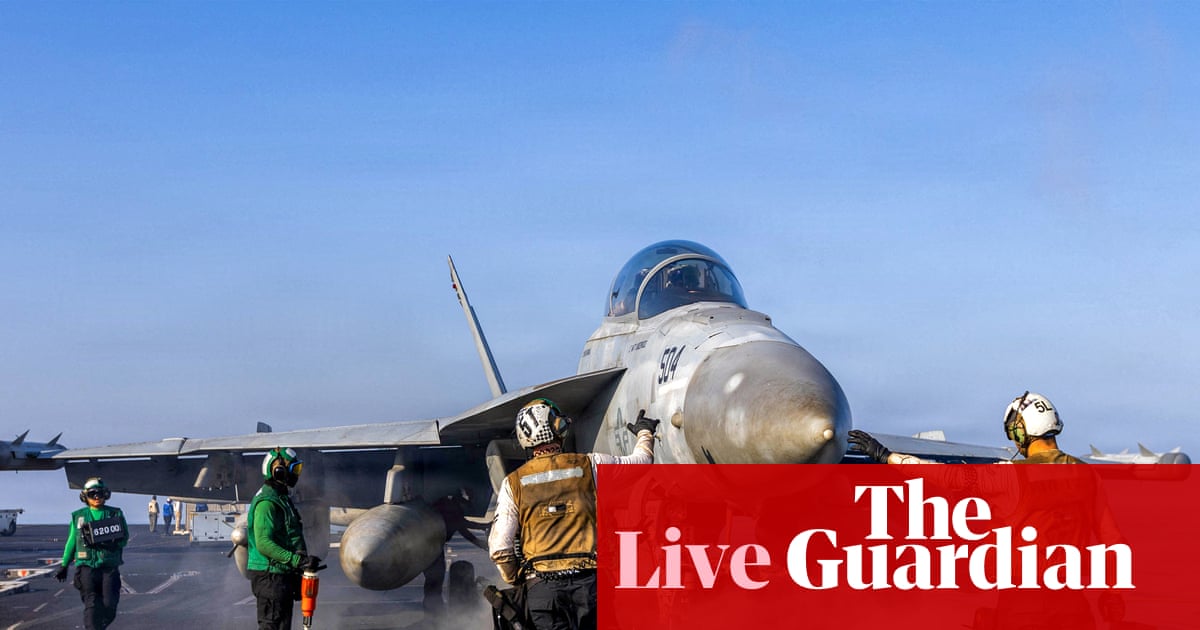
Members of both the House and Senate are scheduled to receive a comprehensive briefing today regarding the recent military actions against Iran, as the Trump administration reportedly presents an evolving rationale for its engagement in the conflict. High-ranking officials, including Secretary of State Marco Rubio, Defense Secretary Pete Hegseth, and General Dan Caine, are slated to address the full legislative body on Tuesday. This pivotal session precedes anticipated votes on parallel measures aimed at reasserting congressional authority over presidential war powers. The briefings and subsequent legislative efforts unfold against a backdrop of rapidly escalating tensions in the Middle East, which have seen the conflict widen significantly since its inception. Lawmakers are seeking clarity on the administration's strategy and the legal basis for the ongoing operations, particularly as the human cost, including American casualties, continues to mount, according to various reports.
The scheduled full congressional briefing follows a prior classified session held on Monday for key legislative leaders at the Capitol. During that earlier meeting, House Speaker Mike Johnson reportedly indicated that the White House perceived Israel as prepared to undertake independent military action, a factor he suggested presented the president with an exceptionally challenging decision. Johnson characterized the offensive against Iran as a "defensive operation," citing Israel's readiness to proceed with or without American backing. The current hostilities originated as a joint military campaign involving the United States and Israel, an operation that resulted in the death of Iran’s supreme leader, Ayatollah Ali Khamenei. Since then, the situation has dramatically intensified, evolving into a broader regional conflict that has claimed hundreds of lives, including at least six members of the United States military, according to official statements. President Donald Trump has previously expressed hope that the operation would be "short in duration," a sentiment echoed by Speaker Johnson.
In a direct response to the escalating situation and the administration's actions, legislative efforts to curb presidential authority are gaining momentum. Reports from Politico indicate that the Senate could hold a vote as early as Tuesday on a measure introduced by Senators Tim Kaine and Rand Paul, which seeks to limit the president's ability to conduct strikes. This potential Senate action is expected to be followed by a separate vote in the House of Representatives on a resolution put forth by Representatives Thomas Massie and Ro Khanna. These initiatives represent a concerted strategy by Democratic lawmakers to compel votes on war powers resolutions, a move widely portrayed as an attempt by Congress to reclaim its constitutional prerogative to formally declare war. Despite these persistent efforts, previous attempts to pass similar resolutions have, thus far, not succeeded. In separate remarks, President Donald Trump, in his initial press conference since the joint US-Israel operation, outlined his administration's forward-looking objectives, which reportedly include destroying Iran's [unspecified targets] as part of his administration's stated objectives.
The impending congressional briefings and votes carry significant implications for the delicate balance of power between the executive and legislative branches, particularly concerning military engagements. The Trump administration's reported "shifting new justification" for the Iran strikes introduces a critical element into the debate, potentially influencing public and congressional support for the ongoing operations. Analysts suggest that the administration faces the challenge of maintaining broad backing for a conflict that has not only escalated rapidly but has also resulted in American casualties. The legislative efforts, even if they ultimately fail to pass, serve as a powerful signal of congressional discontent and a demand for greater oversight. This push for a reassertion of constitutional war powers could redefine the parameters of future presidential military actions and shape the trajectory of US foreign policy in the volatile Middle East region, potentially leading to more rigorous scrutiny of executive decisions in matters of war and peace.
As the full United States Congress prepares for critical briefings on the escalating Iran conflict, the nation stands at a pivotal juncture regarding its military involvement and the constitutional division of war-making powers. The administration's evolving rationale for its actions, coupled with the tragic loss of life, underscores the urgency of these discussions. Lawmakers' efforts to reclaim their constitutional authority through proposed resolutions highlight a fundamental tension between executive prerogative and legislative oversight. The outcomes of the anticipated votes in both the House and Senate will be closely watched, not only for their immediate impact on the current conflict but also for their long-term implications on the checks and balances governing US foreign policy. The unfolding events in the Middle East, alongside domestic political developments, will continue to shape the narrative surrounding Operation Epic Fury and America's role in the region.