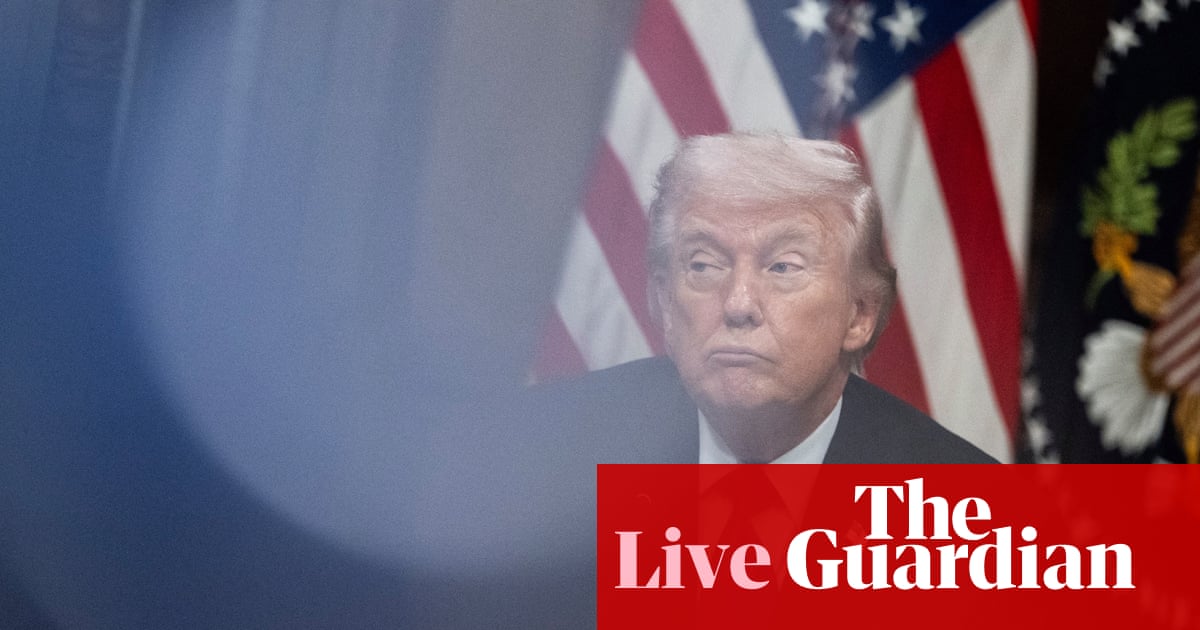
The United States House of Representatives is poised for a significant vote on Thursday concerning a war powers resolution that aims to restrict President Donald Trump's authority regarding ongoing military engagements with Iran. This legislative move, as reported, would mandate the president to secure explicit congressional authorization before continuing any military operations in the region. The impending vote underscores a palpable sense of apprehension within Congress regarding the escalating conflict and follows closely on the heels of a similar measure that failed to pass in the Senate on Wednesday, largely along partisan lines. Observers anticipate a closely contested vote in the House, which is expected to offer an early assessment of the political sentiment, both in favor and opposition, towards the current US-Israel military operation and the administration's justification for bypassing legislative approval, despite Congress's constitutional prerogative to declare war.
This legislative push emerges against a backdrop of heightened tensions and a rapidly expanding conflict in the Middle East, prompting a renewed focus on the constitutional division of war-making powers between the executive and legislative branches. Historically, while the President serves as Commander-in-Chief, the authority to formally declare war rests solely with Congress, a principle the proposed resolution seeks to reassert. The defeat of the Senate's parallel initiative earlier in the week highlighted deep partisan divisions, suggesting a challenging path for any measure designed to curb presidential military discretion. The current US-Israel military operation has intensified calls for greater congressional oversight, with many lawmakers expressing concern that the nation could be drawn into a prolonged conflict without adequate debate or explicit legislative consent, thereby setting a critical precedent for future executive actions.
In a direct challenge to the administration's approach, Gregory Meeks, the senior Democrat on the House Foreign Affairs Committee, articulated the sentiment of many, stating, "Donald Trump is not a king, and if he believes the war with Iran is in our national interest, then he must come to Congress and make the case." Meanwhile, the ongoing conflict in Iran has also become intertwined with domestic legislative battles, specifically a funding bill for the Department of Homeland Security (DHS). Republicans are reportedly leveraging the perceived urgency of the Iran situation to press for the DHS funding bill's passage, which had previously stalled. The House had initially approved a DHS spending measure in January, but it subsequently faltered in the Senate. This failure, according to reports, was due to Democratic insistence on amendments related to immigration enforcement operations, following a controversial incident in Minneapolis where federal agents were involved in the fatal shooting of ICU nurse Alex Pretti during an immigration crackdown. Consequently, funding for the department officially lapsed on February 14.
The strategic move by Republicans to link the DHS funding debate to the military action in Iran reveals a complex interplay of national security concerns and domestic political maneuvering. House Speaker Mike Johnson emphasized this connection, stating that "The military action in Iran makes it all more urgent and crucial to have a fully funded, fully staffed DHS across all its departments." This tactic, however, is widely perceived as unlikely to sway Democrats, who remain committed to their demands for changes in immigration enforcement policy. Political analysts suggest that the tight vote anticipated in the House on the war powers resolution will serve as a critical barometer of internal party cohesion and the extent of bipartisan willingness to challenge presidential authority on foreign policy. The broader implications extend to the balance of power within the federal government, potentially reshaping how future military engagements are authorized and overseen, especially in an era of rapid global developments and evolving threats.
As Congress navigates these dual legislative challenges, the outcomes of Thursday's votes will have immediate and lasting consequences for both U.S. foreign policy in the Middle East and domestic governance. The House's decision on the war powers resolution will signal the legislature's appetite for asserting its constitutional prerogatives against executive action, while the ongoing debate over DHS funding highlights the persistent partisan divides that can impede critical government operations, even amid national security concerns. Observers will be closely watching not only the vote tallies but also the rhetoric surrounding these debates, as they will likely shape future legislative strategies and the dynamics between the White House and Capitol Hill in the coming months.