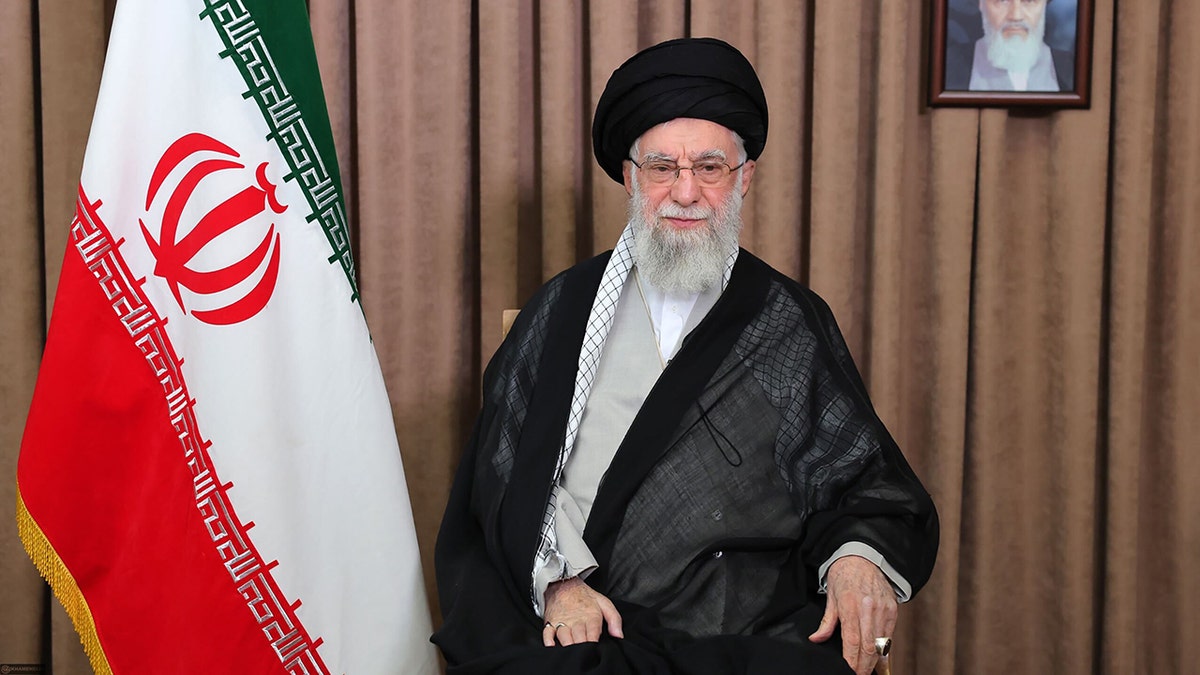
In a significant development in Middle East geopolitics, former United States Ambassador to the European Union, Gordon Sondland, has issued a forceful call for European nations to abandon their perceived 'restraint' and align more closely with American and Israeli efforts against Iran. This appeal follows reports detailed by Sondland of joint American-Israeli military operations on February 28, identified as 'Operation Epic Fury' and 'Operation Roaring Lion.' These operations, according to Sondland, reportedly resulted in the elimination of several high-ranking Iranian officials, including Supreme Leader Ali Khamenei, Iran’s defense minister, the commander of the Islamic Revolutionary Guard Corps, and the secretary of the Supreme National Security Council. Sondland's commentary highlights what he describes as the disproportionate burden borne by American service members and Israeli pilots, who are reportedly absorbing retaliatory strikes, while European responses have been characterized by caution. He specifically cites European leaders like Ursula von der Leyen, who reportedly called the situation 'greatly concerning,' and Emmanuel Macron, who warned of an 'outbreak of war,' alongside clarifications from France, Germany, and the United Kingdom that their forces were not involved.
The current tensions and Sondland's critique are rooted in a long-standing divergence in transatlantic approaches to Iran, particularly concerning its nuclear program and regional activities. The Joint Comprehensive Plan of Action (JCPOA), an international agreement aimed at preventing Iran from developing nuclear weapons, has been a central point of contention. The United States, under the previous administration, withdrew from the JCPOA in 2018, subsequently initiating a 'maximum pressure' campaign against Tehran. During his tenure as US Ambassador to the EU, Sondland was tasked with persuading European allies to also abandon the nuclear deal and join America's more aggressive stance. He recounts encountering what he termed 'willful denial' among European officials in Brussels, who, in his view, performed 'extraordinary contortions' to avoid acknowledging intelligence that reportedly indicated Iran had already violated the terms of the agreement. This historical context underscores the persistent friction within the transatlantic alliance regarding Iran policy, setting the stage for Sondland's current demand for greater European solidarity in the face of recent military actions.
Sondland's detailed account of the February 28 operations, 'Operation Epic Fury' and 'Operation Roaring Lion,' underscores the asserted scale and strategic intent of the joint American-Israeli strikes. The reported targets — the Iranian Supreme Leader, defense minister, IRGC commander, and the secretary of the Supreme National Security Council — represent the highest echelons of Iran's political and military leadership, suggesting a profound impact on the nation's command structure. In contrast to what Sondland describes as the 'heavy lifting' by US and Israeli forces, he points to Europe's reactions as indicative of a lack of robust support. European Commission President Ursula von der Leyen's reported description of the situation as 'greatly concerning' and French President Emmanuel Macron's warning of a potential 'outbreak of war' are presented as examples of this cautious approach. Furthermore, the swift public statements from France, Germany, and the United Kingdom clarifying their non-participation in the strikes are interpreted by Sondland as a collective message of 'distance' rather than 'solidarity,' prompting him to question the fundamental purpose and efficacy of the transatlantic alliance if it cannot rely on Europe for even 'full-throated public support' during such critical moments.
The implications of these reported strikes and the subsequent transatlantic dialogue are far-reaching, potentially reshaping the geopolitical landscape of the Middle East and the future dynamics of international alliances. Sondland's analysis suggests that the current situation represents a critical juncture for the 'free world' to prevent a nuclear-armed theocracy, framing the US-Israeli actions as a necessary defense against a broader threat. This perspective highlights a fundamental divergence in strategic thinking between Washington and Brussels, with the former advocating for decisive military intervention and the latter prioritizing diplomatic solutions and de-escalation. Experts might view this as a test of the transatlantic alliance's resilience, forcing European nations to re-evaluate their security priorities and their relationship with the United States. The ongoing absorption of retaliatory strikes by American and Israeli personnel, as noted by Sondland, further complicates the situation, placing immense pressure on European leaders to articulate a coherent and unified stance that balances alliance commitments with regional stability concerns and independent foreign policy objectives.
In summary, former US Ambassador Gordon Sondland has issued a stark challenge to European nations, urging them to abandon their cautious approach and offer unequivocal support to the United States and Israel following reported joint military operations that allegedly targeted key Iranian leaders. His critique underscores a persistent rift within the transatlantic alliance regarding Iran policy, questioning the very foundation of the partnership if solidarity is lacking during times of perceived crisis. With American and Israeli forces reportedly facing ongoing retaliatory actions, the call for Europe to stand with its allies becomes more urgent. The coming weeks will be crucial in observing how European leaders respond to this appeal, whether they shift their stance towards greater alignment with Washington and Tel Aviv, or continue to pursue a more independent and cautious diplomatic path. The trajectory of this evolving situation will undoubtedly have significant consequences for regional stability and the future of global power dynamics.