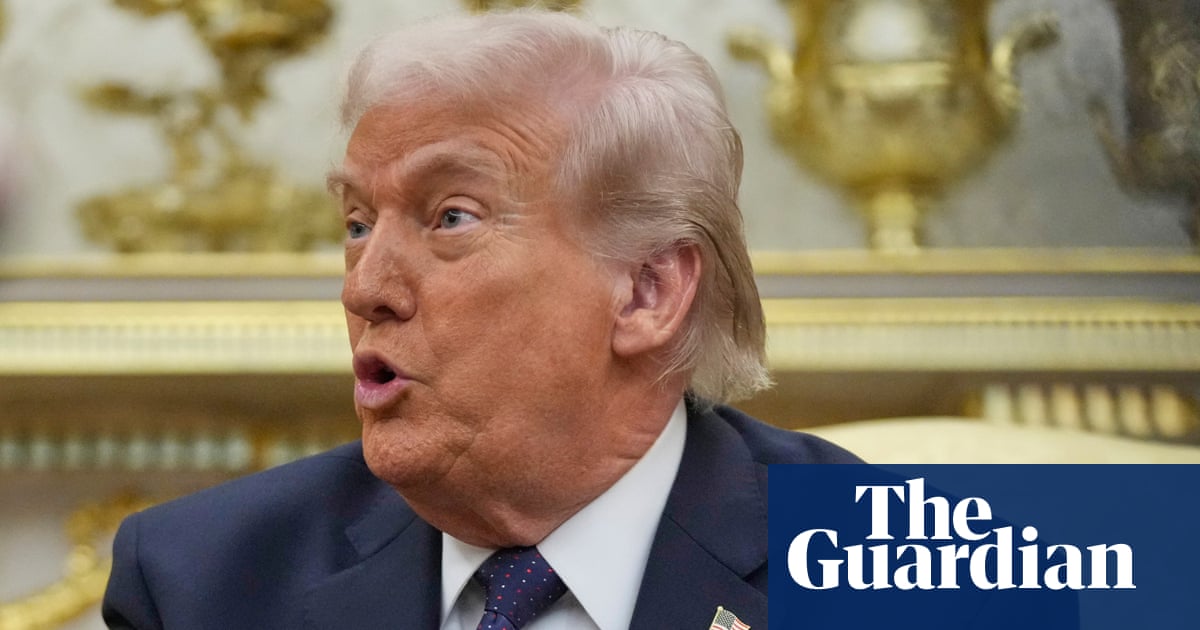
Former US President Donald Trump has once again drawn attention with a series of critical remarks concerning the United Kingdom, prompting significant scrutiny from various reports and analyses. On a recent Tuesday, Trump reportedly asserted that Labour leader Keir Starmer was 'not Winston Churchill,' a comment that immediately sparked debate regarding its historical and political context. Concurrently, he reiterated his long-standing objections to the ongoing diplomatic process concerning the sovereignty of the Chagos Islands, a move that has seen the UK agree to transfer control to Mauritius. These specific comments, alongside broader claims previously made by the former president regarding the UK's energy infrastructure, particularly 'windmills,' and the presence of Sharia law, have been rigorously fact-checked by independent outlets. According to these analyses, many of Trump's assertions frequently diverge from established facts and widely accepted understandings of British policy, history, and legal frameworks, leading to questions about the basis of his public statements.
Trump's pattern of making contentious statements about close international allies, including the UK, is well-documented, often sparking diplomatic ripples and public debate. His recent complaint about the Chagos Islands deal touches upon a complex and sensitive historical issue. The Chagos Archipelago, a British Indian Ocean Territory, has been at the heart of a protracted sovereignty dispute with Mauritius. International legal bodies, including the International Court of Justice (ICJ) and the International Tribunal for the Law of the Sea (ITLOS), have largely supported Mauritius's claim, with the UN General Assembly also voting overwhelmingly in favour of decolonisation. The UK government has, in recent years, acknowledged the need to resolve this dispute, engaging in negotiations that led to the agreement to cede sovereignty. Trump's repeated criticism, as reported, appears to challenge this international consensus and the UK's evolving diplomatic stance, seemingly aligning with a perspective that predates recent legal and political developments on the matter.
Beyond the Chagos Islands, Trump's remarks have encompassed various facets of British life and politics, each attracting its own level of factual examination. His comparison of Keir Starmer to Winston Churchill, for instance, is widely seen by political commentators as a rhetorical flourish rather than a substantive political analysis. Churchill, a wartime prime minister, operated in a vastly different geopolitical landscape than Starmer, who leads the opposition in contemporary Britain. Furthermore, Trump's long-standing criticisms of 'windmills' and renewable energy infrastructure, often linked to claims of inefficiency or environmental harm, stand in stark contrast to the UK's robust commitment to offshore wind power. The UK is a global leader in this sector, with significant investments aimed at achieving ambitious climate change targets, a strategy supported by extensive scientific and economic data. His previous claims regarding the prevalence of 'Sharia law' in the UK have also been consistently debunked by legal experts and government officials, who affirm that the UK operates under a common law system, with Sharia councils existing only in a limited, voluntary capacity for civil arbitration, not as a parallel legal system.
The consistent scrutiny of Donald Trump's statements concerning the UK highlights a broader trend in contemporary political discourse, where claims from high-profile figures are increasingly subjected to immediate and rigorous fact-checking. Political analysts suggest that while such remarks might energize a specific political base, their factual inaccuracies can strain diplomatic relations and misinform public opinion both domestically and internationally. For the UK, a key US ally, these comments carry particular weight, especially given the potential for Trump's return to the presidency. Observers note that a consistent pattern of factually challenged statements could complicate future bilateral relations, potentially impacting areas from trade to defence cooperation. The ongoing need for independent news aggregators like GlobalTruthWire to provide clear, attributed factual corrections underscores the importance of distinguishing between political rhetoric and verifiable truth in an era often characterized by the rapid spread of misinformation.
In summary, recent pronouncements by Donald Trump regarding the United Kingdom, covering diverse subjects from political leadership comparisons to complex territorial disputes and energy policies, have been met with significant factual challenges. Reports indicate that his claims, including those on Keir Starmer, the Chagos Islands, the efficacy of 'windmills,' and the role of Sharia law, frequently lack substantiation when measured against established facts and expert consensus. This recurring pattern of statements diverging from reality underscores the critical role of independent fact-checking in maintaining an informed public and navigating international relations. As global political landscapes continue to evolve, the accuracy of public discourse, particularly from influential figures, remains a vital aspect for both domestic understanding and international diplomacy, making it imperative to watch for future statements and their factual basis.