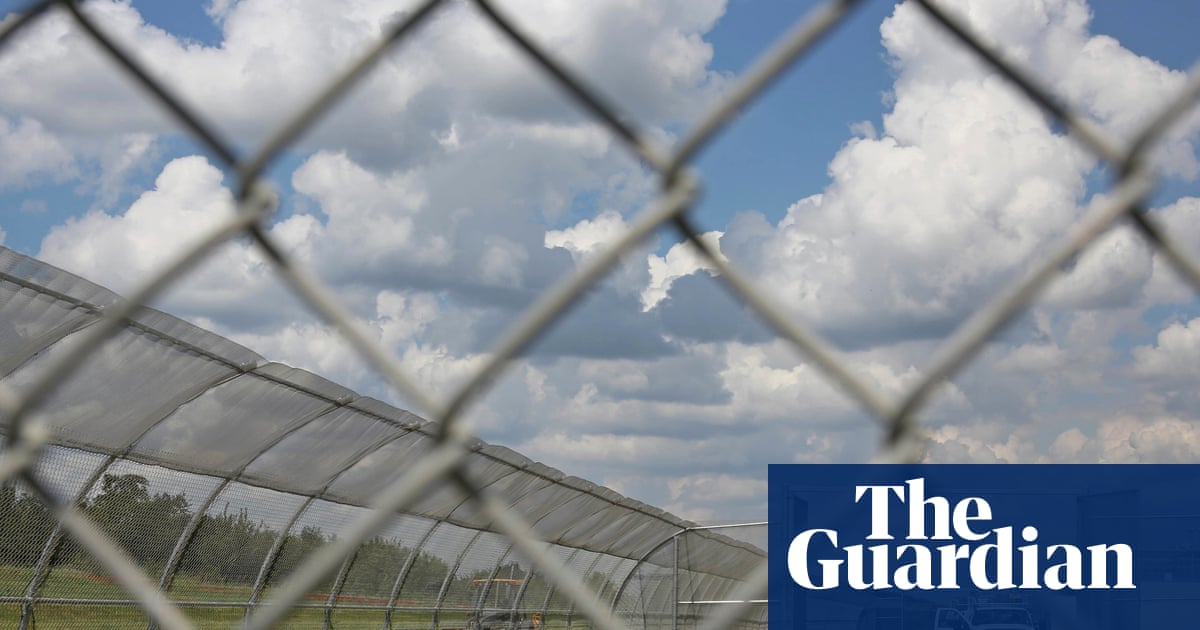
A significant federal trial is currently unfolding, scrutinizing the aftermath of a violent protest that occurred last year outside an Immigration and Customs Enforcement (ICE) facility in Fort Worth, Texas. The proceedings center on an incident from the night of July 4, when a lieutenant responding to a disturbance at the Prairieland detention center was reportedly shot. This event has led to a rare federal prosecution against individuals identified as left-wing demonstrators, a case that observers suggest is testing the boundaries of the Trump administration's controversial characterizations of domestic terrorism. Jurors are hearing firsthand accounts, including testimony from police officer Jeremiah Zapata, who was among the first responders to the chaotic scene. According to reports, Zapata described the intense atmosphere shortly after 11 pm, recounting his frantic search for suspects along Tanglewood Drive, a residential street adjacent to the facility, amid a light rain. The trial's outcome is anticipated to have broader implications for how federal authorities approach protest-related violence and the classification of activist groups.
This federal case emerges from a period of heightened social and political tension, particularly in the summer of 2020, when protests against racial injustice and government policies, including immigration enforcement, were widespread across the United States. The incident at the Prairieland detention center represents a critical flashpoint, escalating a demonstration against an ICE facility into a violent confrontation that resulted in an officer being wounded. The decision to pursue federal charges against left-wing demonstrators in this context is notably uncommon, distinguishing this trial from typical local prosecutions for protest-related offenses. According to legal analysts, the case is significant because it directly engages with the Trump administration's persistent efforts to label certain left-wing groups, often broadly associated with 'Antifa,' as domestic terrorist organizations. This prosecution, therefore, is not merely about the specific acts of violence but also about the broader legal and political framework being applied to dissent and activism in the country.
During the ongoing trial, detailed accounts of the night's events have been presented to the jury. Officer Jeremiah Zapata, one of the initial law enforcement personnel dispatched to the scene, provided testimony regarding his experience. Reports indicate that Zapata received an urgent radio call just minutes after 11 pm, alerting him that a lieutenant had been shot while responding to the situation at the Prairieland detention center. Upon arrival, another officer directed him towards Tanglewood Drive, indicating that the alleged perpetrators had fled in that direction. Zapata recounted his methodical search through the quiet residential street, slowly navigating his police cruiser under a light rain, using his vehicle's spotlight to scan for any sign of the suspects. He described his mental image of the individuals he was pursuing: someone dressed entirely in black, potentially armed with a rifle. Zapata openly acknowledged experiencing 'tunnel vision' during his intense and urgent search for the individuals responsible for the shooting, highlighting the high-stakes and adrenaline-fueled environment faced by officers that night.
The legal proceedings surrounding the Fort Worth incident carry substantial weight, particularly in their potential to shape future interpretations of domestic extremism and the limits of protest. Legal experts suggest that this rare federal prosecution against left-wing activists could establish precedents regarding the federal government's jurisdiction over protest-related violence, which traditionally falls under state and local purview. The trial's outcome will inevitably be viewed through the lens of the Trump administration's rhetoric, which frequently sought to equate certain protest movements with domestic terrorism. Observers are keen to understand if the prosecution successfully demonstrates a link between the alleged actions of the defendants and a broader pattern of organized domestic terrorism, as defined by federal statutes. This case could either validate or challenge the expansive claims made by the previous administration concerning the threat posed by groups like 'Antifa,' impacting how future administrations categorize and prosecute political dissent. The implications extend beyond the courtroom, potentially influencing public perception and policy debates surrounding civil liberties and national security.
In summary, the federal trial stemming from the violent July 4 protest outside the Fort Worth ICE facility represents a pivotal moment in the ongoing national discourse surrounding political activism, law enforcement, and the definition of domestic terrorism. With testimony detailing the shooting of a police lieutenant and the subsequent frantic search for suspects, the jury is tasked with evaluating the evidence in a case that has drawn significant attention due to its federal nature and the political context of its origins. The trial's resolution will not only determine the fate of the accused but also offer insights into the legal viability of the Trump administration's characterizations of left-wing groups as domestic terror threats. As the proceedings continue, stakeholders from civil liberties advocates to national security experts will be closely monitoring the verdict and its potential to influence future legal strategies and public policy concerning protest movements across the United States.