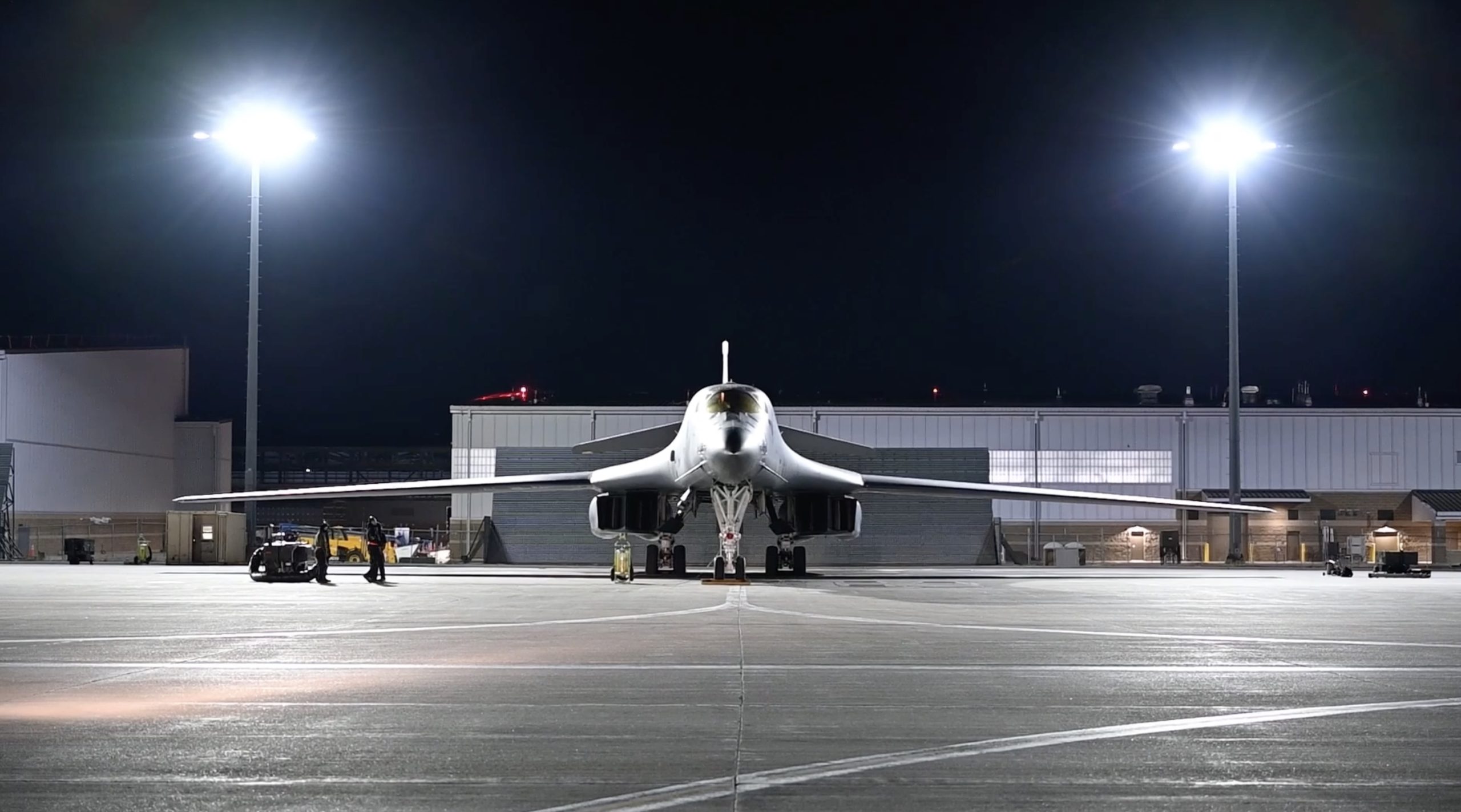
The United States military is significantly augmenting its fighter jet presence in the Middle East, a move that marks the most substantial accumulation of airpower in the region since the 2003 invasion of Iraq. This escalation comes as America's campaign against Iran, designated Operation Epic Fury, entered its third day, with officials indicating that the operation is far from a swift conclusion. Chairman of the Joint Chiefs of Staff, Air Force Gen. Dan Caine, conveyed to reporters at the Pentagon on March 2 that the ongoing efforts were merely in their initial stages and would persist. The administration has outlined key objectives for the campaign, which include neutralizing Iran's missile capabilities, dismantling its naval forces, and targeting any remaining nuclear facilities. Initial reports from U.S. Central Command on March 2 highlighted significant early successes, particularly concerning Iranian naval assets in the Gulf of Oman, signaling an aggressive start to the intensified military engagement.
This substantial military reinforcement provides crucial context for the current geopolitical landscape, underscoring a heightened commitment by the U.S. to its objectives in the Middle East. The scale of the airpower deployment is unprecedented in nearly two decades, reflecting the gravity with which the Trump administration views the conflict with Iran. Officials have articulated that the primary motivation behind the effort to dismantle Iran's missile infrastructure is to establish a robust deterrent against potential attacks, particularly should Iran decide to resume its nuclear development activities. While American officials have indicated that a change in the Iranian regime would be a welcome outcome, they have also clarified that such a shift is not considered a prerequisite for the overall success of Operation Epic Fury, focusing instead on defined military and strategic objectives to ensure regional stability and security.
Reports from the early days of the conflict detail specific operational successes and ongoing strategic decisions. On March 2, U.S. Central Command publicly stated via social media that Iran's naval presence in the Gulf of Oman had been completely eliminated, noting that while eleven Iranian vessels were present two days prior, none remained. This assertion followed an earlier statement from President Donald Trump, made one day prior, claiming that the U.S. had successfully sunk nine Iranian ships. Despite these declared early achievements, the Pentagon has confirmed its intent to continue bolstering its forces in the region. General Caine further assessed that the U.S. had already established 'local air superiority,' an assessment echoed by the Israeli Air Force, which is conducting its own distinct but parallel military campaign against Iranian targets, suggesting a coordinated, albeit separate, approach to regional security challenges.
The sustained deployment of additional fighter jets and the declaration that the operation is 'just beginning' suggest a long-term strategic commitment rather than a short, decisive strike. This approach implies that U.S. military planners anticipate a protracted engagement to fully achieve the stated objectives of neutralizing Iran's military capabilities and nuclear infrastructure. The emphasis on 'local air superiority' by General Caine and the Israeli Air Force indicates a critical early phase success, which is vital for controlling the operational environment and protecting allied forces. The nuanced stance on regime change—being 'welcome' but 'not a requirement'—suggests a pragmatic approach, focusing on tangible military outcomes that could still significantly alter the balance of power in the region without necessarily committing to a broader, potentially more destabilizing, political intervention. This strategic clarity aims to manage expectations while maintaining pressure on the Iranian government.
In summary, the United States is undertaking a significant and sustained military buildup in the Middle East, marking the largest such deployment of airpower since 2003, as Operation Epic Fury against Iran intensifies. Key U.S. officials, including General Dan Caine, have underscored that this campaign is in its nascent stages and is expected to continue, with objectives focused on dismantling Iran's missile, naval, and nuclear capabilities. Initial reports indicate successful engagements, particularly in naval operations, and the establishment of local air superiority. While the administration welcomes a potential regime change in Iran, it is not deemed essential for the operation's success, signaling a focused military strategy. All indications point towards a prolonged engagement, requiring close monitoring of further military deployments and diplomatic developments in the region.