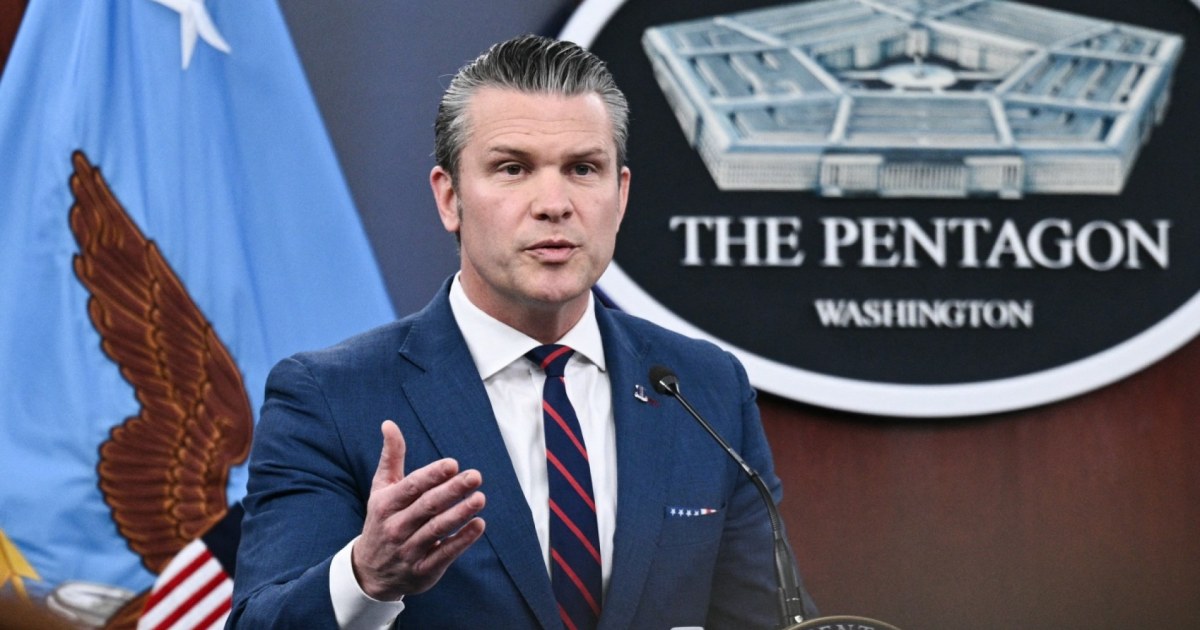
During a Pentagon briefing on March 2, 2026, Defense Secretary Pete Hegseth affirmed that Operation Epic Fury, the ongoing military engagement in Iran, is not conceived as an "endless war." According to officials present, Secretary Hegseth characterized the operation as a "clear, devastating, decisive mission," signaling a defined scope and objective for the U.S. military's involvement. This declaration comes amidst a period of heightened tensions and significant military activity in the region, which has seen a tragic rise in U.S. service member fatalities. Reports indicate that the Joint Chiefs chairman has cautioned the public to anticipate "additional losses" of American personnel as the operation progresses within Iran. The Secretary's remarks are particularly salient as the conflict continues to unfold, drawing international attention to the strategic intentions and potential duration of the United States' military presence in the volatile Middle East, with implications for regional stability and global security.
The current military actions, collectively known as Operation Epic Fury, have been unfolding against a complex backdrop of escalating hostilities between the United States, its allies, and Iran. General Caine has reportedly provided a detailed timeline of the operation, underscoring the strategic planning and execution involved. The conflict has already claimed the lives of several American service members, with reports confirming the death of a fourth U.S. service member recently, following an earlier incident where three U.S. personnel were killed during the military operation in Iran. This surge in casualties has intensified public scrutiny and debate regarding the mission's objectives and potential long-term consequences. Furthermore, the broader regional landscape has been significantly altered by the recent passing of Ayatollah Khamenei, raising critical questions about Iran's future leadership and potentially contributing to internal instability that could further complicate the ongoing military engagement. President Trump had previously offered details regarding the timing and goals of the attacks, and had stated that strikes on Iran were "ahead of schedule," while also acknowledging that more American casualties were "likely" during the operation.
The operational details and wider ramifications of the conflict have been extensive and severe. The U.S. military has released video footage showcasing its strikes on various Iranian targets, underscoring the intensity of the campaign. Tragically, reports confirm that dozens of individuals were killed following a strike on an Iranian school, highlighting the devastating human cost of the conflict, particularly for civilians. In a separate incident, officials stated that three F-15 jets were shot down over Kuwait due to friendly fire, a stark reminder of the inherent risks and complexities of military operations. Economically, the attacks on Iran have led to a significant surge in oil prices, prompting concerns about the potential impact on the U.S. economy and global markets. The military operation has also triggered widespread travel chaos across the globe, disrupting international logistics and personal travel plans. Amidst these developments, President Trump issued a stern warning to Iran, cautioning against any further retaliation following the combined U.S. and Israeli strikes, while the Iranian American community watches the unfolding conflict with profound anxiety.
Secretary Hegseth's assertion that Operation Epic Fury is not an "endless war" carries significant weight, offering a potential strategic signal regarding the administration's commitment to a defined, rather than open-ended, military engagement. This stance could be interpreted as an effort to manage public expectations and differentiate the current conflict from previous protracted military involvements in the Middle East. However, the ongoing exchange of strikes between the U.S., Israel, and Iran, coupled with the Joint Chiefs chairman's warning of further American casualties, suggests a highly volatile situation that could easily escalate beyond initial parameters. Experts indicate that the attack on Iran poses a substantial threat of exploding into a wider Middle East conflict, drawing in more regional and international actors. The political fallout within Iran is also notable, with reports of a crowd toppling an Ayatollah monument in the southern part of the country, signaling potential internal unrest or shifts in public sentiment following the recent leadership changes and ongoing external pressures.
As Operation Epic Fury continues, Secretary Hegseth's declaration of a "clear, devastating, decisive mission" sets a specific tone for the U.S. involvement, aiming to reassure that the engagement has defined objectives and limits. However, the grim reality of rising U.S. service member casualties and the tragic loss of civilian lives in Iran underscore the profound human cost of the conflict. The economic repercussions, including soaring oil prices and global travel disruptions, further highlight the far-reaching impact of the military actions. Moving forward, observers will closely monitor the operational timeline provided by General Caine, any further details on objectives from President Trump, and critically, whether the U.S. and its allies can prevent the conflict from broadening into a more extensive regional confrontation. The evolving leadership situation in Iran following Ayatollah Khamenei's death will also be a key factor in determining the future trajectory of this highly volatile situation.