The United States House of Representatives is poised for a critical vote this Thursday afternoon on a war powers resolution designed to curtail the President's authority in engaging military forces against Iran. This legislative initiative, according to reports, aims to mandate that any sustained deployment of U.S. armed forces in hostilities against Iran, its government, or military components must be explicitly preceded by either a formal declaration of war or a specific authorization for military force from Congress. The resolution emerges in the wake of recent American military operations in the region, which, sources indicate, resulted in the fatalities of several Iranian leaders. Despite its non-binding nature, meaning it does not necessitate the President's signature or face a potential veto, the measure's passage remains uncertain within the closely divided House, with its fate potentially influenced by lawmaker attendance. This impending vote underscores a broader congressional debate regarding the legal foundation for President Donald Trump's decisions concerning military engagements in the Middle East and the constitutional division of war-making powers.
The impetus for this resolution unfolds against a backdrop of heightened tensions between the United States and Iran, marked by recent U.S. military actions. These operations, as widely reported, included targeted strikes that led to the deaths of several prominent Iranian figures. At the heart of this legislative effort lies the constitutional framework governing war-making powers, which traditionally vests the authority to declare war with the legislative branch, while the President functions as the Commander-in-Chief. The War Powers Resolution of 1973 was initially enacted to reassert congressional oversight in committing U.S. forces to armed conflict, requiring presidential consultation and reporting to Congress, and imposing limits on the duration of unauthorized military engagements. Lawmakers are now scrutinizing the legal justifications provided for President Trump's recent decisions to authorize strikes, prompting this specific resolution as a means for Congress to express its collective stance on the appropriate limits of executive military action without explicit legislative approval. The significance of this vote extends beyond the immediate situation, touching upon the enduring struggle for balance between executive power and legislative oversight in matters of national security and international conflict.
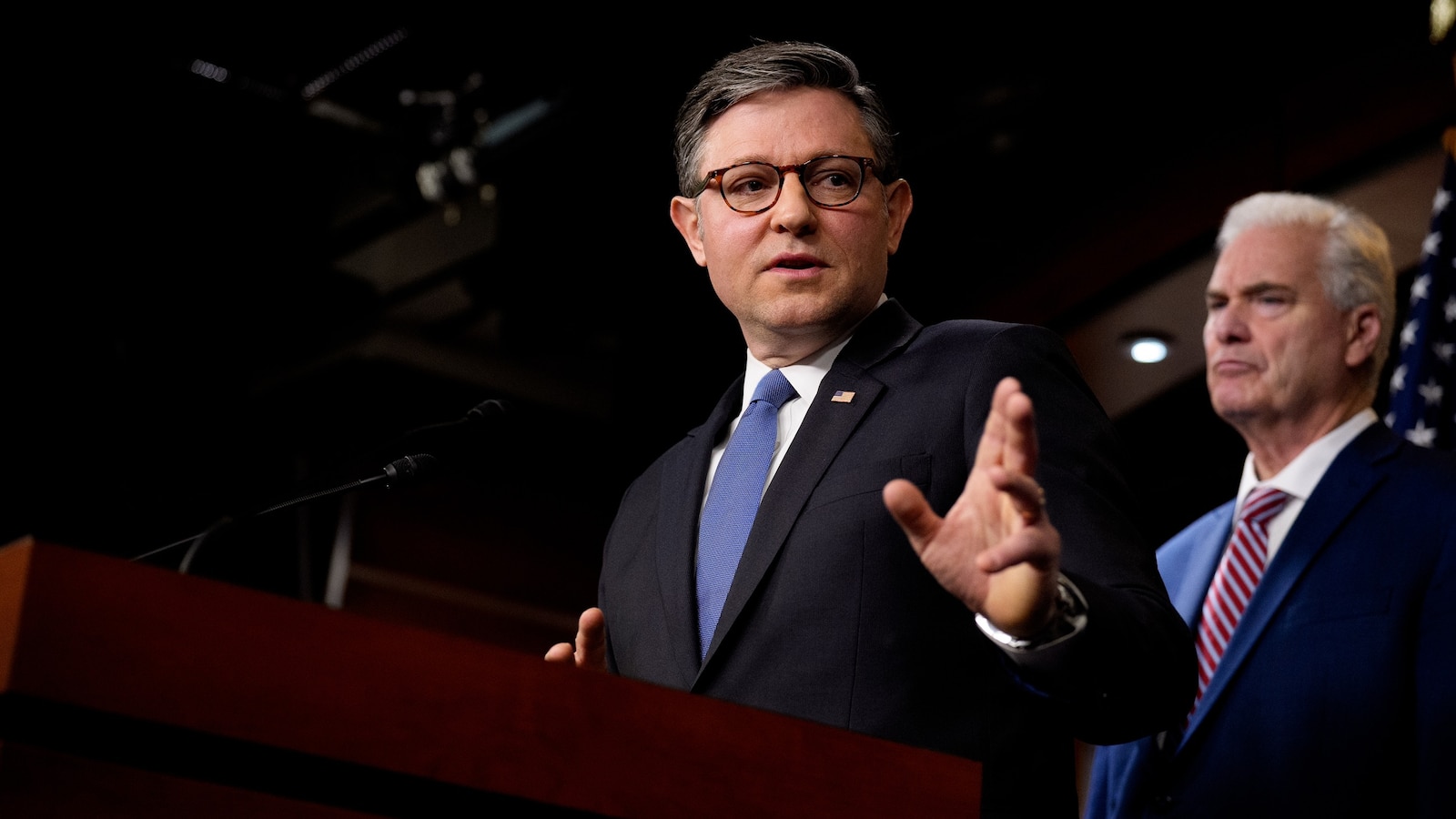
The ongoing debate surrounding the resolution has brought to light distinct perspectives from key political figures regarding the exact nature of U.S. involvement in Iran. Speaker Mike Johnson, speaking to reporters at the Capitol on Wednesday, maintained that the United States is not currently engaged in a state of war with Iran. Johnson characterized the ongoing activities as a
While the proposed resolution is explicitly non-binding, its potential passage would carry substantial symbolic weight, signaling a clear congressional desire to rein in executive military authority. Analysts suggest that even without the force of law, such a vote could influence future presidential decisions and international perceptions of U.S. unity on foreign policy. The differing public statements from Speaker Johnson and President Trump underscore a fundamental tension within the executive branch and among the ruling party regarding the definition and scope of military engagement. This semantic disagreement—whether the U.S. is
As the House prepares for its vote, the core issues at stake remain the constitutional balance of war powers, the legal basis for recent U.S. military actions in Iran, and the overarching strategy for de-escalation or engagement in the region. The resolution, despite its non-binding nature, offers a critical opportunity for Congress to articulate its stance on presidential authority in military matters. The outcome will not only reflect the current political climate within a closely divided House but also send a powerful message about the legislative branch's willingness to assert its constitutional prerogatives. Moving forward, observers will be keenly watching how the administration responds to the vote, regardless of its outcome, and whether this legislative effort leads to any tangible shifts in U.S. policy towards Iran or prompts further congressional action to define the parameters of military engagement. The debate underscores the enduring tension between executive efficiency and democratic oversight in foreign policy, with significant implications for future international relations.