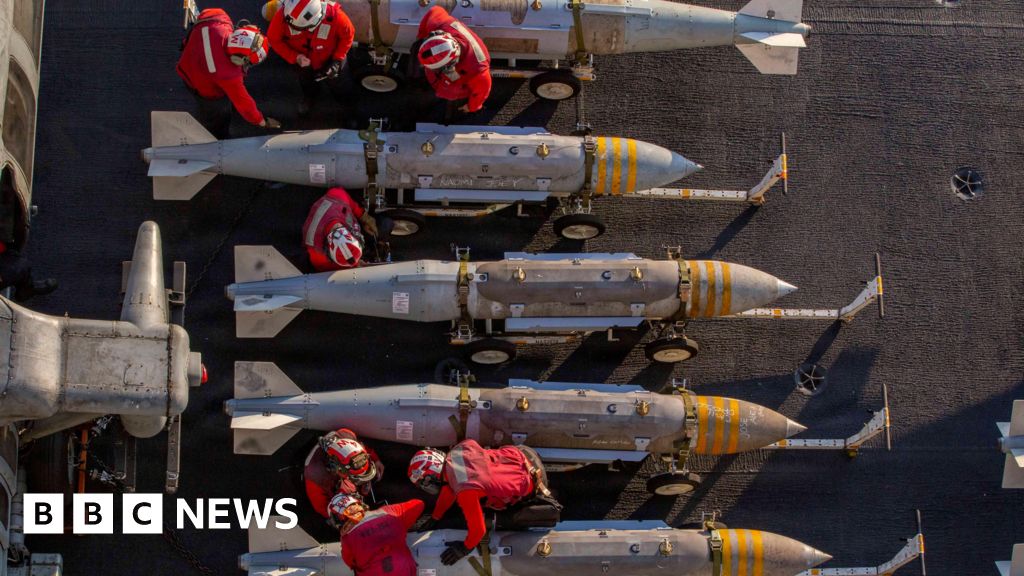
The ongoing conflict involving Iran, referred to as 'Operation Epic Fury,' is reportedly witnessing a rapid consumption of military ordnance, raising significant questions about the long-term sustainability of high-intensity operations for all parties involved. Despite claims from US President Donald Trump about his nation possessing a "virtually unlimited supply" of crucial armaments, and Iran's defense ministry asserting its capability to "resist the enemy" for a duration exceeding American projections, independent assessments suggest a challenging reality. According to the Tel Aviv-based Institute for National Security Studies (INSS), the United States and Israel have collectively executed over 2,000 strikes, each deploying numerous munitions. Concurrently, the INSS reports that Iran has launched 571 missiles and 1,391 drones, though a substantial number of these are believed to have been intercepted. This intense operational tempo, evident from the conflict's outset, indicates that both sides are expending weaponry at a rate that likely surpasses their current production capacities, a situation that becomes increasingly difficult to maintain as the hostilities persist.
While the sheer volume of weapons and supplies does not singularly determine the outcome of a military engagement – as illustrated by the prolonged resistance of Ukraine against a numerically and technologically superior Russia – it undeniably constitutes a critical factor in any sustained conflict. The current pace of 'Operation Epic Fury' underscores this significance, with military analysts noting that the initial high-intensity phase places immense strain on logistical chains and existing arsenals. Historically, precise figures regarding a nation's military inventory are closely guarded secrets, deliberately withheld from public disclosure to maintain strategic ambiguity and deny adversaries valuable intelligence. This inherent secrecy makes independent verification challenging, yet the observed operational patterns and official statements offer crucial insights into the evolving dynamics of the conflict and the potential limitations faced by combatants as the fighting continues.
Specific indicators suggest a notable reduction in Iran's offensive capabilities as the conflict progresses. Western officials have observed a marked decrease in the number of missiles launched by Iran, reportedly falling from hundreds on the initial day of hostilities to mere dozens currently. Before the commencement of 'Operation Epic Fury,' estimates placed Iran's inventory of short-range ballistic missiles at over 2,000 units. Further substantiating these observations, General Dan Caine, a top American commander, stated on Wednesday that Iran's ballistic missile launches had plummeted by 86% since the fighting began on Saturday. Additionally, US Central Command (Centcom) reported a 23% reduction in missile launches within just the last 24-hour period. Iran was also believed to have mass-produced tens of thousands of its Shahed one-way attack drones prior to the conflict, a technology it has exported to Russia for use in Ukraine, and whose design the United States has reportedly replicated. However, General Caine also indicated a 73% drop in Iran's drone launches since the conflict's first day.
The reported decline in Iran's missile and drone launches carries significant implications for the trajectory of 'Operation Epic Fury.' This observed reduction, if sustained, could suggest a strain on Iran's ability to project power or conduct retaliatory strikes at the intensity seen in the conflict's early stages. For the United States and Israel, such a trend might influence strategic planning, potentially shifting focus from immediate defensive measures to longer-term containment or attrition strategies. Conversely, the high expenditure rates for all parties raise questions about their respective industrial capacities to replenish arsenals. While the US claims vast resources, and Iran asserts resilience, the reality of modern warfare often reveals the limitations of even well-stocked militaries when faced with prolonged, high-tempo engagements. Expert perspectives suggest that the ability to sustain combat operations is not merely about initial stockpiles but also about robust manufacturing capabilities and secure supply lines, factors that will increasingly shape the conflict's future.
In summary, the ongoing 'Operation Epic Fury' highlights the critical role of weapons stockpiles and logistical sustainability in contemporary warfare. Despite initial declarations of abundant resources or enduring resistance, the intense operational tempo has evidently led to a rapid depletion of munitions for all involved parties, particularly Iran, as indicated by significant drops in missile and drone launches. The ability of militaries to not only possess but also replenish their arsenals will be a decisive factor in determining the conflict's duration and ultimate outcome. As the fighting continues, observers will closely monitor the rates of weapon expenditure versus production, as these metrics offer a tangible measure of each side's capacity to maintain the fight and adapt to the evolving demands of a prolonged military engagement.