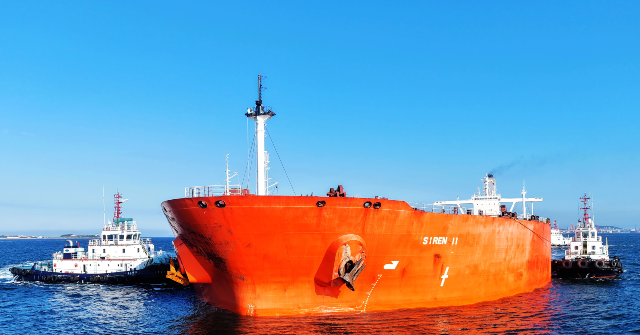
The Islamic Revolutionary Guard Corps (IRGC) of Iran has reportedly scaled back its sweeping threats to block the crucial Strait of Hormuz for international oil shipments, now indicating that any potential attacks would specifically target American, Israeli, and European vessels. This significant modification in stance appears to stem from considerable diplomatic and economic pressure exerted by China, a major global energy consumer. In a related development, Beijing has reportedly directed its largest oil refining companies to cease all exports of diesel and gasoline until further notice, signaling the gravity of the situation. The Strait of Hormuz, a narrow maritime corridor connecting the Persian Gulf and the Gulf of Oman, is an indispensable artery for global energy markets, facilitating the transit of approximately one-fifth of the world's crude oil and liquefied natural gas (LNG). Despite the IRGC's earlier declaration of the strait being 'closed' following the commencement of 'Operation Epic Fury' and threats to 'burn' any defiant tankers, no international maritime authority has yet issued a formal closure notice. Nevertheless, reports indicate that dozens of commercial ships are either idled at either end of the passage or undertaking lengthy detours around Africa to circumvent the volatile region, highlighting the practical disruption to shipping.
The strategic importance of the Strait of Hormuz cannot be overstated, serving as the sole sea passage from the Persian Gulf to the open ocean and a critical chokepoint for global energy supplies. Iran has historically leveraged the threat of closing this waterway during periods of heightened geopolitical tension or conflict, underscoring its perceived strategic advantage. The current escalation began with the IRGC's initial announcement of the strait's closure shortly after the launch of 'Operation Epic Fury,' a move that immediately sent ripples through international shipping and energy markets. While formal international advisories have not confirmed a closure, the practical impact on maritime traffic is undeniable, with numerous vessels electing to avoid the area. This disruption is particularly concerning for Asian economies, which are heavily reliant on oil transiting through the strait. The South Korean government, for instance, has publicly expressed alarm over seven of its tankers, each capable of carrying up to two million barrels of crude oil, which are currently described as 'effectively stranded' within the Strait of Hormuz, illustrating the immediate economic consequences of the instability.
In response to the escalating tensions and the direct threat to global energy flows, the United States has moved to reassure international shipping. President Donald Trump announced on Tuesday that the U.S. Development Finance Corporation (DFC) would extend risk insurance coverage for tankers navigating the Persian Gulf. Furthermore, President Trump affirmed the readiness of the U.S. Navy to provide escorts for these commercial vessels through the Strait of Hormuz if deemed necessary. In a statement posted on Truth Social, President Trump unequivocally declared, 'No matter what, the United States will ensure the FREE FLOW of ENERGY to the WORLD,' emphasizing Washington's commitment to safeguarding international commerce. The IRGC's modified threat, which now specifically targets American, Israeli, and European ships rather than a blanket closure, is seen by observers as a direct consequence of the intense pressure from Beijing, which publicly urged Iran to maintain the strait's openness. This shift, coupled with China's domestic directive for its largest refiners to halt fuel exports, underscores the significant economic leverage held by major energy consumers in de-escalating regional crises.
Industry analysts are closely monitoring the situation, noting that any significant disruption to oil flows through the Strait of Hormuz would disproportionately impact Asian economies more severely than those in the United States or Europe. China, in particular, stands to incur the most substantial economic damage, with estimates suggesting that over 45 percent of its crude oil imports traverse this vital route. This heavy reliance explains Beijing's reported intense pressure on Iran to keep the strait open, culminating in China's public appeal for continued access. The United States' offer of risk insurance and naval escorts introduces a critical security dimension, aiming to mitigate the immediate risks for commercial shipping and underscore a commitment to maintaining global energy stability. This complex interplay of economic leverage, military deterrence, and diplomatic pressure highlights the intricate geopolitical dynamics at play in the Persian Gulf, with the potential for either further escalation or a gradual de-escalation depending on the actions of the key regional and international actors involved. The situation underscores the fragility of global supply chains when confronted with regional instability.
The evolving situation in the Strait of Hormuz remains a focal point of international concern, with Iran's Islamic Revolutionary Guard Corps having adjusted its threats under apparent Chinese influence, while the United States has pledged robust support for maritime security. Although no official international closure has been declared, the practical impact on global shipping is evident, with vessels either delaying transit or seeking alternative, longer routes. The fate of stranded tankers, particularly those from South Korea, serves as a tangible reminder of the economic stakes involved. As the international community navigates these complex geopolitical waters, the effectiveness of diplomatic pressure, the resolve of naval protection, and the resilience of global energy markets will be closely watched. The coming days will likely reveal whether the modified threats and international interventions can prevent further disruption in this indispensable global energy corridor.