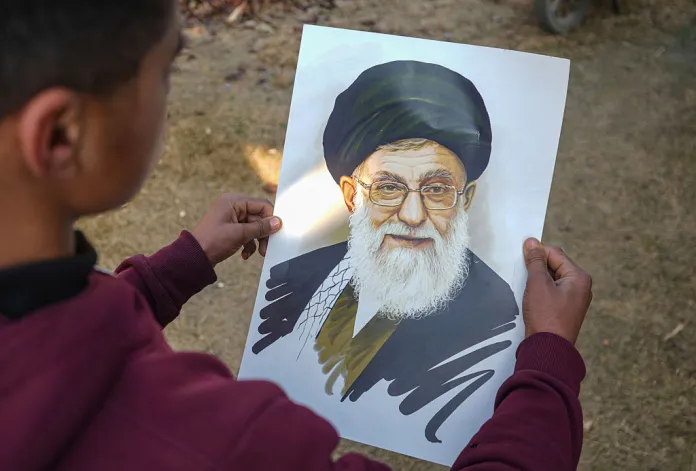
Iranian authorities have strongly refuted allegations circulating that Ayatollah Ali Khamenei, the nation's revered Supreme Leader, lost his life during recent military actions reportedly carried out by the United States and Israel. These operations, according to various reports, specifically aimed at neutralizing Khamenei and other prominent figures within the Iranian governmental structure. Speaking to NBC News, Iran's foreign minister, Abbas Araghchi, explicitly stated that, based on his current understanding, both Supreme Leader Khamenei and President Masoud Pezeshkian, who was also reportedly among the targets of these strikes, are confirmed to be alive and well. This official pushback comes amidst heightened regional tensions and underscores the critical importance of leadership stability in Tehran, particularly when faced with such grave and unverified claims of casualties at the highest echelons of power. The swift and coordinated denials from senior Iranian officials aim to quell widespread speculation and maintain internal and external perceptions of control and continuity within the Islamic Republic's governance, especially given the profound implications such an event would have for regional stability and global geopolitics. The nature of the alleged strikes, targeting the very top of Iran's political and religious hierarchy, has naturally generated significant international concern and scrutiny.
The claims regarding the demise of Iran's Supreme Leader emerge against a backdrop of deeply entrenched animosity and recurrent confrontations involving Iran, the United States, and Israel. Ayatollah Ali Khamenei holds the ultimate authority in Iran, serving as the spiritual and political head of the nation since 1989, making any reports concerning his health or status profoundly significant. His leadership encompasses critical decisions on state policy, military strategy, and religious doctrine, positioning him as an irreplaceable figure in the country's governance. The United States and Israel have long expressed concerns over Iran's nuclear program, its ballistic missile development, and its support for various regional proxy groups, leading to a complex and often volatile security landscape in the Middle East. Military operations attributed to either the U.S. or Israel targeting high-ranking Iranian officials are not unprecedented, but striking the Supreme Leader himself would mark an unprecedented escalation, potentially triggering widespread retaliatory actions and fundamentally altering the regional power balance. The historical context of covert operations, cyber warfare, and targeted assassinations against Iranian nuclear scientists and military commanders further illustrates the persistent shadow war that defines these relationships, making any claims of direct attacks on the supreme leadership particularly incendiary and difficult to immediately verify.
Reinforcing the initial denial from Foreign Minister Abbas Araghchi, other high-ranking Iranian officials have also come forward to dismiss the reports of Supreme Leader Khamenei's death. Mohammad Jafar Ghaem-Panah, Iran’s Executive Vice President, further corroborated the foreign minister's account, indicating a unified front from Tehran's leadership against the circulating rumors. According to reports, Araghchi’s specific comments to NBC News were pivotal in directly addressing the international media regarding the status of the Supreme Leader and President Pezeshkian. The coordinated statements from such senior government figures underscore the gravity with which Tehran views these allegations and its determination to control the narrative surrounding its top leadership. The explicit mention of President Masoud Pezeshkian as another alleged target of the US and Israeli strikes, and his subsequent confirmation as alive by Iranian officials, highlights the perceived breadth of the alleged operations. These official confirmations are crucial for both domestic stability, preventing panic or speculation among the Iranian populace, and for international diplomacy, signaling continuity and stability to allies and adversaries alike amidst a period of intense regional volatility. The consistent message from various branches of the Iranian government aims to project an image of resilience and unwavering leadership in the face of external pressures and hostile actions.
The emergence and subsequent denial of such high-stakes claims often serve multiple purposes in the complex arena of international relations and information warfare. From an analytical perspective, reports of a leader's demise, even if false, can be strategically leaked or amplified to test reactions, sow discord, or exert psychological pressure on an adversary. Conversely, a swift and firm denial, as issued by Iranian officials, is critical for maintaining internal morale, projecting strength, and preventing any perceived power vacuum that could be exploited. Experts suggest that in conflict zones, the line between factual reporting and deliberate misinformation can become blurred, making independent verification exceptionally challenging. The potential implications of an actual strike on Iran’s Supreme Leader would be catastrophic, likely leading to an immediate and severe escalation of hostilities across the Middle East, potentially drawing in other regional and global powers. Therefore, the current situation, even with denials, contributes to an already volatile environment, keeping all parties on high alert. This episode underscores the fragility of peace in the region and the constant struggle for narrative control between opposing nations, where even unconfirmed reports can have tangible impacts on diplomatic and military calculations.
In conclusion, Iranian officials, led by Foreign Minister Abbas Araghchi and Executive Vice President Mohammad Jafar Ghaem-Panah, have unequivocally rejected claims that Supreme Leader Ayatollah Ali Khamenei and President Masoud Pezeshkian were killed in recent military operations attributed to the United States and Israel. These denials, communicated directly to international media outlets like NBC News, aim to stabilize perceptions both domestically and internationally regarding the continuity of Iran's leadership. The incident highlights the persistent and dangerous geopolitical tensions in the Middle East, where even unsubstantiated rumors about high-level casualties can trigger significant concern and require immediate official responses. As the situation evolves, the international community will remain vigilant for any further statements from Tehran, independent confirmations, or shifts in regional military postures. The episode serves as a stark reminder of the ongoing information battles waged alongside conventional and unconventional conflicts, emphasizing the critical need for verified information in a highly sensitive geopolitical landscape.