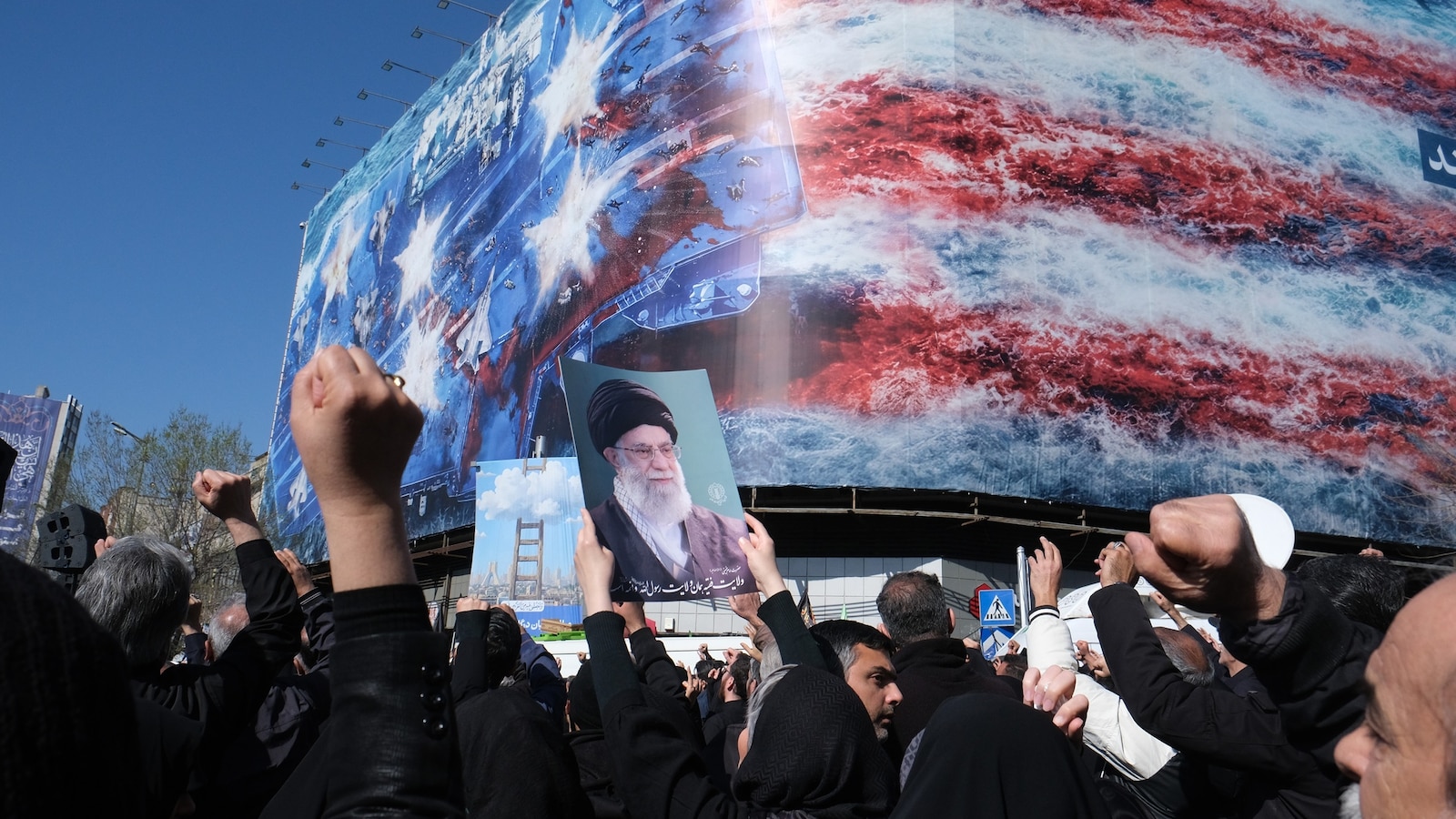
Iran has established an interim leadership council following the reported demise of Supreme Leader Ayatollah Ali Khamenei, a development confirmed by Iranian state television on Sunday. Notably, President Masoud Pezeshkian, who sources indicated was a target in a recent joint U.S.-Israel operation, publicly reappeared on state television, affirming the new council's operational status. The council's formation comes amidst heightened regional tensions, including claims by the Israel Defense Forces (IDF) of neutralizing 40 Iranian commanders. The swift establishment of this temporary body suggests an effort by Tehran to maintain governmental continuity and project stability during a critical period of transition for the Islamic Republic. Its members include President Pezeshkian, the head of the judiciary, and Ayatollah Alireza Arafi, representing the Guardian Council, as officials work to navigate the immediate aftermath of the Supreme Leader's passing and address ongoing security challenges.
The reported death of Ayatollah Ali Khamenei marks a profound moment for Iran, as he served as the nation's Supreme Leader for decades, wielding ultimate authority over state policy, military, and religious affairs. His passing initiates a complex constitutional process for succession, typically overseen by the Assembly of Experts, though the immediate formation of an interim council highlights the urgency of leadership continuity. This transition unfolds against a backdrop of severe regional instability, underscored by a recent joint U.S.-Israel military action. Reports from sources suggested this operation specifically targeted President Masoud Pezeshkian on Saturday, adding a layer of geopolitical intrigue to the domestic leadership changes. Concurrently, the Israel Defense Forces have publicly asserted that their operations resulted in the elimination of approximately 40 Iranian military commanders, a claim that, if accurate, would represent a significant blow to Iran's military leadership and further escalate tensions in the Middle East. The confluence of these internal and external pressures creates a volatile environment for Iran's new provisional leadership.
The newly constituted interim leadership council, tasked with guiding Iran through this transitional phase, comprises three key figures: President Masoud Pezeshkian, the nation's head of the judiciary, and Ayatollah Alireza Arafi, who serves as a representative from the influential Guardian Council. According to the Islamic Republic's constitution, the Guardian Council itself is a powerful oversight body composed of twelve members: six "faghihs," or Islamic jurists, and six Muslim legal experts specializing in various domains of law. President Pezeshkian, in a recorded video message broadcast on Iranian state television, confirmed the council's commencement of duties following the Supreme Leader's death. In the same address, he conveyed a resolute message regarding Iran's military posture, stating that the armed forces of the Islamic Republic are "powerfully crushing the enemy’s bases." Echoing a defiant tone, Ali Larijani, the Secretary of Iran's Supreme National Security Council, appeared in a separate television interview, expressing profound sorrow over Khamenei's passing, describing it as a wound to the hearts of the nation. Larijani issued a stark warning to the United States, asserting that "Americans should know that by stabbing the hearts of the Iranian nation, their hearts will be stabbed," and that their actions against the Iranian leadership would not achieve their objectives due to public anger.
The rapid formation of an interim leadership council in Iran, coupled with President Pezeshkian's swift reappearance, signals a concerted effort by Tehran to project an image of stability and continuity in the wake of Supreme Leader Khamenei's reported death. Pezeshkian's public address, particularly his assertion about Iran's armed forces "powerfully crushing the enemy’s bases," serves multiple purposes: it aims to reassure the domestic population, deter external adversaries, and potentially deflect from the narrative of him being targeted in a recent attack. His survival and immediate return to public duty, as reported by sources, could be interpreted as a strategic move to undermine claims of a successful strike against the Iranian leadership. The strong rhetoric from Ali Larijani, warning the United States of retaliation, underscores the deep-seated animosity and the potential for further escalation in an already volatile region. This period of transition, while constitutionally outlined, inherently carries risks of internal power struggles or external opportunism. International observers will be closely watching how this interim council manages both the immediate succession process and the ongoing geopolitical tensions, particularly concerning Iran's nuclear program and its regional proxies. The constitutional role of the Guardian Council in the succession process further emphasizes the religious establishment's enduring influence.
In summary, Iran is navigating a critical juncture following the reported death of its Supreme Leader, Ayatollah Ali Khamenei, with an interim leadership council now at the helm. The swift establishment of this council, featuring President Masoud Pezeshkian, the head of the judiciary, and a Guardian Council representative, aims to ensure governmental stability amidst significant regional and internal pressures. Pezeshkian's public re-emergence, despite reports of him being targeted in a recent joint U.S.-Israel operation, sends a clear message of resilience. However, the defiant statements from high-ranking officials like Ali Larijani highlight the potential for continued confrontation with Western powers. The coming weeks will be crucial as Iran undertakes the formal process of selecting a permanent Supreme Leader, a decision that will undoubtedly shape the nation's trajectory for years to come. Observers will be keenly watching for any signs of internal dissent, shifts in foreign policy, or further escalations in the Middle East, as the Islamic Republic grapples with both a leadership transition and persistent external threats.