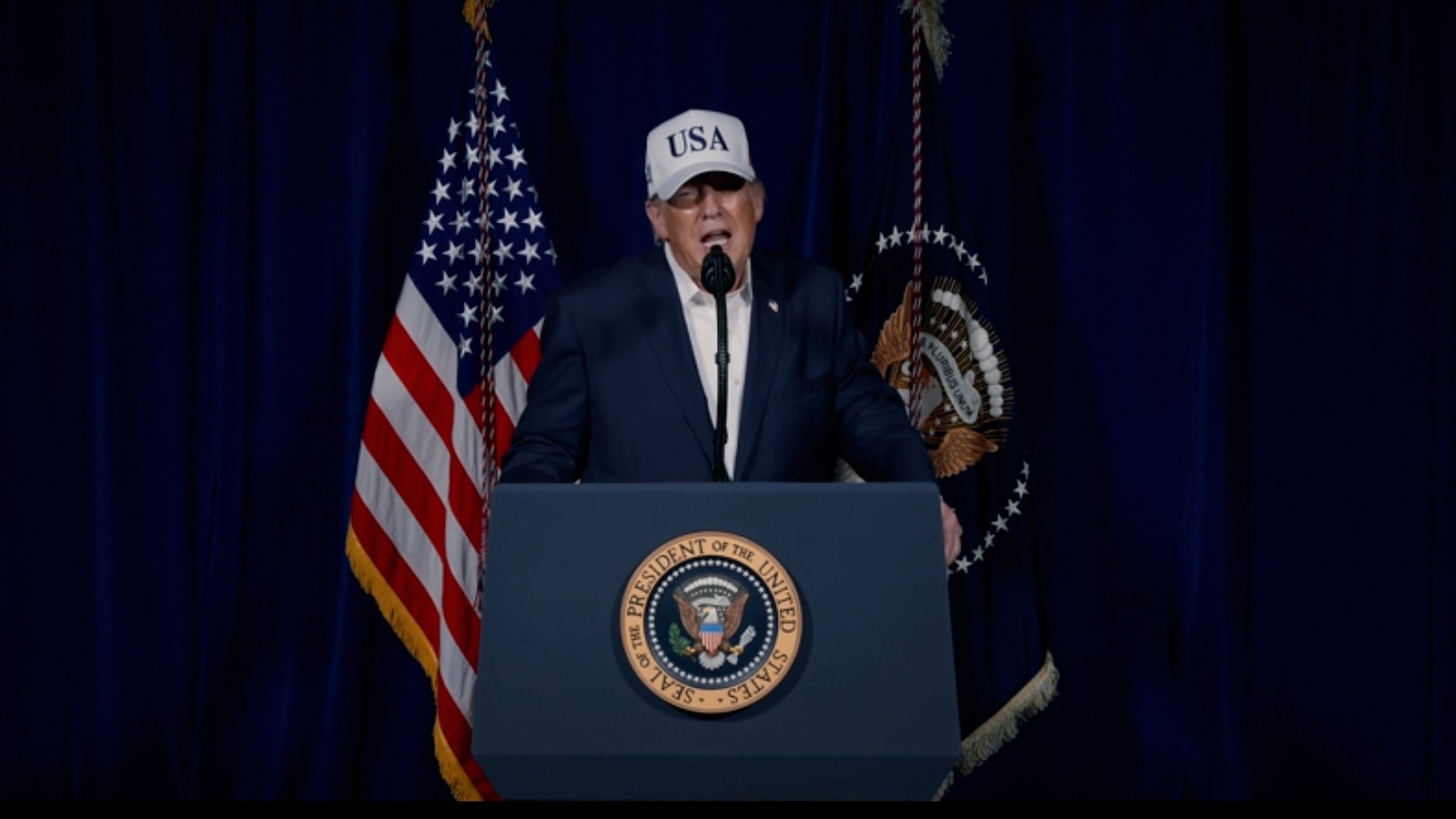
President Donald Trump indicated in a recent interview with ABC News that the ongoing military operation targeting Iran could continue for several weeks. The assertion follows his announcement of the death of Iran's Supreme Leader, Ayatollah Ali Khamenei. Speaking late Sunday night after returning to the White House from Mar-a-Lago, where he had been overseeing military actions, President Trump explicitly connected the strike to a perceived threat against his own life. "I got him before he got me," the President stated, referencing an alleged Iranian plot to assassinate him during his 2024 presidential campaign. He further elaborated, "They tried twice. Well, I got him first," underscoring his belief that the recent action was a preemptive measure. This significant development marks a dramatic escalation in the long-standing tensions between the United States and Iran, with the President framing the military intervention as a decisive response to past hostile intentions directed at him personally, as reported by ABC News.
The context surrounding this military action is deeply rooted in a history of escalating animosity between Washington and Tehran, particularly concerning allegations of Iranian state-sponsored plots. According to U.S. intelligence assessments from the summer of 2024, the Iranian government was reportedly developing a scheme to assassinate then-presidential candidate Donald Trump. While officials clarified that this particular plot was distinct from other reported assassination attempts against Trump in locations such as Butler, Pennsylvania, and West Palm Beach, Florida, the threat was deemed credible enough to warrant significant security enhancements. Following a briefing on the intelligence, the Biden administration reportedly augmented the Secret Service detail assigned to candidate Trump, highlighting the seriousness with which the threat was perceived across administrations. The killing of Ayatollah Ali Khamenei, a figure who has led Iran for decades and held ultimate authority over its political and religious affairs, represents a profound shift in the regional power dynamic and could have far-reaching implications for stability in the Middle East, as observers suggest.
In his conversation with ABC News, President Trump conveyed a sense of overwhelming success regarding the military operation. He characterized the intervention as having been an "unmitigated success," a sentiment he expressed with considerable confidence. Furthermore, the President claimed that the strike had effectively "knocked out most of the candidates" who might have been in line to succeed Khamenei, suggesting a strategic impact on Iran's future leadership. This assertion, if accurate, could significantly destabilize Iran's political landscape and potentially create a power vacuum or a period of intense internal struggle for succession. Trump also remarked on his unique ability to execute such an operation, telling the interviewer, "Nobody else could have done this but me, and you know that," emphasizing his personal conviction in his leadership and decision-making during this critical period. He also indicated that, prior to the recent events, Iranian representatives had made "significant concessions in the last round of talks," though the nature and details of these concessions were not specified in the report.
President Trump's demeanor during the interview, described as sounding "invincible," offers a glimpse into his perspective on the current geopolitical situation and his role within it. This self-assuredness, coupled with his claims of personal success and unique capability, could be interpreted by analysts as a projection of strength intended both for domestic and international audiences. The assertion that the operation has eliminated potential successors to Khamenei, if substantiated, could lead to a period of unpredictable internal dynamics within Iran, potentially creating opportunities for new factions to emerge or for existing power structures to be severely tested. The broader implications of such a high-profile targeted killing extend beyond immediate political succession, potentially impacting regional alliances, global oil markets, and the trajectory of nuclear negotiations. International relations experts will likely scrutinize the long-term consequences of this action, considering its potential to either de-escalate or further inflame tensions in an already volatile region, especially given the President's expectation that the operation could extend for weeks.
The killing of Ayatollah Ali Khamenei and President Trump's subsequent statements to ABC News underscore a dramatic turning point in U.S.-Iran relations, driven by the President's personal conviction regarding past threats. With the operation potentially lasting weeks, the world watches for Iran's response and the unfolding of its internal political landscape. Trump's belief in the operation's success and his claims about eliminating potential successors suggest a strategic intent to reshape Iran's future leadership. The coming weeks will be crucial in determining the immediate and long-term ramifications of this decisive action, both for regional stability and global diplomacy, as the international community assesses the fallout from this unprecedented event and its impact on the delicate balance of power in the Middle East.