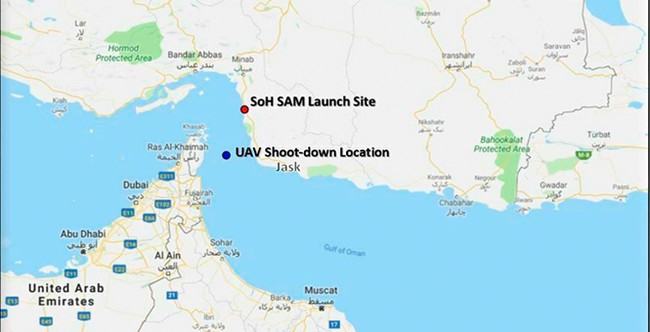
In a significant and highly provocative announcement made on March 2, 2026, Iranian authorities declared the closure of the strategically vital Strait of Hormuz, asserting their intent to target and destroy any vessel attempting passage. This declaration, disseminated via official social media channels attributed to elements of the Iranian government, comes amidst a rapidly escalating series of maritime incidents in the region. Reports indicate that the Islamic Revolutionary Guard Corps (IRGC) Commander specifically affirmed the strait's closure following a reported drone strike that set a tanker ablaze. Among the confirmed incidents, the Honduran-flagged vessel Athe Nova was reportedly struck by two unmanned aerial vehicles while attempting transit, resulting in a fire. Furthermore, an earlier incident involved a drone strike on an Iranian-affiliated 'shadow tanker' that had been anchored near the Strait for over a week, raising questions about the nature and targets of these attacks. These developments have prompted maritime security organizations to elevate the overall risk level in the region to 'CRITICAL,' underscoring the severe threat to international shipping.
The Strait of Hormuz represents one of the world's most critical maritime chokepoints, through which a substantial portion of global oil and liquefied natural gas transits daily. Iran's long-standing threats to close the strait have historically been viewed as a last-resort measure in response to severe international pressure or conflict, making this latest declaration particularly alarming. The current escalation unfolds within a broader operational context designated as 'Operation Epic Fury,' suggesting a concerted and intensified campaign of regional destabilization. The deployment of unmanned aerial vehicles (UAVs) has become a hallmark of recent regional hostilities, with these systems increasingly utilized in attacks against both military and commercial targets. The reported strike on an Iranian-linked vessel, described by some observers as a 'shadow tanker,' adds a perplexing layer to the unfolding crisis, potentially indicating internal operational complexities or a willingness to demonstrate force through unconventional means, even at the cost of their own assets. This pattern of behavior underscores a volatile environment where maritime safety is severely compromised.
Further compounding the regional instability, multiple other maritime incidents have been confirmed by international monitoring bodies. According to a joint report from the UK Maritime Trade Operations (UKMTO) and the Combined Maritime Forces (CMF Bahrain) Joint Maritime Information Center, the past 24 hours have seen several confirmed vessel attacks. The vessel SKYLIGHT, with IMO number 9330020, was reportedly attacked while at anchor just north of Oman, sustaining significant fire damage, necessitating the evacuation of its crew, with four individuals reported wounded. Separately, the MKD VYOM (IMO 9284386) was struck by a projectile above the waterline in the Gulf of Oman, leading to an explosion and an engine room fire that tragically resulted in the death of one crewmember, though the fire is now reportedly under control and salvage operations are underway. The HERCULES STAR (IMO 9295531) also experienced a strike off the coast of the UAE in the Persian Gulf, which caused a fire, though no injuries were reported, and the vessel was able to continue its voyage. Additionally, the OCEAN ELECTRA (IMO 9591466) was involved in a near-miss incident, further highlighting the pervasive danger. Beyond these vessel-specific events, reports also indicate a strike on a shipyard located at a port in Bahrain, signaling a broader targeting strategy.
The credibility and practical implications of Iran's declaration to close the Strait of Hormuz are now subject to intense international scrutiny. While the pronouncement from the IRGC Commander signals a clear intent, the actual capability to enforce a complete and sustained closure against international naval forces remains a significant question mark for many analysts. The recent spate of attacks, particularly those involving unmanned aerial vehicles, demonstrates Iran's willingness to disrupt maritime traffic and inflict damage, but a full blockade would require a far greater and more sustained military effort. Experts suggest that such a move would inevitably provoke a robust international response, given the global economic reliance on the Strait. The perplexing incident involving the strike on an Iranian 'shadow tanker' could be interpreted in various ways: as a reckless display of force, an operational error, or even a deliberate act to create a pretext for further aggression or to test response capabilities. The escalation of attacks on diverse targets—from commercial tankers to a shipyard—indicates a widening scope of engagement and a heightened state of regional conflict, with potentially severe repercussions for global trade and energy markets.
In summary, Iran's explicit declaration of closing the Strait of Hormuz marks a dangerous escalation in regional tensions, underscored by a series of confirmed and damaging maritime attacks. With the overall maritime risk level now critical, the international community faces an immediate challenge to ensure the safety of vital shipping lanes and prevent further destabilization. The coming days will likely see intensified diplomatic efforts and potentially increased naval presence from international powers seeking to de-escalate the situation and maintain freedom of navigation. The true extent of Iran's capability and willingness to enforce its closure claim, alongside the ongoing threat posed by drone and projectile attacks on commercial vessels, will remain key areas of concern. Observers will be closely monitoring any further incidents and the responses from regional and global actors as the situation in this critical chokepoint continues to evolve.