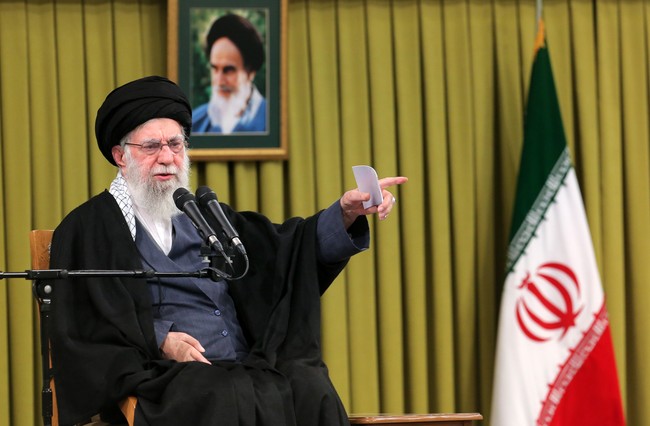
A significant joint military operation, reportedly involving forces from both the United States and Israel, commenced against Iran on Saturday, marking a dramatic escalation in regional hostilities. Initial reports indicate this coordinated air assault, personally confirmed by President Donald Trump, is projected to continue over several days. Sources familiar with the operation suggest its primary objective extends far beyond previous limited engagements, aiming for the complete dismantling of the current Iranian Islamic regime. The initial wave of strikes, reportedly executed by the Israeli Air Force (IAF), specifically targeted the highest echelons of Iran's leadership. Among those reportedly eliminated in these early attacks are Amir Hatami, Iran's Defense Minister, and General Mohammad Pakpour, the commander of the Islamic Revolutionary Guard Corps (IRGC), claims attributed to Dr. Eli David and multiple reports circulating since the offensive began. This decisive military action follows weeks of heightened rhetoric and the apparent failure of diplomatic efforts.
This dramatic military intervention comes after an extended period during which the Trump administration reportedly pursued diplomatic resolutions with Iran, only to encounter what officials described as an unyielding and arrogant stance from Iranian negotiators. Despite claims from Tehran's representatives about securing concessions, President Trump consistently expressed his growing dissatisfaction with the lack of substantive progress on crucial issues. The groundwork for this decisive action was reportedly laid with the strategic deployment of the USS Gerald Ford carrier group into the region, a move widely interpreted by observers as a clear signal of impending action to counter what was perceived as Iranian stalling tactics. Unlike past limited engagements, such as the '12 Day War' referenced in some analyses, this current operation appears to be designed with a far more conclusive outcome in mind, aiming to fundamentally alter the political landscape of Iran rather than merely contain specific threats or capabilities.
Further details emerging from the initial phase of the assault highlight the precision and strategic intent behind the operation. The Israeli Air Force (IAF) is reported to have spearheaded the initial wave of strikes, focusing on critical command and control infrastructure and, crucially, the residences and operational centers of Iran's top military and political figures. The reported eliminations of Defense Minister Amir Hatami and General Mohammad Pakpour, the influential commander of the Islamic Revolutionary Guard Corps, if confirmed, represent a severe blow to Iran's military command structure. These claims, widely circulated by Dr. Eli David and other independent reports, underscore the ambitious scope of the operation, which appears to be targeting the very core of the Iranian regime's ability to govern and project power. The deliberate targeting of such high-profile individuals suggests an intent to decapitate the regime's leadership and create a power vacuum, facilitating the broader objective of dismantling the current government.
The implications of an operation explicitly aimed at the 'complete dismantling' of the Iranian Islamic regime are profound, signaling a significant shift in geopolitical strategy for the Middle East. Analysts suggest this approach moves beyond traditional containment policies, which sought to limit Iran's nuclear program or regional influence, towards a direct confrontation designed to fundamentally reshape the country's political future. Such an ambitious objective carries substantial risks, including the potential for widespread regional destabilization, a prolonged conflict, and unpredictable responses from Iran's allies and proxies. The success of this strategy hinges not only on military effectiveness but also on the ability to manage the aftermath and establish a stable alternative. This decisive action, contrasting sharply with previous, more limited military engagements, indicates a calculated gamble by the United States and Israel to resolve the long-standing tensions with Iran through direct, forceful intervention.
In summary, a joint US-Israeli air assault has commenced against Iran, with President Trump confirming the operation and its ambitious goal of dismantling the current Iranian regime. Initial reports indicate high-level casualties, including Iran's Defense Minister and the IRGC commander, signaling a direct strike at the heart of the leadership. This military intervention follows a period of failed diplomacy and strategic deployments, marking a significant departure from previous, more contained approaches to Iranian tensions. As the operation is expected to continue for several days, the world will be closely watching for further developments, including the extent of the strikes, the Iranian response, and the broader implications for regional stability and international relations.