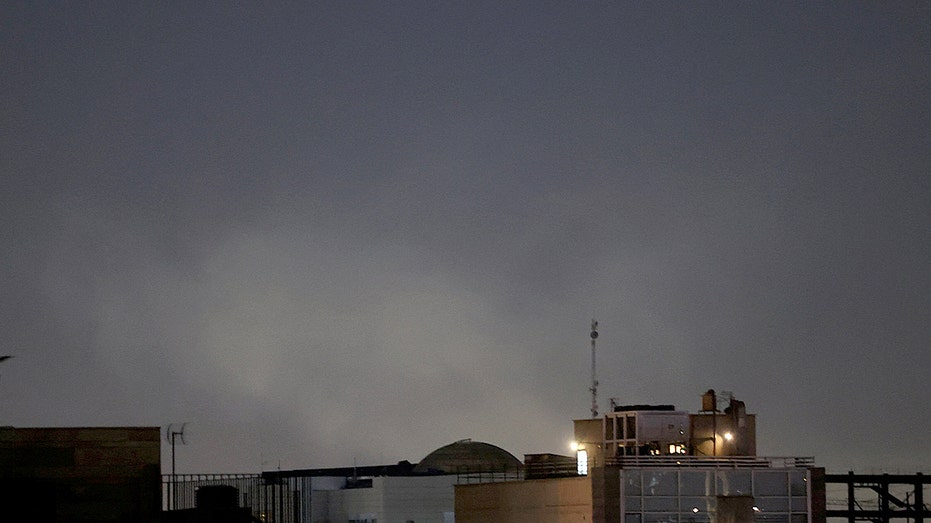
Iran experienced a widespread internet outage on Saturday, mere hours after reports of coordinated military actions by the United States and Israel across the country. A global internet monitoring organization confirmed that national connectivity significantly declined, effectively plunging the nation into digital darkness. These military operations reportedly targeted critical infrastructure and a specific compound situated in Tehran, which officials indicated resulted in the deaths of numerous high-ranking regime figures. According to Alp Toker, CEO of NetBlocks, a firm specializing in internet governance, the country's online access began to sharply decrease shortly after the reported attacks. Toker characterized the incident as aligning with Iran's established crisis response protocols, suggesting it was a deliberate measure consistent with past strategic actions taken by the regime during periods of conflict. This swift and comprehensive disruption to digital communications immediately raised concerns about the internal situation within Iran following the significant external military pressure.
The context surrounding Saturday's internet blackout is rooted in a series of reported military strikes, described as a joint operation conducted by Israeli and U.S. forces. These strikes were not merely symbolic but, according to official statements, aimed at specific, high-value targets within Iran. Key among these was a compound located in the capital city of Tehran, which sources indicated housed and was frequented by dozens of senior figures within the Iranian regime. The reported fatalities among these individuals underscore the gravity and strategic intent behind the military actions. Furthermore, the strikes also reportedly targeted broader infrastructure, suggesting an effort to degrade Iran's operational capabilities. This incident draws parallels with historical precedents, as NetBlocks CEO Alp Toker noted its consistency with tactics observed during the 2025 Twelve-Day War involving Israel, highlighting a recurring pattern in Iran's response to significant external military engagements. Such actions often aim to control information flow and consolidate internal power during times of heightened tension.
Detailed tracking by NetBlocks provided a precise timeline of the unfolding digital disruption. According to their reports, the primary strike on the Iranian regime compound occurred at approximately 06:10 UTC. Within an hour, by 07:10 UTC, initial signs of telecommunications interference began to emerge across the country. The situation rapidly escalated, with a significant portion of the internet blackout becoming effective by 08:00 UTC. By 08:30 UTC, connectivity levels had dramatically plummeted, effectively flatlining at an estimated 1% of normal operational capacity. This near-total shutdown was imposed shortly after 07:00 UTC, not long after the initial assault on the compound, and persisted for approximately 12 hours, leaving the nation largely offline. Alp Toker, a leading authority on internet monitoring, emphasized the exceptional nature of such a widespread national blackout. He stated that wartime national blackouts of this magnitude are exceedingly uncommon globally, noting that Iran is one of the very few nations where such a large-scale, deliberate internet shutdown has been observed, reinforcing the assessment of it being a calculated strategic maneuver by the regime.
The imposition of a nationwide internet blackout following military strikes carries profound implications, both domestically and internationally. From an internal perspective, such a drastic measure can serve multiple strategic purposes for a regime under pressure. It can severely restrict the flow of information, preventing citizens from accessing independent news about the strikes or the government's response, thereby allowing authorities to control the narrative. Furthermore, it can hinder the ability of opposition groups or even ordinary citizens to organize, communicate, or share real-time updates, effectively stifling potential dissent or unrest. Experts suggest that this aligns with a 'wartime playbook' designed to maintain internal stability and project an image of control amidst external threats. Internationally, such actions raise significant concerns regarding human rights, particularly freedom of expression and access to information. The rarity of national-scale blackouts, as highlighted by NetBlocks, underscores the severity of the situation and suggests a regime prioritizing information control and national security above all else in a crisis.
In summary, Iran experienced a comprehensive internet blackout on Saturday, a direct consequence of reported joint military operations by the United States and Israel that targeted key infrastructure and a high-level regime compound in Tehran. This digital shutdown, which saw connectivity drop to an estimated 1% for roughly half a day, was swiftly implemented following the strikes. Internet monitoring experts, including NetBlocks CEO Alp Toker, characterized the blackout as a deliberate strategic move, consistent with Iran's established protocols during periods of conflict. The extreme rarity of such widespread national internet outages globally underscores the gravity of the situation and the regime's apparent determination to control information flow during a crisis. Moving forward, observers will be closely watching for the full restoration of internet services, any official statements from Tehran, Washington, or Jerusalem regarding the strikes and the blackout, and the broader geopolitical ramifications of these escalating tensions.