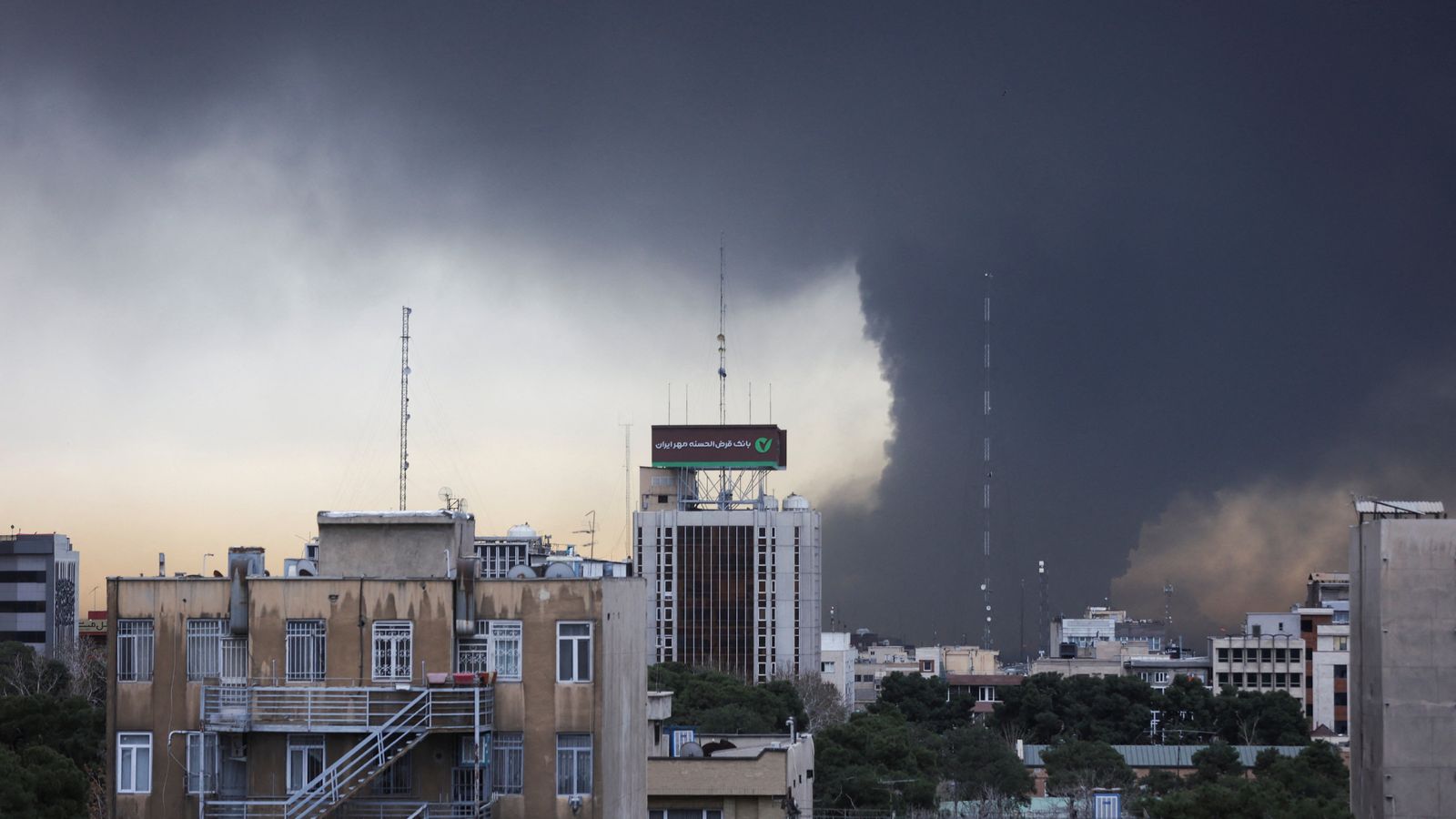
The Middle East is witnessing a dramatic escalation of hostilities, marked by a significant naval engagement in the Indian Ocean and a series of reciprocal strikes across the region. Reports indicate that a United States submarine successfully torpedoed an Iranian warship operating near Sri Lanka, resulting in the reported deaths of at least 87 personnel. This incident underscores the intensifying 'US campaign against Iran,' as described by sources familiar with the ongoing military actions. Concurrently, Israel has initiated what is being termed a 'broad wave' of new military operations within Iran itself, alongside targeting Hezbollah positions in Beirut, Lebanon, marking the fifth consecutive day of sustained conflict. These developments signal a dangerous phase in the regional power struggle, with multiple actors engaging in direct military confrontation and raising concerns about broader instability.
The current surge in military activity unfolds against a backdrop of prolonged geopolitical tensions, with the 'fifth day of the war' highlighting an established pattern of conflict. The US campaign against Iran, which includes naval actions such as the recent submarine strike, reflects a sustained effort to counter Iranian influence and capabilities. Israel's ongoing operations, extending into Iranian territory and against Hezbollah in Lebanon, are consistent with its stated objectives of neutralizing perceived threats. The humanitarian impact of these hostilities is already evident, with thousands of individuals reportedly displaced within Lebanon due to the attacks on Hezbollah targets. This displacement adds a critical layer of human suffering to an already volatile situation, emphasizing the far-reaching consequences of the escalating military engagements across the Levant and beyond.
Further details emerging from the conflict zone reveal a complex web of retaliatory actions and defensive measures. Following the reported sinking of its warship, Iran launched its own series of strikes. The Israel Defense Forces (IDF) confirmed that Israel was a target of these Iranian operations, though specifics of the impact were not immediately detailed. Simultaneously, authorities in the United Arab Emirates and Qatar reported successfully intercepting drones and missiles launched from Iran, indicating a broader regional reach for Tehran's retaliatory capabilities. In another significant development, NATO air defenses intercepted a ballistic missile fired from Iran as it approached Turkish airspace. The North Atlantic Treaty Organization subsequently condemned Tehran's actions, characterizing them as 'indiscriminate attacks across the region,' a statement that underscores the alliance's concern over the widening scope of the conflict. Meanwhile, internal political dynamics within Iran are also in flux, with officials reportedly nearing a decision on a successor to Ayatollah Khamenei, and his 56-year-old son emerging as a leading candidate.
The multifaceted nature of the current escalation carries significant implications for regional stability and international relations. Analysts observe that the US strategy appears to involve not only direct military engagement but also covert support for internal opposition, with reports suggesting Washington is backing local Kurdish forces in an effort to ignite an uprising within Iran. This approach could potentially destabilize Iran from within, adding another dimension to the external pressures it faces. Former US President Donald Trump weighed in on the situation, expressing concern that the 'worst case' scenario in Iran would be the ascension of a new leadership 'as bad as the previous regime,' highlighting the international community's apprehension regarding the future trajectory of Iranian governance. The internal succession process, particularly with Khamenei's son as a frontrunner, could signify either continuity or a potential shift in Iran's hardline policies, depending on the chosen successor's ideological leanings and strategic vision.
In summary, the Middle East is currently experiencing a period of intense military confrontation and political uncertainty. The reported sinking of an Iranian warship by a US submarine, coupled with Israel's extensive strikes and Iran's retaliatory missile and drone launches across multiple nations, paints a picture of a rapidly escalating conflict. The involvement of NATO in intercepting Iranian projectiles and its subsequent condemnation further internationalize the crisis. As internal discussions proceed in Tehran regarding the succession of Ayatollah Khamenei, the region braces for potential shifts in leadership that could profoundly impact future policies. The coming days will be critical in determining whether these intense military exchanges lead to a broader regional conflagration or if diplomatic efforts can somehow de-escalate the volatile situation, making continued vigilance essential for observers worldwide.