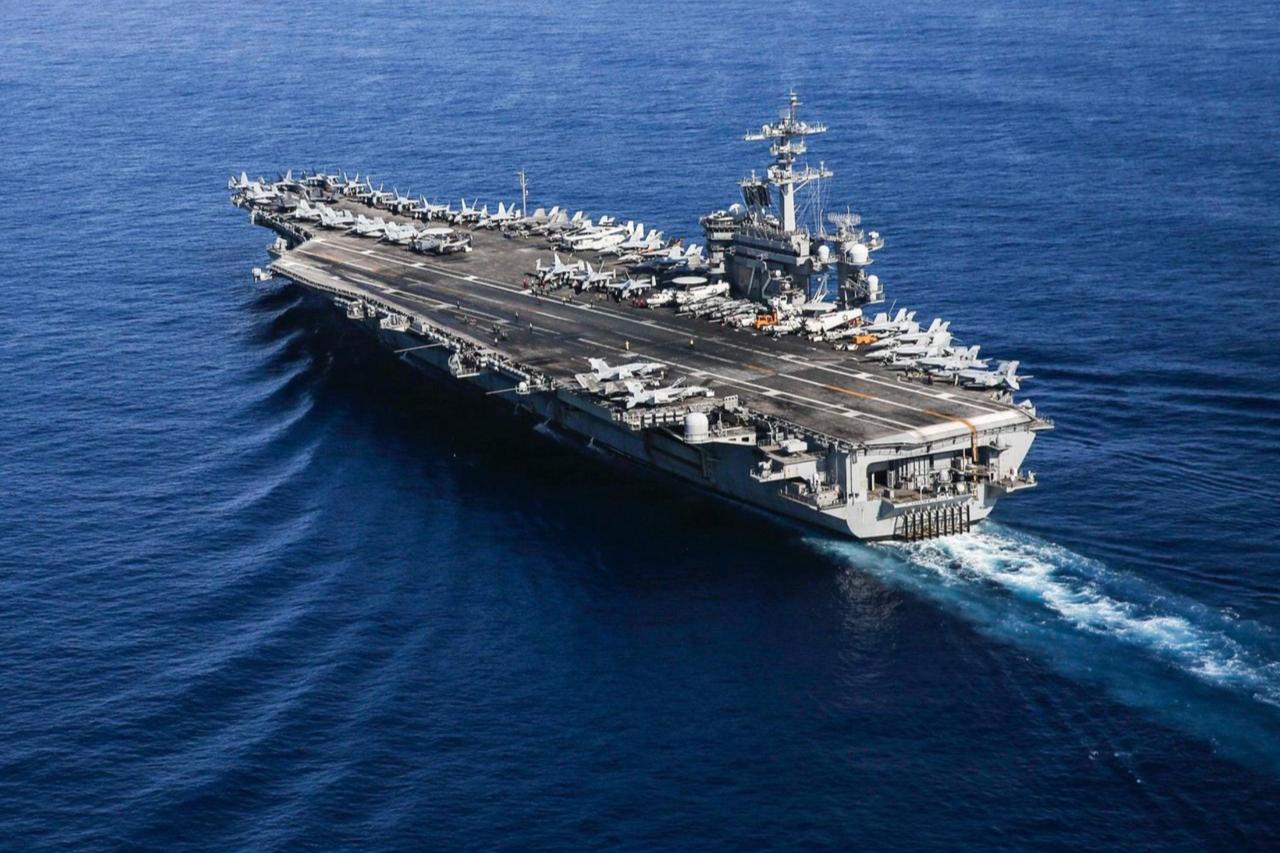
The Islamic Revolutionary Guard Corps (IRGC) of Iran asserted on Sunday that its forces launched four ballistic missiles targeting the USS Abraham Lincoln (CVN-72) aircraft carrier. This audacious claim, if independently substantiated, would mark a significant and unprecedented direct assault on a U.S. naval aircraft carrier in several decades, potentially escalating tensions in an already volatile region. According to a communique, identified as the seventh statement of an ongoing operation and disseminated by the Tasnim News Agency, the IRGC explicitly stated, "The U.S. Navy aircraft carrier Abraham Lincoln was attacked with four ballistic missiles." However, this declaration from Tehran has not received any independent corroboration from external observers or international bodies. In a swift response, the Pentagon categorically refuted Iran's assertion, with U.S. Central Command issuing a denial via social media, stating that the carrier was unharmed and the missiles did not approach the vessel.
This incident unfolds against a backdrop of persistent and often heightened friction between the United States and Iran, particularly concerning maritime security and military posturing in the Persian Gulf and surrounding waterways. The presence of U.S. naval assets, including aircraft carrier strike groups, in the region is a long-standing component of American foreign policy aimed at deterring aggression and ensuring the free flow of commerce. Aircraft carriers, being formidable symbols of military power projection, represent critical strategic targets in any potential conflict scenario. Iran, for its part, has steadily developed a robust ballistic missile program, which it views as a cornerstone of its defensive capabilities and a deterrent against perceived threats from the U.S. and its regional allies. The historical context of these tensions underscores the gravity of such claims, irrespective of their veracity, as they contribute to a climate of uncertainty and potential miscalculation in a strategically vital part of the world.
Further elaborating on its purported actions, the Revolutionary Guard conveyed through its official statements that its offensive operations against what it termed "American-Zionist enemy targets" had transitioned into a "new phase." The communique, as reported, contained strong rhetoric, asserting that "The powerful strikes of the armed forces of the Islamic Republic of Iran against the weary military body of the enemy have entered a new phase, and land and sea will increasingly become the graveyard of terrorist aggressors." This language signals an intent to project strength and resolve. Conversely, the U.S. Department of Defense, through U.S. Central Command, promptly countered the Iranian narrative. In a public statement disseminated on the social media platform X, officials unequivocally denied the alleged strike, asserting, "The Lincoln was not hit. The missiles launched didn’t even come close." This direct and immediate rebuttal aimed to dismiss the Iranian claim as unfounded and prevent any potential misinterpretation of events or unwarranted escalation.
The conflicting reports surrounding this alleged missile strike highlight the complex dynamics of information warfare and strategic communication in modern geopolitical confrontations. Even an unverified claim of such a significant attack can serve multiple purposes for the claimant, including bolstering domestic morale, projecting military prowess to regional adversaries, and testing the resolve or response mechanisms of opposing forces. For the United States, a swift and decisive denial is crucial to maintain credibility, reassure allies, and prevent any perception of vulnerability or weakness. Analysts suggest that such incidents, whether factual or fabricated, contribute to an environment of heightened alert and increase the risk of unintended escalation through misinterpretation or overreaction. The IRGC's declaration of a "new phase" in its operations, coupled with its aggressive rhetoric, underscores a potential shift in its operational posture or at least its public messaging, warranting close observation by international security bodies and regional stakeholders.
In conclusion, the unconfirmed assertion by Iran's Revolutionary Guard regarding a ballistic missile attack on the USS Abraham Lincoln, met with an immediate and firm denial from the Pentagon, leaves the international community grappling with conflicting narratives. While the U.S. maintains the carrier was untouched, the IRGC's public declaration marks a significant rhetorical escalation, signaling a potentially more aggressive stance against perceived adversaries. The absence of independent verification underscores the critical need for caution and thorough investigation in assessing such claims. Moving forward, the focus will remain on monitoring military movements and official statements from both sides, as this incident, regardless of its factual basis, reflects the ongoing, delicate balance of power and the ever-present risk of escalation in the Middle East. The implications for regional stability and international shipping lanes remain a key concern for global security observers.