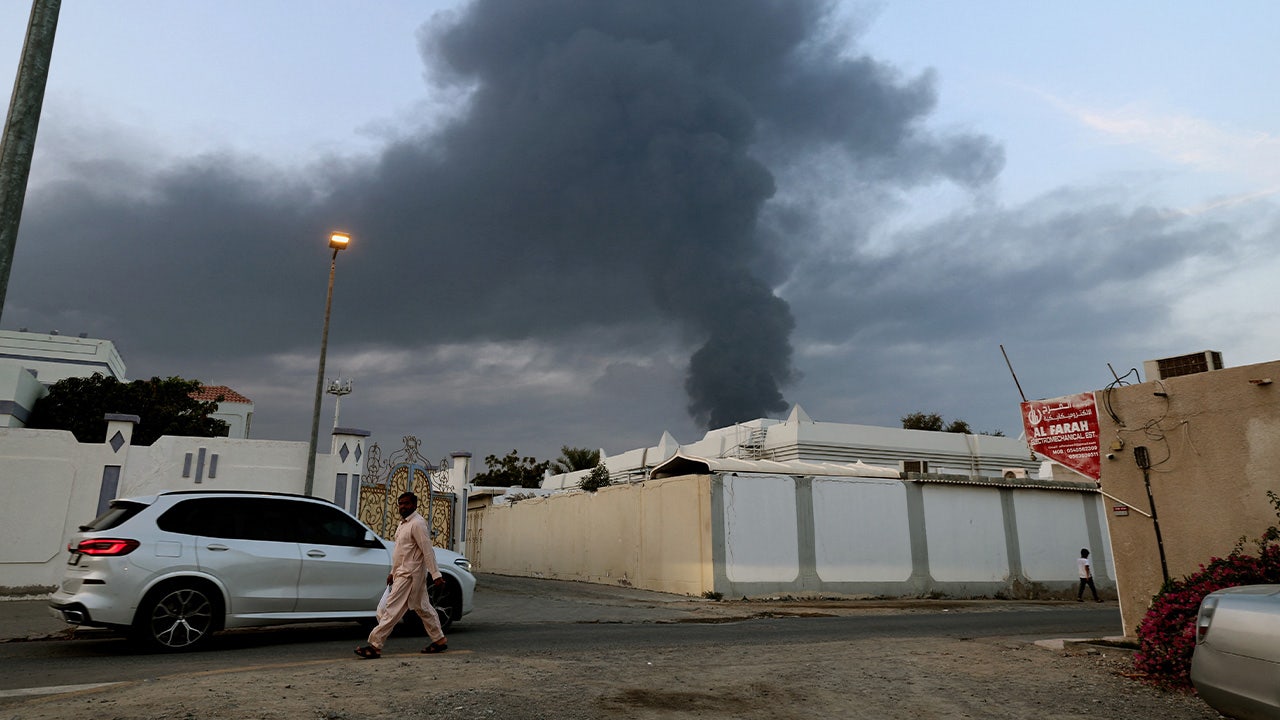
Recent aggressive actions by Iran across the Middle East could inadvertently propel several Gulf nations toward establishing formal diplomatic relations with Israel, according to a prominent former U.S. military official. Joe Buccino, who previously served as Communications Director for U.S. Central Command (CENTCOM), suggested on Tuesday that Tehran's widespread missile and drone strikes have backfired, fundamentally altering the region's geopolitical landscape. This assessment follows a period of heightened tension where Iran launched retaliatory attacks against U.S. interests in neighboring countries, occurring after the commencement of 'Operation Epic Fury' on Saturday. Several Gulf states, including Bahrain, Qatar, and the United Arab Emirates, actively intercepted hundreds of Iranian projectiles over a four-day span. The Gulf Cooperation Council (GCC) has reportedly condemned Iran's actions and vowed a response, a development Buccino believes could pave the way for a significant realignment of alliances in the region, potentially culminating in normalization with Israel.
The current escalation stems from Iran's response to 'Operation Epic Fury,' an event that triggered a wave of retaliatory strikes targeting American assets and interests across the region. This sequence of events has brought to the forefront long-standing regional anxieties regarding Iranian influence and military capabilities. For years, many Gulf states have harbored shared security concerns with Israel regarding Tehran's nuclear ambitions, ballistic missile program, and support for proxy groups. While some diplomatic channels have existed informally, the recent overt aggression by Iran has seemingly solidified a common front among its adversaries. The potential for Gulf states to formalize ties with Israel builds upon the precedent set by the Abraham Accords, which saw the UAE, Bahrain, Sudan, and Morocco normalize relations with Israel. This latest development, as analyzed by experts, could represent a pivotal moment, pushing the Middle East away from traditional, often fractured, alliances and towards a more unified, albeit anti-Iranian, security architecture.
In the wake of 'Operation Epic Fury,' Iran reportedly initiated a series of missile and drone attacks aimed at U.S. interests within the region. Over a period of four days, multiple Gulf nations played a critical role in defending against these incursions. Specifically, reports indicate that Bahrain, Qatar, and the United Arab Emirates successfully intercepted hundreds of Iranian missiles and drones, demonstrating a coordinated regional defense effort. This collective response was further underscored by a joint statement issued by a coalition of states, including Bahrain, Qatar, the UAE, Saudi Arabia, Jordan, Kuwait, and the United States. This powerful declaration unequivocally condemned Iran's actions, characterizing the missile and drone strikes as 'indiscriminate and reckless.' The statement further asserted that these attacks endangered civilian populations, caused damage to critical infrastructure, and flagrantly violated the sovereignty of multiple nations. According to former CENTCOM Communications Director Joe Buccino, the Gulf Cooperation Council has not only denounced Iran's behavior but has also expressed a firm resolve to retaliate, signaling a significant shift in regional dynamics.
Former CENTCOM Communications Director Joe Buccino characterized Iran's recent actions as a 'stunning strategic miscalculation,' suggesting that Tehran's aggressive posture has inadvertently strengthened the resolve of its regional opponents. This assessment highlights the unintended consequence of Iran's broad attacks, which appear to have fostered a greater sense of urgency and common purpose among Gulf states and Israel. From a strategic standpoint, formalizing ties with Israel could offer Gulf nations enhanced security cooperation, including intelligence sharing and advanced defense capabilities, directly bolstering their collective deterrence against future Iranian threats. Such a realignment would fundamentally alter the power balance in the Middle East, potentially isolating Iran further and creating a more robust anti-Iranian bloc. Buccino also articulated a vision for a broader regional 'reset,' particularly contingent on the emergence of a 'new leadership, a new regime' in Iran that deviates from its current hard-line stance. This long-term perspective suggests that while immediate reactions are critical, the potential for lasting transformation hinges on both external pressures and internal shifts within Iran.
In summary, Iran's recent aggressive military actions, intended as retaliation, are now being viewed by some, including former CENTCOM Communications Director Joe Buccino, as a profound strategic error that could inadvertently accelerate the normalization of relations between several Gulf states and Israel. The unified condemnation from the Gulf Cooperation Council, coupled with the joint statement from key regional players and the United States, underscores a growing consensus against Tehran's destabilizing behavior. The successful interception of hundreds of Iranian projectiles by Gulf nations further illustrates a burgeoning cooperative defense framework. Moving forward, observers will be closely watching for any concrete diplomatic steps or increased security collaboration between Gulf states and Israel, which would signify a significant and potentially irreversible transformation of alliances and security structures across the Middle East.