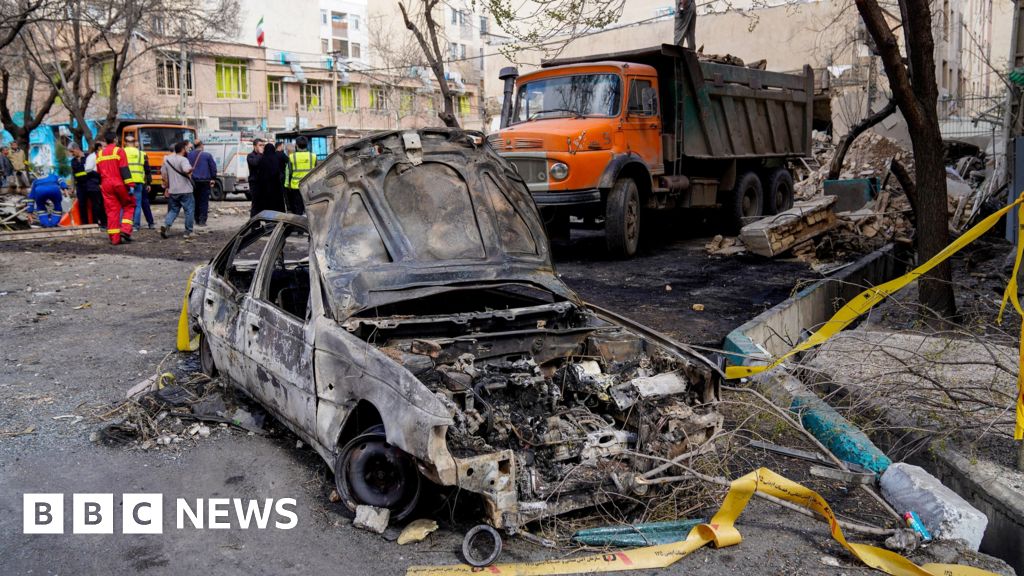
Ayatollah Ali Khamenei, Iran's Supreme Leader, has reportedly been killed in a coordinated military operation involving both American and Israeli forces, as announced by former US President Donald Trump. Writing on his Truth Social platform, Trump declared Khamenei, whom he described as "one of the most evil people in History," was deceased. This significant development follows earlier satellite imagery on Saturday that depicted damage to Khamenei's compound located in Tehran, suggesting recent military engagements. The Israeli prime minister had also indicated growing evidence that the Iranian leader was "gone." Initial reports from Iranian state media, specifically the Tasnim and Mehr news agencies, had denied the claims, asserting Khamenei was " steadfast and firm in commanding the field." However, Iranian state media later confirmed his death, leading to widespread reports of dozens of fatalities across Iran and retaliatory attacks launched by Iran throughout the Middle East against countries hosting US bases or allied with the United States.
The alleged assassination of such a prominent global figure marks a dramatic escalation in the long-standing tensions between Iran and the Western powers, particularly the United States and Israel. Ayatollah Ali Khamenei, who succeeded Ruhollah Khomeini in 1989, has been the spiritual and political head of Iran for decades, wielding ultimate authority over the country's domestic and foreign policy. His death, if confirmed definitively by independent sources, would create an unprecedented power vacuum and potentially trigger profound instability within Iran and across the broader Middle East. The adversarial relationship between Tehran and Washington, exacerbated by issues such as Iran's nuclear program, regional proxy conflicts, and sanctions, has frequently teetered on the brink of direct confrontation. This reported joint strike underscores a significant shift in strategy, moving beyond covert operations or targeted sanctions to direct military action against the highest echelons of Iranian leadership, a move that carries immense geopolitical ramifications.
In his series of posts on Truth Social, Donald Trump elaborated on the operation, asserting that the strike represented "justice for the people of Iran, but for all Great Americans." He further claimed that Khamenei "was unable to avoid our Intelligence and Highly Sophisticated Tracking Systems and, working closely with Israel, there was not a thing he, or the other leaders that have been killed along with him, could do." This statement suggests a meticulously planned and executed operation targeting multiple high-value individuals. Trump also presented the event as a pivotal moment for Iran, stating, "This is the single greatest chance for the Iranian people to take back their Country." Despite the reported success, Trump warned that the "heavy and pinpoint bombing, however, will continue, uninterrupted throughout the week or, as long as necessary to achieve our objective," indicating an ongoing military campaign. The initial conflicting reports from Iranian state media, which first denied Khamenei's death before later confirming it, highlight the chaotic and rapidly evolving nature of the situation on the ground, further complicated by the reported dozens of casualties nationwide and Iran's swift retaliatory strikes against US-allied targets in the region.
The reported joint US-Israeli strike on Iran's Supreme Leader signals a potential paradigm shift in regional dynamics and international relations. Experts suggest such an audacious operation, if fully verified, would demonstrate an unparalleled level of intelligence and military coordination between Washington and Jerusalem, sending a forceful message about their resolve to counter perceived threats from Tehran. The implications for Iran's internal stability are profound; the succession process for the Supreme Leader is highly secretive and complex, and Khamenei's sudden demise could ignite a fierce power struggle among conservative factions, potentially leading to internal unrest or a more hardline stance from his successor. Regionally, Iran's immediate retaliatory strikes underscore the high risk of widespread escalation, with the potential to draw numerous actors into a broader conflict. Analysts will be closely watching for how other global powers, particularly Russia and China, react to this development, as it could reshape alliances and geopolitical strategies across the Middle East and beyond. The former US President's framing of the event as an opportunity for the Iranian populace also introduces a significant political dimension, potentially aiming to galvanize internal opposition.
The death of Ayatollah Ali Khamenei, as confirmed by Iranian state media following former US President Donald Trump's announcement of a joint US-Israeli strike, marks a critical juncture in Middle Eastern geopolitics. The immediate aftermath has seen widespread reports of casualties within Iran and swift retaliatory attacks by Tehran across the region, targeting nations allied with the US or hosting American military assets. With Trump warning of continued "heavy and pinpoint bombing," the situation remains highly volatile and poised for further escalation. The coming days will be crucial for observing Iran's internal power transition, the extent of its retaliatory actions, and the international community's response to this unprecedented event. The long-term consequences for regional stability, global energy markets, and the future of US-Iran relations are immense and uncertain, demanding vigilant monitoring from international observers.