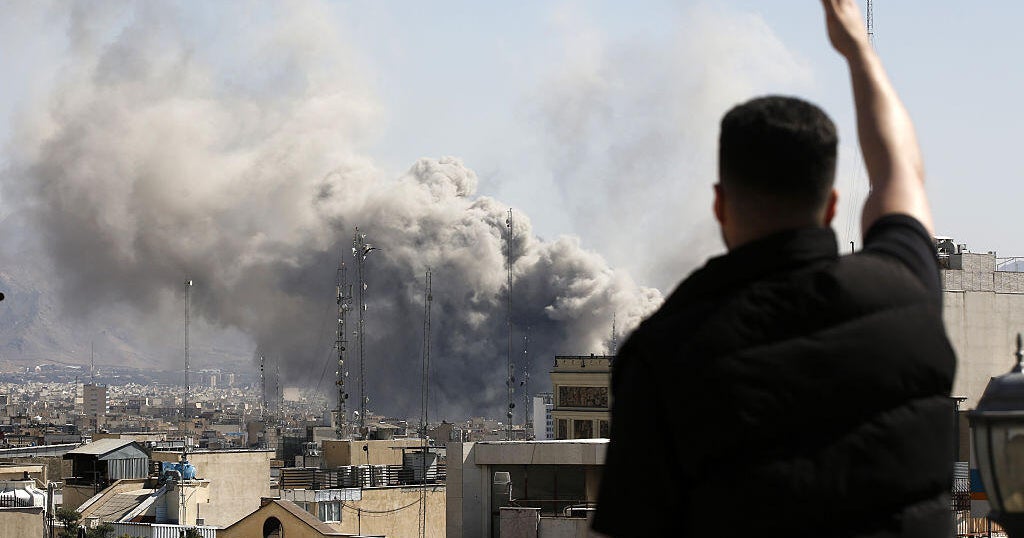
The Middle East plunged deeper into conflict on what marks the second day of an intense confrontation involving the United States, Israel, and Iran. Following initial U.S. and Israeli military actions against Iranian targets, which reportedly resulted in no American casualties, Iran's armed forces have initiated a series of retaliatory missile attacks. These salvos have been directed at maritime vessels and various nations across the wider Middle Eastern region. Tragically, Israeli medical personnel have confirmed that at least eight individuals lost their lives in the most recent wave of these Iranian missile strikes. This rapid escalation follows the profound development reported on Sunday: the passing of Iran's Supreme Leader, Ayatollah Ali Khamenei. His demise, alongside approximately forty other high-ranking officials within the Islamic Republic's structure, occurred during a joint U.S.-Israeli assault just one day prior, an event widely cited as the catalyst for the current widespread hostilities in the region. As the nation grapples with this monumental loss, Iranians are reportedly gathering today for the funeral rites of their long-serving spiritual and political head.
Ayatollah Ali Khamenei had been at the helm of Iran's theocratic government for decades, a system that has governed the nation for nearly fifty years. His sudden death, attributed to the coordinated U.S.-Israeli military operation, has sent shockwaves through the region and within Iran itself, fundamentally altering the political landscape. The joint assault, which also claimed the lives of numerous other senior figures within the Islamic Republic, is widely understood to have ignited the current state of warfare. In the immediate aftermath of these devastating losses, the remaining leadership of the Iranian government has moved swiftly to establish an interim administration. Reports indicate that President Masoud Pezeshkian has been named as part of this provisional leadership, tasked with guiding the nation through this unprecedented period of transition and conflict. This swift move aims to maintain a semblance of stability amidst profound internal and external pressures. The long-term implications of this leadership vacuum, particularly during active hostilities, remain a significant concern for regional and international observers.
The Iranian military's response has been characterized by a series of missile launches, targeting both maritime assets and land-based locations in neighboring countries, according to various reports from the region. These actions underscore a clear intent to project force and retaliate against the U.S.-Israeli offensive. While initial reports from the U.S. indicated no American military personnel were harmed in the initial strikes on Iran, the subsequent Iranian counter-attacks have had tangible consequences. Israeli emergency services have tragically confirmed at least eight fatalities resulting from the recent Iranian missile barrages, highlighting the deadly nature of the ongoing exchanges. Concurrently, the U.S. Embassy in Jerusalem issued an urgent security alert on Sunday, advising American citizens residing in Israel to seek immediate shelter. The embassy explicitly stated its current inability to facilitate evacuations or provide direct assistance for Americans attempting to depart Israel, citing the volatile security environment. Furthermore, all U.S. government personnel and their families have been instructed to remain sheltered in their residences until further notice. In a related development, the embassy announced the closure of its Jerusalem and Tel Aviv consular sections on Monday, March 2, 2026, suspending all passport and consular report of birth abroad services, in adherence to Israeli Home Front Command directives. Adding to the regional disruption, Ben Gurion Airport, a critical hub, remains closed.
The sudden removal of Ayatollah Ali Khamenei, a figure who embodied the continuity of Iran's revolutionary ideology for nearly five decades, marks a pivotal moment with far-reaching implications. Analysts suggest that while the interim leadership, including President Masoud Pezeshkian, has been swiftly appointed, the long-term stability and direction of the Islamic Republic are now subject to intense scrutiny. The dual public reaction within Iran further complicates the domestic landscape; while many citizens reportedly celebrated the demise of what they perceived as a repressive government, significant protests against the U.S.-Israeli actions also emerged, indicating a deeply divided populace. This internal divergence could either pave the way for significant political shifts or lead to intensified internal struggles for power. Regionally, the escalation of hostilities, evidenced by Iran's missile strikes and the U.S. Embassy's security warnings, signals a dangerous new phase in Middle Eastern dynamics. Experts are closely watching whether the interim government will consolidate power effectively or if the instability will embolden various factions, potentially leading to further regional destabilization and a prolonged conflict.
As the region enters the second day of this intensified conflict, the immediate focus remains on the ongoing military exchanges and the profound political transition within Iran. The funeral of Supreme Leader Ayatollah Ali Khamenei on Sunday is expected to be a significant event, both as a moment of national mourning and a potential flashpoint for further expressions of public sentiment. The international community, particularly the United States, continues to monitor the situation closely, with the U.S. Embassy's advisories underscoring the severe security risks for its citizens in Israel. The coming days will be crucial in determining the trajectory of Iran's interim leadership, the extent of its retaliatory capabilities, and the potential for de-escalation or further expansion of the conflict. The interplay between internal Iranian dynamics and external military pressures will undoubtedly shape the immediate future of the Middle East, demanding vigilant observation from global stakeholders.