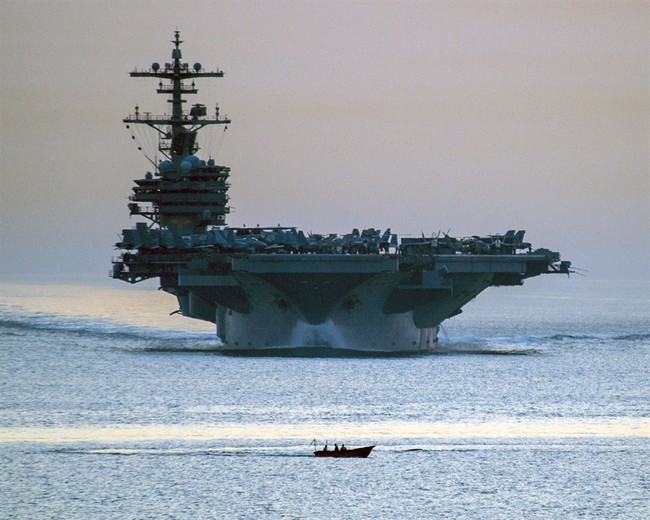
The Islamic Republic of Iran is reportedly intensifying its disruptive activities in the strategically vital Strait of Hormuz, employing both physical attacks and sophisticated electronic warfare tactics against maritime traffic. This escalation comes despite significant internal upheaval, including the reported decimation of its leadership cadre following an event referred to as 'Operation Epic Fury.' According to a Saturday report by Ward Clark for RedState, Iranian forces are continuing their long-standing pattern of aggressive posturing and threats to close the narrow waterway, which is a critical conduit for approximately twenty percent of the world's oil supply. The recent actions, which officials stated have impacted over a thousand vessels, suggest a persistent capability and intent to destabilize global shipping, even amidst profound internal challenges. These operations extend beyond conventional threats, incorporating advanced electronic interference alongside more traditional explosive devices, raising concerns across the international maritime community about the safety and security of one of the world's most crucial shipping lanes.
The Strait of Hormuz, forming Iran's entire southern maritime border, represents a choke point of immense global economic and geopolitical significance. Historically, Iran has frequently leveraged its geographical control over this passage as a tool for political leverage, issuing recurrent threats to impede or halt international shipping. This latest wave of aggression unfolds against a backdrop of considerable uncertainty within the Iranian power structure, following 'Operation Epic Fury,' which, according to various accounts, severely depleted the nation's top leadership. Despite this apparent vacuum at the highest levels, the country has demonstrated an ongoing capacity to project power, including launching missiles at neighboring states and now, more acutely, disrupting vital maritime commerce. The strategic importance of the Strait, coupled with Iran's consistent willingness to challenge international norms of navigation, underscores the gravity of the current situation and its potential ramifications for global energy markets and regional stability.
Recent incidents illustrate the dual nature of Iran's current tactics. Reports detail multiple physical attacks, including an explosion from an unidentified projectile near a vessel west of Sharjah, UAE. Another tanker operating north of Muscat, Oman, sustained a strike above its waterline, which ignited a fire that was subsequently brought under control. A third incident involved a projectile hitting a vessel northwest of Mina Saqr, UAE, also resulting in a blaze onboard, according to organizational reports. Compounding these physical threats is a surge in electronic warfare. Maritime intelligence firm Windward has documented widespread interference with GPS and Automatic Identification System (AIS) signals, affecting more than 1,000 ships. This electronic disruption has led to significant navigation anomalies, with vessels falsely appearing at locations such as airports, a nuclear power plant, and various inland sites near Iran's Bandar Abbas port. Windward also identified new clusters of AIS jamming across Emirati, Qatari, Omani, and Iranian waters, prompting major shipping entities like Maersk to announce the rerouting of some services away from the region, citing paramount concerns for crew and cargo safety.
The sustained and multi-faceted disruption in the Strait of Hormuz carries profound implications for global trade and regional security. The fact that Iran continues these operations despite the reported severe losses to its leadership from 'Operation Epic Fury' suggests either a deeply entrenched institutional directive for such actions or a decentralized command structure capable of independent execution. Experts indicate that the combination of physical attacks and sophisticated electronic warfare represents a significant escalation, demonstrating Iran's evolving capabilities and its willingness to employ advanced tactics to achieve its objectives. This strategy not only directly threatens the flow of global oil—a fifth of which transits the Strait—but also introduces an unpredictable element into an already volatile region. The rerouting of major shipping lines like Maersk highlights the immediate economic impact, potentially leading to increased shipping costs, longer transit times, and ultimately, higher prices for consumers worldwide. Analysts are closely watching whether these 'antics,' as described in reports, will provoke a more robust international response or further destabilize the delicate balance of power in the Persian Gulf.
In summary, the ongoing disruptions in the Strait of Hormuz underscore Iran's persistent capacity and intent to influence global maritime commerce, even in the wake of significant internal challenges. The dual threat of physical attacks and widespread electronic warfare poses a complex security challenge for international shipping, directly impacting global energy supplies and trade routes. The decision by major carriers to reroute services signals the seriousness of the situation, highlighting the immediate economic consequences. As the international community grapples with understanding the decision-making processes within a purportedly leaderless Iran, the focus remains on ensuring the safety of navigation through this critical waterway. Future developments will likely hinge on the international response to these aggressive tactics and whether diplomatic or security measures can effectively deter further escalation in this geopolitically sensitive region.