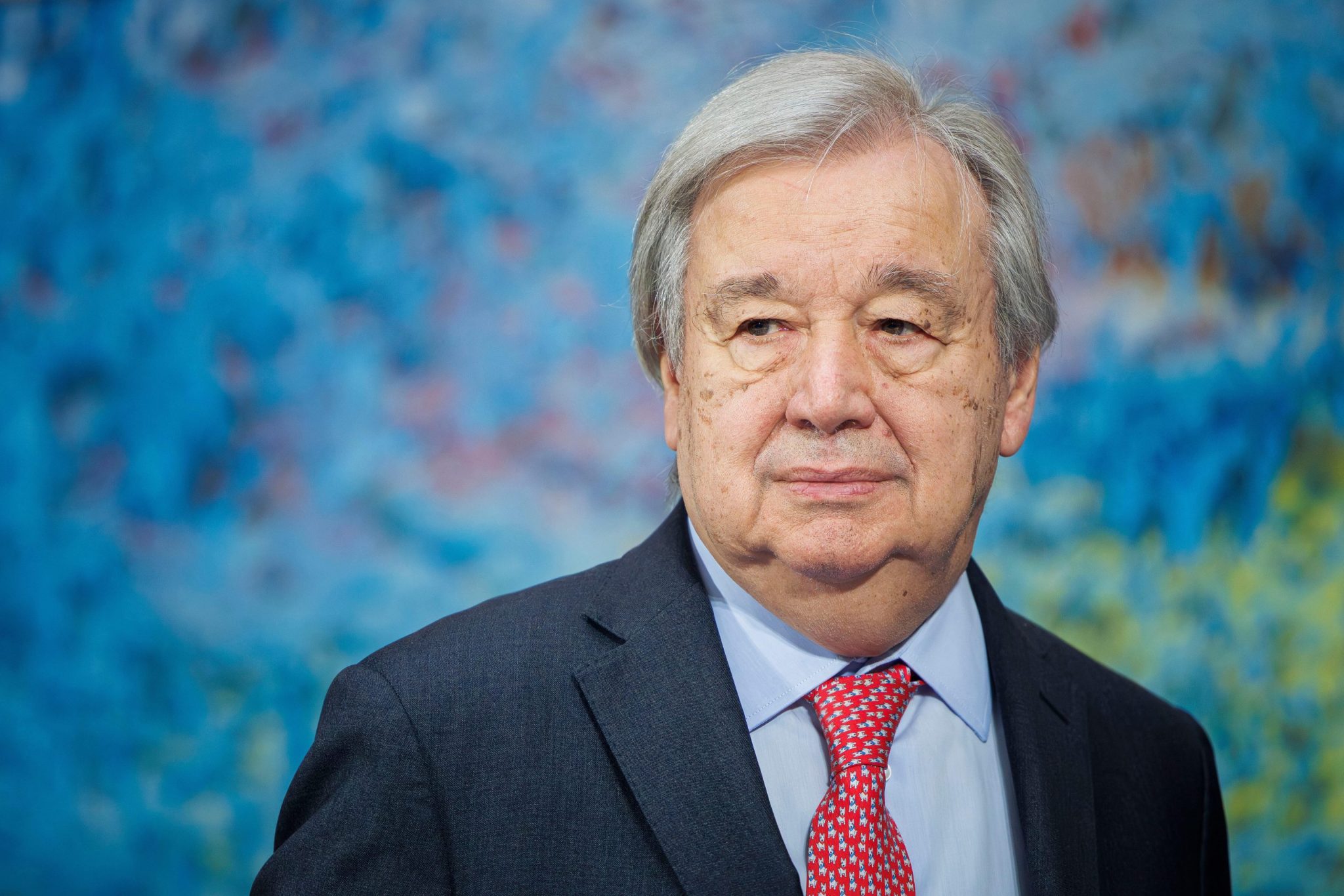
An urgent session of the United Nations Security Council convened on Saturday, witnessing a direct confrontation between representatives from the United States and Israel against Iran. The emergency meeting was called amidst escalating regional tensions, with the UN Secretary-General and numerous member states issuing strong appeals for an immediate cessation of hostilities and a return to diplomatic negotiations. This collective plea aimed to avert the further spread of conflict across the Middle East and potentially beyond its borders. Secretary-General António Guterres underscored the critical necessity of preventing any escalation, cautioning that the alternative presented a perilous path towards a broader conflict, carrying severe repercussions for civilian populations and the stability of the entire region. Furthermore, Guterres asserted that recent airstrikes conducted by the U.S. and Israel constituted violations of international law, including the foundational principles enshrined in the UN Charter. Concurrently, he also condemned Iran's retaliatory actions, citing their infringement upon the sovereignty and territorial integrity of several nations, including Bahrain, Iraq, Jordan, Kuwait, Qatar, Saudi Arabia, and the United Arab Emirates.
The backdrop to this tense Security Council gathering is a deeply volatile Middle East, where a series of recent military actions have significantly heightened fears of a wider conflagration. The specific incidents prompting the emergency session involved airstrikes attributed to the United States and Israel, which were subsequently met with retaliatory measures from Iran. These exchanges have exacerbated an already fragile geopolitical landscape, characterized by long-standing rivalries and proxy conflicts. The significance of the UN Secretary-General's direct condemnation of actions by both sides—specifically citing violations of international law and national sovereignty—highlights the international community's profound concern. This meeting served as a crucial barometer of global sentiment, reflecting a widespread apprehension that the current trajectory could lead to an uncontrollable regional crisis, with devastating humanitarian and economic consequences. The urgency of the calls for de-escalation from the UN chief and various nations underscores the perceived immediacy of the threat, emphasizing the critical role of international diplomacy in preventing a full-scale regional war.
During the heated council debate, the United States' envoy to the United Nations, Mike Waltz, firmly maintained that the military operations undertaken by the U.S. were entirely lawful. He articulated a clear principle, stating that Iran's acquisition of a nuclear weapon was unacceptable, framing it not as a political issue but as a matter of global security, thereby justifying the U.S.'s lawful actions. Similarly, Israel's Ambassador to the UN, Danny Danon, mounted a robust defense of his nation's airstrikes, characterizing them as an imperative response to an existential threat. Danon emphasized Israel's commitment to preempting extremism before it became unmanageable, asserting that his country would ensure no radical regime, armed with nuclear weapons and ballistic missiles, could imperil its populace or the wider world. In stark contrast, Iran's Ambassador to the UN, Amir Saeid Iravani, vehemently accused the U.S. and Israel of committing war crimes and crimes against humanity, alleging that their airstrikes had resulted in the deaths and injuries of hundreds of Iranian civilians. Iravani also expressed profound disappointment and criticism towards the UN and its most powerful body, the Security Council, for what he perceived as their failure to heed Tehran's prior warnings regarding what he termed "warmongering statements" from the U.S. in recent weeks, urging immediate action from the council to address the legality of member states using force, coercion, or aggression.
The emergency Security Council meeting starkly illuminated the profound divisions among global powers, particularly concerning the application and interpretation of international law in the context of ongoing Middle East conflicts. The inability of the council to forge a unified path towards de-escalation, despite the Secretary-General's dire warnings, underscores the persistent challenges in addressing crises when permanent members are directly involved or have vested interests. Expert observers suggest that the divergent narratives presented by the U.S., Israel, and Iran indicate a deep-seated mistrust that complicates any diplomatic resolution, potentially paving the way for further unilateral actions rather than multilateral cooperation. This situation raises critical questions about the efficacy of international bodies like the UN in preventing conflict when geopolitical interests clash so fundamentally. The rhetoric exchanged, particularly the accusations of international law violations and war crimes, signifies a dangerous escalation in diplomatic confrontation that could easily spill over into broader military engagement, further destabilizing an already volatile region and impacting global energy markets and security alliances.
In conclusion, the emergency UN Security Council meeting on Saturday served as a stark reminder of the escalating tensions in the Middle East and the significant hurdles to achieving a diplomatic resolution. Despite urgent calls for de-escalation and a return to negotiations from the UN Secretary-General and numerous nations, the session concluded with the United States and Israel defending their military actions against Iran's strong condemnations. The fundamental disagreements over the legality and justification of recent airstrikes, coupled with accusations of international law violations, underscore a deeply entrenched conflict with no immediate resolution in sight. The international community now faces the precarious task of monitoring a situation where the risk of a wider regional conflict remains alarmingly high. Future developments will likely hinge on whether diplomatic channels can be re-established and if the parties involved can be persuaded to prioritize de-escalation over further confrontation, a prospect that currently appears challenging given the entrenched positions articulated at the Security Council.