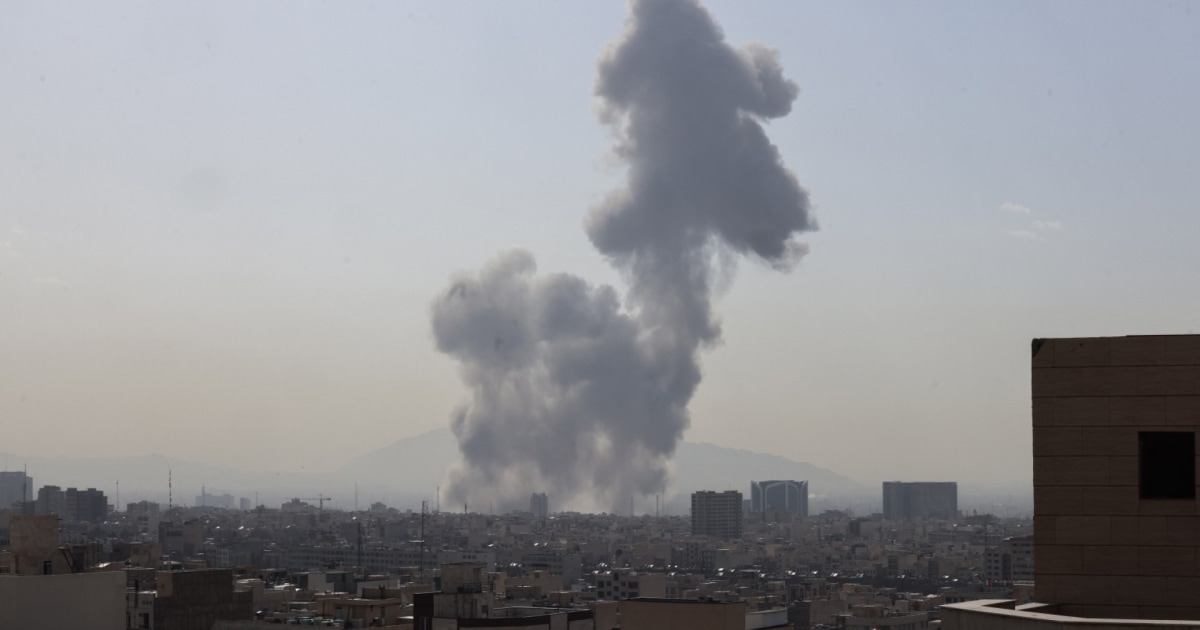
A significant escalation in Middle Eastern tensions unfolded as a joint United States and Israeli military initiative, dubbed 'Operation Epic Fury,' launched extensive attacks against military and security targets within Iran. President Donald Trump, in a recorded video address, confirmed the commencement of what he termed 'major combat operations.' Concurrently, Iranian state media outlets reported multiple explosions reverberating across central Tehran, with news agency footage depicting substantial plumes of smoke rising above the capital city. Amidst these developments, reports emerged from Iranian state media confirming the death of Ayatollah Ali Khamenei, Iran's Supreme Leader. This claim, however, was met with conflicting statements, as Iran's foreign minister later asserted that, to his knowledge, the Supreme Leader remained alive. The situation further intensified with Israel initiating a new series of strikes specifically targeting Iranian missile systems, while air raid sirens blared across Tel Aviv, and a missile reportedly penetrated defenses to strike the city. In response, Iran launched retaliatory attacks against several U.S. military installations situated across the Middle East, including a U.S. Navy center in Bahrain, marking a rapid and dangerous cycle of aggression.
The current wave of hostilities represents a dramatic intensification of long-standing regional rivalries and geopolitical friction between the United States, Israel, and Iran. 'Operation Epic Fury' signifies a coordinated military effort, moving beyond previous limited engagements to what President Trump described as major combat operations. This strategic shift follows years of heightened rhetoric and proxy conflicts, with both Washington and Jerusalem consistently expressing concerns over Iran's nuclear ambitions, its ballistic missile program, and its support for various regional non-state actors. The targeting of military and security infrastructure, particularly missile systems, indicates a concerted effort to degrade Iran's defensive and offensive capabilities. The potential collapse of the Iranian regime, a scenario alluded to in various analyses, could precipitate profound political and societal challenges within the Islamic Republic, fundamentally reshaping the regional power balance and creating a vacuum that could lead to further instability or, conversely, a path towards a different future for the Iranian populace. Israeli Prime Minister Benjamin Netanyahu, addressing the Iranian people directly, conveyed a message that the joint operation was intended to usher in regional peace, framing the offensive as a necessary step towards broader stability.
Further details emerging from the unfolding crisis highlight the immediate and varied reactions from key international and domestic actors. President Trump, commenting on the reports of Ayatollah Khamenei's death, stated, 'We feel that is a correct story,' lending credence to the initial claims from Iranian state media, despite the subsequent denial from Iran's foreign minister. The missile strike on Tel Aviv, which saw air raid sirens activate across the city on live television, underscored the immediate threat of Iranian retaliation and the vulnerability of Israeli urban centers. Following these events, Iran confirmed it had retaliated against multiple U.S. military facilities across the Middle East, with specific reports indicating attacks on a U.S. Navy center in Bahrain. Within the United States, the actions prompted diverse reactions across Congress. Senator Kim called for Congress to reconvene for a crucial vote on a war powers resolution, emphasizing the constitutional role of the legislative branch in authorizing military force. Conversely, Representative Bacon articulated a strong stance against the Iranian leadership, stating that 'the world cannot coexist with the ayatollah and his regime,' reflecting a hawkish sentiment among some lawmakers. Meanwhile, an emergency protest against the military action in Iran was held by demonstrators in Times Square, signaling public dissent against the escalating conflict.
Expert perspectives and political analysis suggest that 'Operation Epic Fury' carries profound implications for regional stability and international relations. A former Israeli ambassador to the U.S. indicated 'overwhelming support' within Israel for the attacks on Iran, reflecting a domestic consensus on the perceived necessity of these military actions. This sentiment aligns with statements from a former Trump defense secretary, who asserted that the administration 'made the right call' regarding the strikes, underscoring a belief in the strategic justification for the offensive. The Iranian Foreign Minister, however, dismissed President Trump's call for regime change as 'mission impossible,' signaling the Iranian leadership's resolve to resist external pressures and maintain its current structure. The potential for political and societal challenges within Iran, particularly if the regime were to collapse, remains a significant analytical point, with experts weighing the risks of internal fragmentation against the possibility of a more moderate future. The call by Senator Kim for a congressional vote on a war powers resolution highlights the critical debate within the U.S. government regarding the legal and constitutional authority for such extensive military engagements, emphasizing the need for checks and balances in times of conflict.
In summary, 'Operation Epic Fury' has dramatically reshaped the geopolitical landscape of the Middle East, initiating a dangerous cycle of aggression and retaliation between the U.S., Israel, and Iran. The reported death of Ayatollah Ali Khamenei, though disputed by Iranian officials, introduces a significant element of uncertainty regarding Iran's future leadership and internal stability. The immediate aftermath has seen Israeli strikes on Iranian missile systems, a retaliatory missile attack on Tel Aviv, and Iranian counter-strikes against U.S. military assets in the region. As the situation remains highly volatile, the world watches for further developments, particularly concerning the veracity of reports about Iran's Supreme Leader and the potential for broader regional conflict. The ongoing debate within the U.S. Congress regarding war powers underscores the serious implications of these actions, while international observers will be closely monitoring the humanitarian and political consequences of this unprecedented escalation. The path forward remains uncertain, with the potential for either de-escalation or a more protracted and devastating conflict looming large.