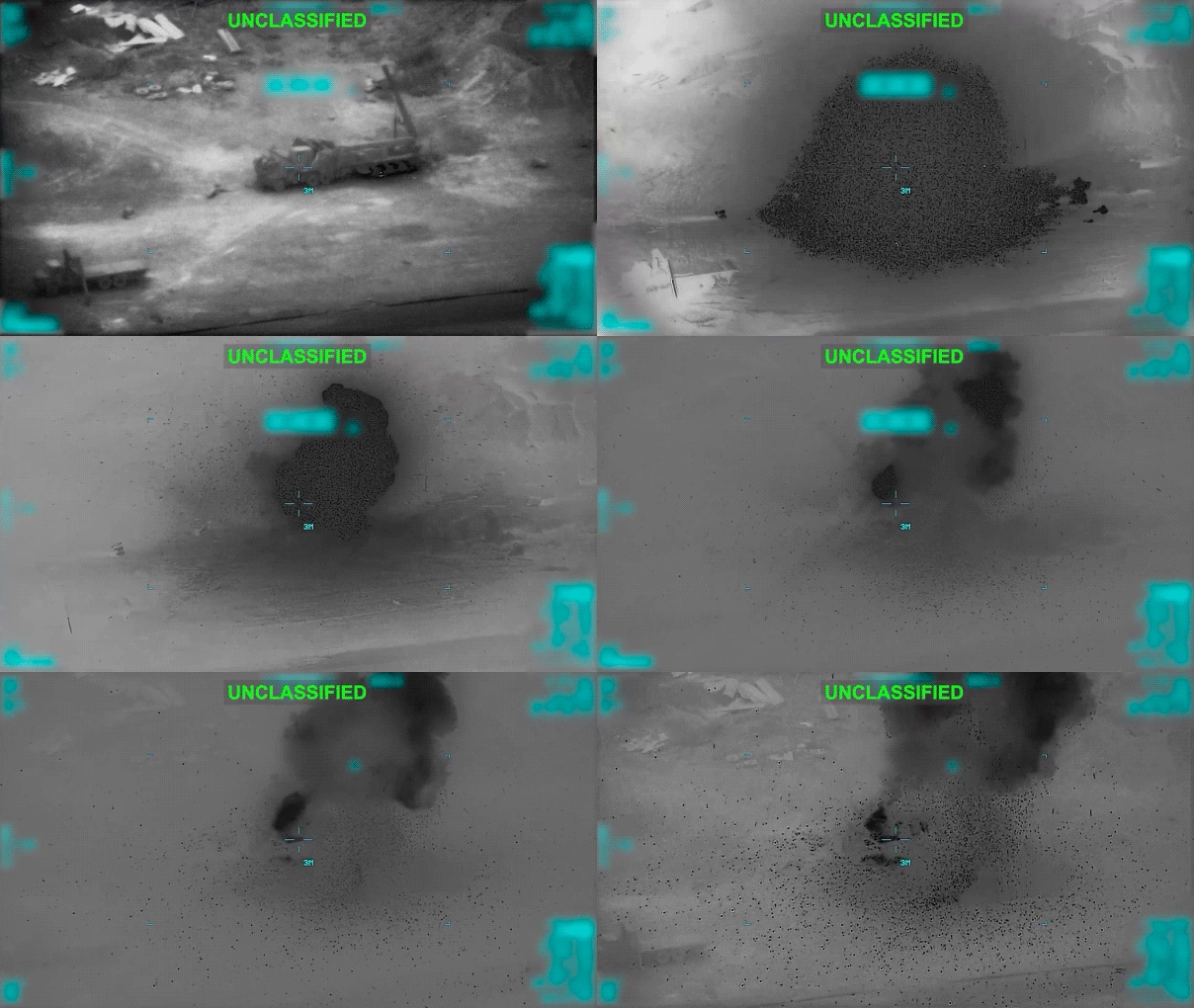
United States military forces have executed a sweeping campaign dubbed Operation Epic Fury, reportedly striking more than 1,700 targets across Iran within a 72-hour timeframe. This extensive offensive, detailed in a fact sheet released by U.S. Central Command (CENTCOM), signifies a concentrated effort to dismantle the Iranian regime's security infrastructure and neutralize what officials have characterized as immediate threats. The operation's primary objective, according to these reports, is to significantly degrade the core components of Iran's military command structure and its capacity for offensive actions. The sheer volume and rapid succession of these strikes underscore a determined strategy to disrupt Iran's operational capabilities and its ability to project power, marking a significant escalation in regional dynamics. The targets selected reflect a deliberate focus on critical military assets, indicating a comprehensive approach to weakening the nation's defense and attack mechanisms.
The initiation of Operation Epic Fury unfolds against a backdrop of escalating tensions and long-standing geopolitical friction between the United States and Iran. For decades, the relationship has been marked by periods of intense confrontation, proxy conflicts across the Middle East, and concerns over Iran's regional influence and military development. Officials have consistently voiced apprehension regarding Iran's ballistic missile program, its naval activities in strategic waterways, and the capabilities of its Islamic Revolutionary Guard Corps (IRGC). This latest military action, as described by CENTCOM, specifically targets elements deemed to pose an "imminent threat," suggesting a pre-emptive or reactive measure to perceived immediate dangers. The broad scope of the operation, encompassing a wide array of military sites, points to a strategic intent to fundamentally alter Iran's military posture and diminish its capacity for aggressive actions or defensive responses in the region.
The detailed list of targets struck during Operation Epic Fury highlights a precise and multifaceted attack strategy. According to CENTCOM reports, the strikes successfully hit numerous command and control centers, including the IRGC Joint Headquarters and the IRGC Aerospace Forces Headquarters. Beyond these critical leadership nodes, U.S. forces also targeted integrated air defense systems and various ballistic missile sites, aiming to cripple Iran's defensive and offensive missile capabilities. Naval assets were not spared, with Iranian Navy ships, submarines, and anti-ship missile sites reportedly engaged, alongside military communication infrastructure. This comprehensive targeting indicates a concerted effort to disrupt Iran's ability to coordinate operations and project force across air, land, and sea domains. Notably, officials have affirmed that nuclear sites were explicitly excluded from the list of targets, emphasizing a focus on conventional military assets. The operation's scale is further underscored by the deployment of an impressive array of advanced U.S. military hardware, including strategic bombers like the B-1, B-2, and B-52, alongside a diverse fleet of fighter jets such as F-15s, F-16s, F-18s, and fifth-generation F-22 and F-35 stealth fighters. Attack jets like the A-10 and EA-18G electronic attack aircraft also participated, supported by airborne early warning and control platforms, and communication relay aircraft. Ground-based missile defense systems, including Patriot interceptors and THAAD anti-ballistic missile systems, were part of the force posture, complemented by M-142 High Mobility Artillery Rocket Systems. The naval component included nuclear-powered aircraft carriers, guided-missile destroyers, P-8 maritime patrol aircraft, RC-135 reconnaissance aircraft, and MQ-9 Reaper drones, along with counter-drone systems, illustrating a robust and technologically advanced military deployment.
Military analysts and observers are likely to interpret Operation Epic Fury as a significant demonstration of U.S. military might and a clear signal regarding its commitment to regional security. The rapid engagement of over 1,700 targets within 72 hours, utilizing a vast array of advanced air, sea, and land assets, suggests a highly coordinated and pre-planned operation designed for maximum impact. The emphasis on degrading Iran's command and control, missile capabilities, and naval assets indicates a strategy aimed at crippling its ability to wage war or support proxy groups effectively. The specific exclusion of nuclear facilities, as noted by officials, might be a deliberate attempt to contain the conflict's scope and avoid further escalation into a nuclear crisis, while still delivering a powerful message. This operation could redefine the parameters of engagement in the region, potentially forcing Iran to reassess its military posture and strategic calculations. The long-term implications for regional stability remain uncertain, as Iran's response to such a massive and direct assault on its military infrastructure will be a critical factor in determining the future trajectory of U.S.-Iran relations and broader Middle Eastern security.
In summary, Operation Epic Fury represents a substantial and rapid military intervention by U.S. forces against Iran, targeting over 1,700 sites in a concentrated 72-hour period. Driven by the stated goal of dismantling Iran's security apparatus and neutralizing imminent threats, the operation employed a wide spectrum of advanced military hardware to strike critical command centers, missile sites, and naval assets. While nuclear facilities were deliberately avoided, the scale and precision of the strikes underscore a significant escalation in the ongoing tensions between the two nations. The coming days and weeks will be crucial in observing Iran's reaction and assessing the broader impact on regional stability, as the international community watches for any further developments in this unfolding geopolitical situation.