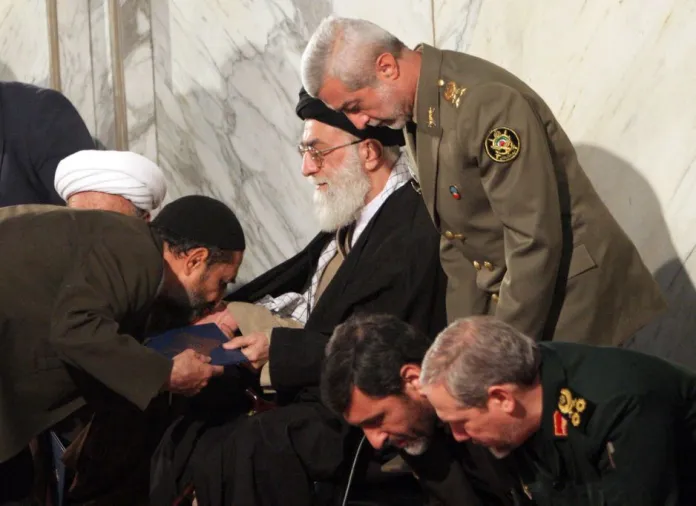
Reports from the region indicate a significant escalation in hostilities, with Iran's Supreme Leader, Ali Khamenei, among at least seven senior government and military figures reportedly killed in a series of joint Israeli and United States strikes that commenced overnight on Saturday. The Israel Defense Forces (IDF) reportedly focused its efforts on targeting key Iranian regime leaders, while the U.S. military concentrated on disrupting Iran's ballistic missile and nuclear infrastructure. These coordinated attacks have plunged the Iranian government into an immediate leadership crisis, prompting swift retaliatory actions from Tehran. Iranian forces have reportedly launched missiles towards both Israel and U.S. military installations situated across the broader Middle East, signaling a dangerous new phase in regional tensions. The full extent of the casualties and the long-term implications of these strikes are still unfolding, but the reported loss of such high-profile figures marks a critical turning point in the long-standing geopolitical standoff.
The recent strikes, which the Israel Defense Forces (IDF) described as an "opening salvo" in a broader military operation against the Iranian regime, appear to be a concerted effort to initiate significant political change within Iran. This objective aligns with previous statements from international leaders; officials, including former U.S. President Donald Trump and Israeli Prime Minister Benjamin Netanyahu, have openly urged the Iranian populace to overthrow their current government. The reported death of Supreme Leader Ali Khamenei, who wielded immense power over all major state decisions and personnel appointments, creates an unprecedented vacuum at the pinnacle of Iran's leadership. Many of the high-ranking officials reportedly killed in the strikes were direct appointees of Khamenei, underscoring his central role in the regime's operational structure. This sudden and profound loss of key figures has, according to various assessments, thrust the Iranian government into a profound state of crisis, challenging its stability and future direction in ways not seen in decades.
Among the prominent figures reportedly killed in the coordinated strikes were Islamic Revolutionary Guard Corps (IRGC) Commander Mohammad Pakpour and Defense Minister Aziz Nasirzadeh, whose deaths represent a severe blow to Iran's military and defense capabilities. Additionally, reports indicate the loss of two close advisers to Supreme Leader Khamenei, a current and a former chairman of Iran’s nuclear program, and a chief intelligence official within Iran’s military emergency headquarters. These casualties collectively signify a substantial decapitation of the regime's strategic and operational leadership. While the scale of the losses is significant, not all targeted officials were reportedly killed; Iranian Foreign Minister Abbas Araghchi confirmed earlier on Saturday that President Masoud Pezeshkian, who was also a target, survived the attacks. Similarly, Mojtaba Khamenei, the Supreme Leader's son and an aide, was targeted but is believed to have also survived, according to sources. In the immediate aftermath of the Supreme Leader's reported death, an interim three-member council is set to assume power, comprising President Masoud Pezeshkian, Chief Justice Gholam Hossein Mohseni Ejehi, and one Islamic cleric, tasked with navigating the country through this turbulent period.
The reported elimination of Iran's Supreme Leader and a significant portion of its senior leadership presents an extraordinary challenge to the stability of the Islamic Republic and carries profound implications for regional security. With no clear successor immediately apparent, the interim three-member council faces the daunting task of maintaining control amidst potential internal power struggles and ongoing external pressures. The Assembly of Experts, an 88-member body of elected Islamic clerics, is constitutionally mandated to convene and elect a new Supreme Leader. However, this process is likely to be fraught with complexities, especially given the current crisis and the absence of a universally accepted candidate. While Mojtaba Khamenei, the Supreme Leader's son, has been previously mentioned as a potential contender, according to reports from Axios, his path to leadership is far from certain. The stated U.S. and Israeli objective of regime change, coupled with the direct targeting of high-level officials and critical infrastructure, suggests a deliberate strategy to destabilize the current Iranian government, potentially leading to a period of intense political uncertainty and heightened regional volatility.
In summary, the reported deaths of Supreme Leader Ali Khamenei and several other high-ranking Iranian officials in joint Israeli and U.S. strikes mark a dramatic and potentially transformative moment for the Middle East. These attacks, described by the IDF as an "opening salvo," have triggered immediate retaliatory missile launches from Iran, escalating an already tense regional dynamic. The Iranian regime now faces an unprecedented leadership vacuum, with an interim council temporarily at the helm while the Assembly of Experts prepares to undertake the complex and critical task of electing a new Supreme Leader. The coming days and weeks will be crucial in determining the immediate trajectory of Iran's internal politics and the broader regional response, as the world watches for further developments and the potential for continued escalation in this volatile geopolitical landscape.