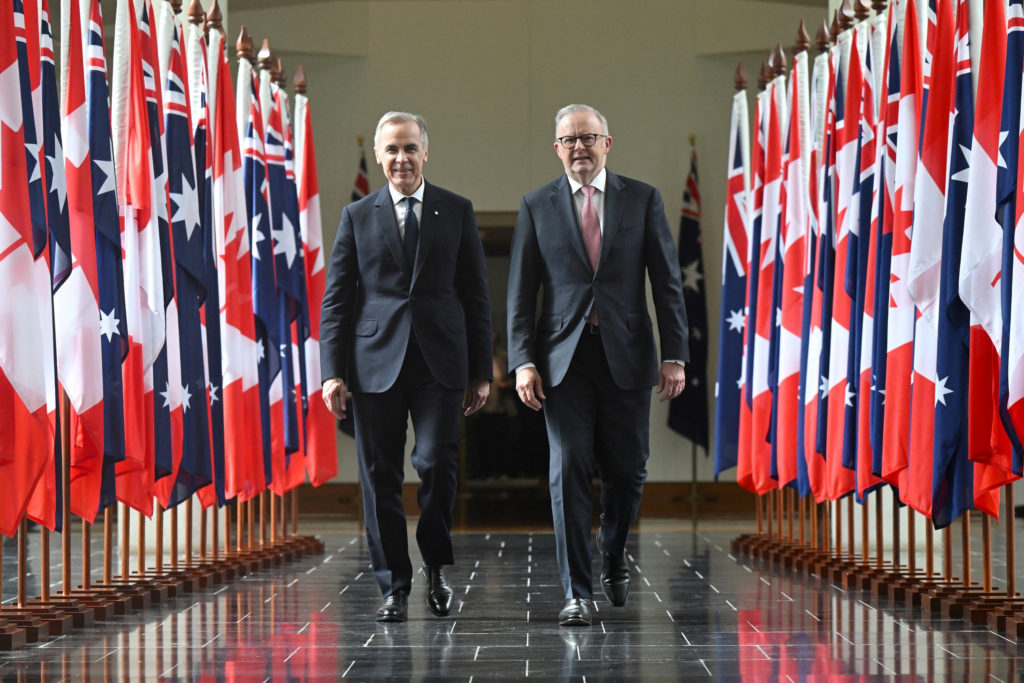
In a significant diplomatic development, leaders from Canada and Australia reportedly convened to address escalating tensions in the Middle East, issuing a joint call for de-escalation concerning Iran and firmly reiterating their opposition to Iran developing nuclear weapons. This high-level engagement, occurring within the broader context of 'Operation Epic Fury,' followed a series of alarming military incidents that have underscored the volatile security situation in the region. Specifically, the meeting took place after reports emerged of a United States submarine successfully engaging and sinking an Iranian warship in the Indian Ocean. Concurrently, officials in Turkey announced that NATO defense systems had intercepted a ballistic missile launched from Iranian territory, preventing its entry into Turkish airspace, further highlighting the precarious state of regional stability and prompting international concern over potential widespread conflict. The urgency of the leaders' statements reflects a growing global apprehension regarding Iran's actions and the potential for a wider conflagration, emphasizing the need for diplomatic solutions amidst increasing military confrontations.
The recent naval engagement in the Indian Ocean represents a critical escalation in the ongoing tensions between the United States and Iran. According to reports, a U.S. submarine was responsible for the destruction of an Iranian warship, marking a direct military confrontation at sea. This incident, occurring in a strategically vital waterway, underscores the heightened operational tempo and potential for miscalculation in the region. The Indian Ocean, a crucial global shipping lane, has been a flashpoint for various maritime incidents involving Iranian vessels and international forces in recent years. The sinking of a warship signifies a substantial increase in the severity of these encounters, moving beyond previous skirmishes or seizures to direct combat. Such an event carries significant geopolitical weight, signaling a robust response from U.S. forces within the framework of 'Operation Epic Fury' and raising questions about the rules of engagement and the broader implications for naval security in international waters. This development is likely to intensify calls for restraint from the international community, including the recent statements from Canadian and Australian leadership.
Adding to the volatile situation, Turkey's defense ministry confirmed that NATO air defense systems successfully intercepted a ballistic missile launched from Iran. Officials stated that the missile was detected and neutralized before it could enter Turkish airspace, preventing a potentially catastrophic incident. This interception highlights the advanced capabilities of NATO's integrated air and missile defense network and underscores the immediate threat posed by Iran's missile program. The launch of a ballistic missile from Iranian territory, even if its intended target remains unclear, represents a significant act of aggression and a direct challenge to regional stability. Turkey, a key NATO member bordering Iran, has frequently expressed concerns over regional security and the proliferation of advanced weaponry. The incident further validates the strategic importance of robust defense mechanisms in the face of escalating regional conflicts and reinforces the necessity for international cooperation to manage such threats. This event, alongside the naval confrontation, paints a picture of a region teetering on the brink, demanding urgent diplomatic intervention.
These two distinct yet interconnected military incidents — the U.S. sinking of an Iranian warship and Turkey's interception of an Iranian ballistic missile — collectively paint a stark picture of escalating regional instability. Analysts suggest that such direct confrontations and missile launches significantly raise the stakes, moving beyond proxy conflicts to more overt military actions. The simultaneous nature of these events, occurring within the overarching context of 'Operation Epic Fury,' underscores a dangerous period of heightened alert and potential for rapid escalation. International relations experts indicate that the perceived impunity or perceived necessity of such actions by involved parties could lead to a dangerous cycle of retaliation. It is precisely this precarious environment that compels nations like Canada and Australia, often proponents of multilateralism and rules-based international order, to step forward. Their calls for de-escalation and firm stance against Iran's nuclear ambitions reflect a broader international consensus that a nuclear-armed Iran, especially amidst such military adventurism, would pose an unacceptable threat to global security and non-proliferation efforts. The current trajectory demands a concerted international diplomatic push to avert a larger conflict.
The recent military engagements involving the United States, Turkey, and Iran, culminating in diplomatic calls from Canada and Australia, underscore a critical juncture in Middle Eastern security. The sinking of an Iranian warship and the interception of a ballistic missile serve as stark reminders of the immediate and tangible risks of the ongoing geopolitical tensions. International observers will be closely monitoring Iran's response to these incidents, as well as any further military maneuvers by regional or international actors. The united front presented by Canada and Australia, urging de-escalation and reaffirming the imperative of preventing Iran from acquiring nuclear weapons, reflects a global desire to prevent a wider conflict. The success of future diplomatic efforts will depend heavily on sustained international pressure and a clear commitment from all parties to pursue peaceful resolutions, rather than further military confrontations, in what remains an exceptionally volatile operational theatre.