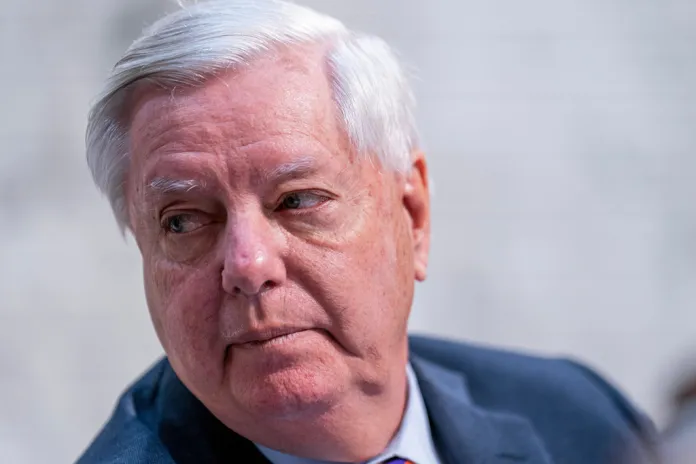
Senator Lindsey Graham, a prominent voice in the United States Congress known for his hawkish stance on international affairs, has swiftly shifted his focus from the Middle East to the Caribbean, declaring the Islamic Republic of Iran effectively dismantled while simultaneously predicting the imminent downfall of Cuba's communist government. Speaking on Fox News's "Sunday Night in America," the South Carolina Republican asserted that Iran had been "functionally destroyed" following a coordinated bombardment by American and Israeli forces over the recent weekend. According to Graham, the Iranian regime, which he characterized as a central hub for global terrorism, is on the brink of collapse. He further claimed that the nation's supreme leader, the Ayatollah, was deceased, and many key figures associated with perpetuating terrorism were either dead or in hiding. With Iran's alleged demise, Graham wasted no time in identifying the next target for what he perceives as necessary intervention, unequivocally stating that Cuba's communist dictatorship would soon meet a similar fate, declaring its "days are numbered." These bold pronouncements signal a potential new direction for aggressive foreign policy, championed by a senator known for his close ties to the executive branch.
Senator Graham's recent declarations regarding Iran and Cuba are consistent with his long-standing advocacy for assertive American foreign policy, particularly concerning regimes deemed hostile to U.S. interests. For over a decade, Graham has been a vocal proponent for the complete dismantling of the Ayatollah's government in Iran, consistently urging for robust action against the nation's leadership. His influence has been particularly notable within the orbit of President Donald Trump, where he has positioned himself as a key, albeit unofficial, advisor on matters of international intervention. Reports indicate Graham was among the most fervent proponents influencing President Trump in the lead-up to "Operation Epic Fury," a significant military action. Despite not holding a formal position within the White House administration, Graham's role as a reliable ally for the President, especially on issues requiring military engagement, has been well-documented. This history provides crucial context for understanding the weight and potential implications of his recent public statements, suggesting a continuity in his strategic thinking regarding global adversaries.
Expanding on his assessment of the situation in Iran, Senator Graham detailed his conviction that the "mother ship of international terrorism" was nearing its end, urging for the completion of the mission. He reiterated his belief that the Ayatollah, whom he referred to as the "captain of the ship," was "stone-cold dead," and that those who supported his terrorist activities were either deceased or actively evading capture. Following these definitive statements on Iran, Graham pivoted sharply to the Caribbean, asserting, "Cuba’s next." He expressed confidence that the island nation's "communist dictatorship" was destined to fall, with its "days numbered." This aggressive rhetoric is not new for the senator. His role as an enthusiastic supporter of President Trump's more confrontational foreign policy decisions was notably exemplified during a January flight aboard Air Force One. On that occasion, while President Trump addressed reporters about the then-recent alleged kidnapping of Venezuelan President Nicolas Maduro, Graham's presence and supportive stance underscored his consistent alignment with the administration's assertive approach to challenging perceived adversaries in the Western Hemisphere and beyond.
Senator Graham's pronouncements carry significant weight, not merely as personal opinions, but as potential indicators of future policy directions, particularly given his close relationship with the current administration. While he operates outside the formal structure of the White House, his consistent advocacy and influence have often preceded or mirrored major foreign policy shifts. Observers note that such definitive statements from a senior senator, especially one dubbed an "Iran hawk," could serve to galvanize public opinion or lay groundwork for further action. His immediate pivot from Iran to Cuba suggests a broader, perhaps interconnected, strategy targeting regimes perceived as threats to U.S. interests or democratic values. The implications of declaring a nation "functionally destroyed" and another "next" are profound, potentially signaling an escalation of rhetoric and, conceivably, military or diplomatic pressure. This approach could be interpreted as a continuation of a "maximum pressure" strategy, expanding its geographical scope and ideological targets, thereby shaping the discourse around global interventions.
In conclusion, Senator Lindsey Graham's recent remarks represent a forceful and rapid shift in focus, moving from a declaration of victory in Iran to an immediate call for intervention in Cuba. His assertions about Iran's leadership being decimated and the regime on the verge of collapse, coupled with his unequivocal prediction of Cuba's impending fall, underscore his consistent hawkish foreign policy stance. As a key, albeit informal, advisor to President Trump, Graham's public statements often resonate beyond typical senatorial commentary, potentially foreshadowing future U.S. engagements. The international community will undoubtedly be watching closely to see if these bold pronouncements translate into concrete policy initiatives or increased pressure on the Cuban government, following the dramatic events reported in Iran. His influence on the administration's foreign policy agenda remains a critical factor in understanding potential future U.S. actions on the global stage.