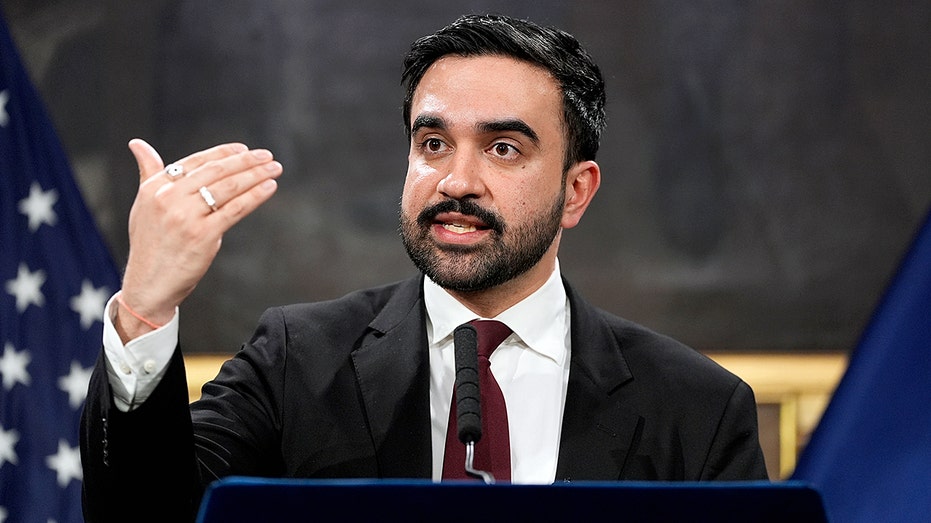
New York City Council Member Zohran Mamdani, a prominent socialist voice, is currently facing significant criticism from conservative circles on social media following his public denouncement of a recent military operation targeting Iran. The operation, reportedly a joint effort by the United States and Israel, resulted in the death of Iran’s supreme leader, Ayatollah Ali Khamenei. Mamdani’s remarks, posted on the platform X on a Saturday as details of the strike emerged, quickly gained widespread attention, accumulating approximately 20 million views. In his statement, Mamdani characterized the military action as a "catastrophic escalation in an illegal war of aggression," asserting that it involved "bombing cities" and "killing civilians," thereby "opening a new theater of war." He further contended that American citizens do not desire "another war in pursuit of regime change," instead prioritizing "relief from the affordability crisis." The council member also addressed Iranian residents of New York City directly, reassuring them of their safety within the metropolis and acknowledging their integral role in the city's diverse fabric.
The controversial military strike, which led to the demise of Ayatollah Ali Khamenei, represents a significant development in the long-standing geopolitical tensions involving Iran, the United States, and Israel. Khamenei, who served as Iran's supreme leader for decades, held ultimate authority over the country's religious, political, and military affairs, making his death a monumental event with potentially far-reaching implications for regional stability and global power dynamics. The United States and Israel have historically viewed Iran as a destabilizing force in the Middle East, citing its nuclear program, support for proxy groups, and human rights record. Against this backdrop, Council Member Mamdani's strong condemnation of the strike aligns with his socialist political ideology, which often advocates for non-interventionist foreign policy and prioritizes domestic social welfare over military engagements abroad. His public stance, therefore, not only reflects a particular political viewpoint but also highlights the deep ideological fissures within American society regarding foreign policy decisions, especially those involving military action and regime change. The swift and intense backlash from conservatives underscores the highly polarized nature of these debates, where differing perspectives on national security and international relations often clash dramatically.
Mamdani's post, which quickly went viral, drew immediate and sharp rebukes from prominent conservative figures across social media platforms. Critics argued that the council member's response appeared to exhibit sympathy for Iran's authoritarian government, a regime widely accused of severe human rights abuses. A key point of contention raised by these critics was Mamdani's perceived silence regarding the numerous Iranian protesters reportedly killed by their own government in recent years, contrasting it with his swift condemnation of the US-Israel strike. Senator Ted Cruz, a Republican, notably posted on X, suggesting that "Comrade Mayor is rooting for the Ayatollah" and quipped that "They can chant together," implying an alignment between Mamdani and the Iranian leadership. Fox News host Brian Kilmeade also weighed in, questioning Mamdani's patriotism and his understanding of the Iranian populace. Kilmeade asserted that many Iranians "hate" Khamenei and would "celebrate his death," further claiming that Khamenei was responsible for the deaths of "thousands of Americans" and "30,000 Iranians." He concluded by calling Mamdani an "embarrassment" and urging him to resign. Adding to the chorus of criticism, Iranian American journalist Masih Alinejad expressed a sense of insecurity in New York, stating that she doesn't "feel safe" with someone like Mamdani, who, in her view, "sympathizes with the regime that killed more than 30,000 unarmed Iranians in less than 24 hours." Alinejad emphatically declared that Iranians would not "allow" Mamdani "to lecture" them on the matter.
The intense reaction to Council Member Mamdani's comments underscores the profound ideological chasm that often characterizes discussions surrounding U.S. foreign policy, particularly concerning nations like Iran. Experts suggest that such controversies are not merely about the specific military action but reflect deeper divisions over America's role on the global stage, the legitimacy of interventionism, and the prioritization of human rights versus national security interests. For a socialist politician like Mamdani, whose platform often emphasizes anti-imperialism and domestic social justice, condemning military strikes and advocating for non-intervention is a consistent ideological stance. However, as this incident demonstrates, such positions can be perceived by political opponents as tacit support for adversarial regimes, especially when the target of the strike is a figure like Ayatollah Ali Khamenei, who is widely seen by many as an enemy of the U.S. and an oppressor of his own people. The rapid amplification of the controversy on social media platforms like X also highlights their role in shaping public discourse, allowing for immediate, widespread, and often highly charged reactions that can quickly escalate local political figures into national lightning rods. This incident could potentially impact Mamdani's political standing, both locally within New York City and within the broader national progressive movement, as it forces a public reckoning with how his foreign policy views resonate with diverse constituencies, including those with direct ties to the affected regions.
In conclusion, Council Member Zohran Mamdani's swift condemnation of the US-Israel strike that resulted in the death of Iran's supreme leader, Ayatollah Ali Khamenei, has ignited a significant and highly publicized conservative backlash. The controversy highlights the deep ideological divisions within American politics regarding foreign policy, military intervention, and the assessment of international adversaries. While Mamdani's statements reflect a consistent anti-war and non-interventionist stance, critics have interpreted his remarks as sympathetic to a repressive regime, drawing sharp contrasts with his perceived silence on the regime's human rights abuses against its own citizens. As the geopolitical landscape continues to evolve following Khamenei's death, and as domestic political discourse remains highly polarized, this incident serves as a potent reminder of how international events can quickly become flashpoints in local and national political debates. Observers will be watching to see how this controversy impacts Mamdani's political trajectory and how the broader discussion around U.S. foreign policy toward Iran continues to unfold in the public sphere and on social media.