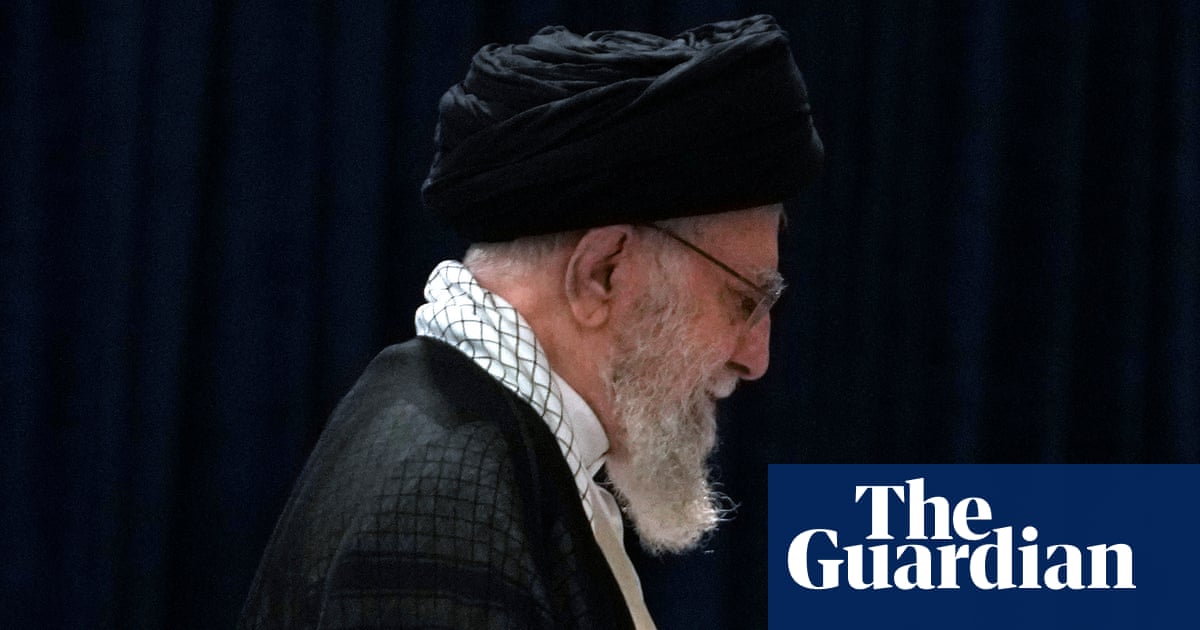
Iran's Supreme Leader, Ayatollah Ali Khamenei, has reportedly been killed in the initial phase of a military campaign launched by the United States and Israel, according to a claim made by US President Donald Trump. The President announced the death of the influential religious and political figure, who has led Iran since 1989, via a post on his Truth Social platform. President Trump characterized Khamenei as "one of the most evil people in History" and asserted that he was unable to evade "our Intelligence and Highly Sophisticated Tracking Systems," suggesting a coordinated effort with Israel. The military operation, which Trump described as a "regime change war," commenced on Saturday morning with a series of missile and airstrikes across Iran. Israeli Prime Minister Benjamin Netanyahu had previously hinted at Khamenei's demise, stating there were "many signs" he was "no longer alive," with Israeli officials later briefing media outlets that the leader's body had been recovered. This development marks a significant and volatile escalation in Middle Eastern geopolitics, with the joint US-Israeli action initiating a new regional conflict of uncertain duration and outcome.
The alleged demise of Ayatollah Ali Khamenei represents a monumental shift in the political landscape of Iran and the broader Middle East. Khamenei, who assumed the role of Supreme Leader in 1989 following the death of Ayatollah Ruhollah Khomeini, has wielded unparalleled political, military, and religious authority within Iran for over three decades. His leadership has been central to Iran's domestic and foreign policies, including its nuclear program, regional proxy networks, and confrontational stance towards the United States and Israel. The US-Israeli operation, dubbed 'Operation Epic Fury' by some sources, aims for a complete "regime change," as explicitly stated by President Trump. This objective underscores a dramatic departure from previous strategies of containment or targeted strikes, signaling a full-scale effort to dismantle the current Iranian government structure. The initiation of such a comprehensive military campaign, reportedly involving widespread air attacks, plunges an already volatile region into unprecedented instability, with global implications for energy markets, international alliances, and humanitarian concerns.
Further details emerging from President Trump's statements indicate that the military campaign, which commenced with a "barrage of missiles and airstrikes," was highly effective in targeting key Iranian leadership. According to President Trump's Truth Social post, Khamenei was not the sole casualty, with "other leaders that have been killed along with him." He further elaborated in an interview with NBC earlier on Saturday, stating that "the people that make all the decisions, most of them are gone," and that "a large amount of leadership" in Iran had been eliminated. The President also suggested that elements within Iran's security apparatus, including the Islamic Revolutionary Guard Corps (IRGC), military, and police forces, might be unwilling to continue fighting and are "looking for Immunity from us." These claims, if substantiated, point to a potentially rapid and devastating impact on Iran's command and control structures. Israeli officials, as reported, reinforced the narrative of success by indicating that Khamenei's body had been successfully recovered, lending credence to the claims of his death in the opening hours of the operation.
The implications of Khamenei's alleged death and the declared goal of regime change are profound and far-reaching. Analysts suggest that while Iran's Assembly of Experts, a body of religious leaders, is constitutionally mandated to select a new Supreme Leader upon the incumbent's death, the ultraconservative Islamic Revolutionary Guard Corps (IRGC) may be better positioned to consolidate power in the immediate aftermath. This could lead to an internal power struggle or a more militarized leadership, further complicating the regional landscape. The operation itself has been described as a "significant early success" for the joint US-Israeli forces, yet it simultaneously ushers the Middle East into a "new regional conflict with no certain timeline or outcome." Experts warn that the pursuit of regime change could lead to prolonged instability, humanitarian crises, and the potential for wider regional or even global entanglement, as various state and non-state actors react to the dramatic shift in power dynamics within Iran.
The reported death of Ayatollah Ali Khamenei, as claimed by US President Donald Trump and corroborated by Israeli officials, marks an unprecedented moment in modern Middle Eastern history. The launch of a US-Israeli military operation with the explicit aim of regime change in Iran signifies a dramatic escalation of long-standing tensions. While the immediate success of the initial strikes is being highlighted, the long-term consequences for Iran's internal stability, its regional influence, and the broader geopolitical balance remain highly uncertain. The world now watches for official confirmation from Tehran, the process of succession, and the potential for further military actions or retaliatory measures that could redefine the future of the Middle East. The coming days will be critical in understanding the full scope and impact of this audacious military undertaking.