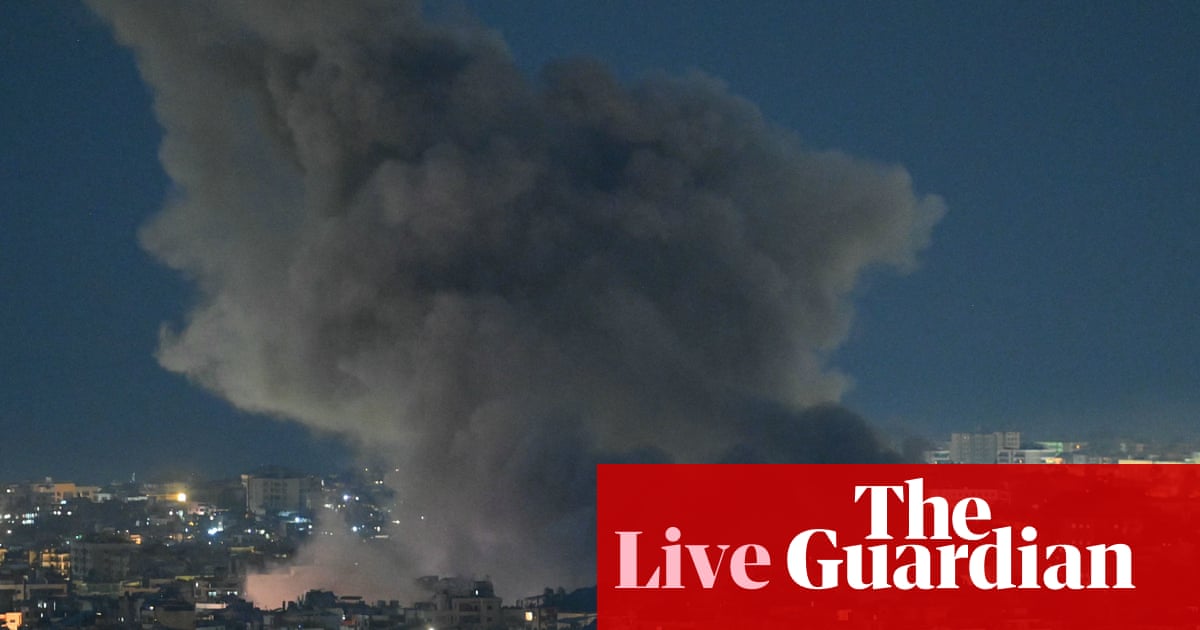
The Middle East faces escalating tensions as Israeli Prime Minister Benjamin Netanyahu recently conveyed that the ongoing conflict would necessitate a considerable period for resolution, though he assured it would not be an interminable engagement. Simultaneously, the United States State Department has initiated significant security measures, instructing non-essential government personnel and their families to depart from Bahrain and Jordan. This directive follows a similar order issued just a day prior for staff stationed in Iraq, citing heightened security concerns across the region. These developments unfold amidst reports of retaliatory actions from Iran in response to recent US-Israeli strikes. Furthermore, military strategists and technology experts are increasingly vocal about the implications of artificial intelligence tools being deployed in these conflicts, warning that such advancements could usher in an era of military strikes executed at an unprecedented velocity, potentially outpacing human decision-making capabilities. The confluence of these events underscores a deeply volatile geopolitical landscape, prompting nations to reassess their diplomatic and security postures.
The backdrop to these recent announcements is a deeply entrenched and rapidly evolving crisis across the Middle East, marked by a complex web of geopolitical rivalries and military engagements. The US State Department's decision to evacuate non-emergency personnel from multiple regional allies – Bahrain, Jordan, and Iraq – signals a tangible increase in perceived threat levels for American citizens and interests abroad. This move is particularly significant given the broader context of Iran's stated retaliatory actions following joint US-Israeli military operations, suggesting a direct link between these strikes and the subsequent security concerns. Prime Minister Netanyahu's remarks regarding the duration of the conflict are crucial for managing public expectations both domestically and internationally, indicating a strategic intent to pursue objectives over an extended timeline while attempting to alleviate fears of an open-ended war. The Israeli military's reported identification of numerous potential targets in Lebanon further highlights the potential for the conflict to expand geographically, adding another layer of complexity to an already volatile situation and raising concerns about regional stability.
Specific details regarding the US State Department's directives indicate a phased withdrawal of personnel. On Tuesday, officials stated that non-emergency US government employees and their family members were ordered to leave Bahrain and Jordan. This action was accompanied by updated travel advisories for both nations, reflecting the ordered departures. A day earlier, on Monday, the department had already mandated the departure of non-emergency US government staff from Iraq, explicitly citing security concerns as the primary driver for the decision, according to reports from Agence France-Presse. In a separate but equally critical development, experts have voiced profound apprehension regarding the integration of artificial intelligence tools into military operations. They warn that the use of AI to facilitate attacks, particularly against targets in Iran, heralds a new paradigm where bombing campaigns could be executed with a speed described as 'quicker than the speed of thought.' Reports by Robert Booth and Dan Milmo specifically indicate that Anthropic’s AI model was reportedly utilized by the US military in recent barrages of strikes, a technology that purportedly 'shortens the kill chain' – the entire process from target identification to legal approval and the ultimate launch of a strike, raising questions about human oversight.
The increasing reliance on advanced AI in military operations presents a multifaceted analytical challenge, prompting experts to weigh the tactical advantages against significant ethical and strategic concerns. While proponents might argue that AI's ability to 'shorten the kill chain' enhances operational efficiency and responsiveness, critics caution that this accelerated decision-making process could sideline human judgment, potentially leading to unintended escalation or miscalculation in high-stakes environments. The implications for international law and accountability in warfare, where the line between human and machine decision-making blurs, are profound. Concurrently, the US decision to evacuate non-essential personnel from key Middle Eastern nations serves as a powerful diplomatic signal, underscoring the perceived instability and the potential for broader regional conflict. This move could be interpreted as both a precautionary measure for American lives and a strategic indicator of Washington's assessment of the escalating risks, potentially influencing the calculations of other regional and international actors. Prime Minister Netanyahu's framing of the conflict's duration, while aiming to manage expectations, also signals a determined long-term strategy, suggesting that a swift resolution is unlikely and that the region must brace for a protracted period of engagement and uncertainty.
In summary, the Middle East is navigating a period of intense volatility, characterized by Israel's stated commitment to a sustained, albeit not endless, conflict and the United States' proactive measures to safeguard its personnel in key regional states. The strategic implications of these developments are compounded by the emerging role of artificial intelligence in modern warfare, which promises unprecedented speed but also raises serious questions about human oversight and the potential for rapid escalation. As regional powers and international actors continue to respond to the evolving security landscape, the coming weeks will be critical in determining whether diplomatic efforts can de-escalate tensions or if the conflict risks broadening. Observers will closely monitor any further military actions, the impact of AI on battlefield dynamics, and the humanitarian consequences of what Prime Minister Netanyahu has indicated will be a conflict requiring 'some time' to conclude.