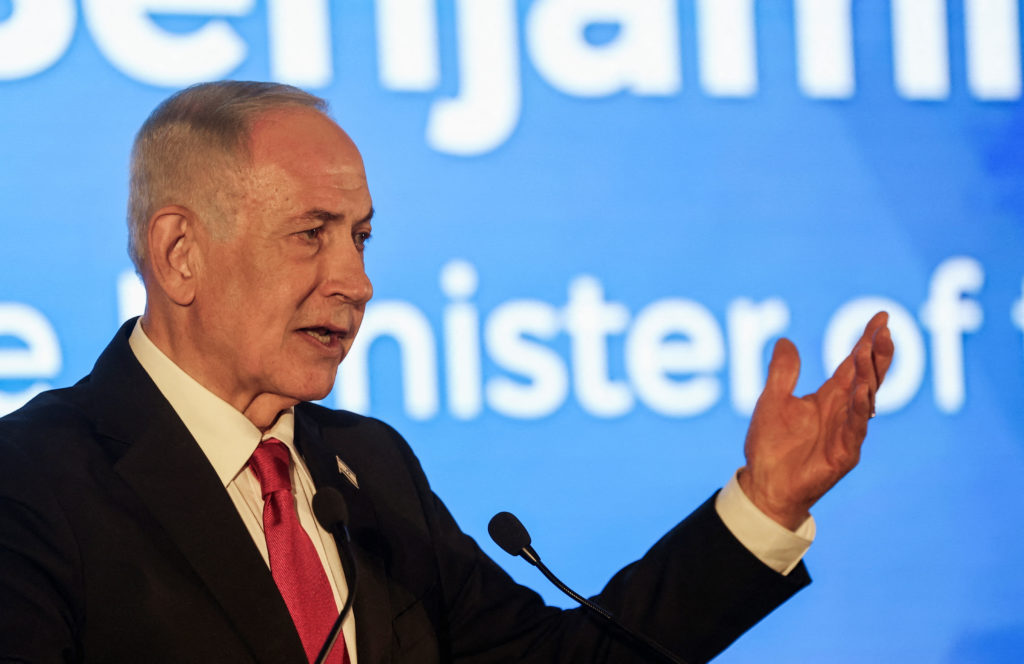
Israeli Prime Minister Benjamin Netanyahu recently issued a stark warning regarding the ongoing tensions with Iran, indicating an aggressive posture from his nation. According to recent statements, Netanyahu conveyed his government's resolve to strike numerous additional sites associated with what he termed the 'terror regime' in the upcoming period. This declaration signals a potential escalation in the long-standing shadow conflict between the two regional powers, suggesting a broad scope for future military actions. Concurrently, the Israeli leader articulated a commitment to fostering an environment conducive to the Iranian populace's liberation from oppressive rule, as indicated by his remarks. This dual message combines a direct military threat with an appeal to the Iranian people, framing Israel's actions as not only defensive but also supportive of internal change within Iran. The pronouncements underscore the complex and multifaceted nature of the geopolitical struggle in the Middle East, where military strategy often intertwines with ideological messaging aimed at influencing both state actors and civilian populations.
The context surrounding Prime Minister Netanyahu's recent remarks is rooted in decades of profound animosity and strategic competition between Israel and Iran. Both nations view each other as significant threats to their regional security and national interests, leading to a protracted period of proxy conflicts, covert operations, and diplomatic hostilities. Iran, often referred to by Israeli officials as a 'terror regime,' is frequently accused of destabilizing the Middle East through its support for various militant groups, its nuclear program aspirations, and its expanding regional influence. Conversely, Iran views Israel as an occupying power and a key ally of the United States, posing a threat to its sovereignty and the broader Islamic world. Netanyahu's reference to 'thousands more targets' reflects Israel's consistent stance that it reserves the right to act preemptively against perceived Iranian threats, whether directly or through its proxies. The call for the Iranian people to 'free themselves from the chains of tyranny' also aligns with a long-held Israeli and Western narrative that seeks to differentiate between the Iranian government and its citizens, often expressing solidarity with the latter in hopes of internal political transformation.
Delving deeper into the implications of Netanyahu's statements, the phrase 'thousands more targets' suggests a comprehensive and potentially sustained campaign rather than isolated strikes. While specific details were not provided in the reported remarks, such targets could encompass a wide array of assets, including military installations, missile sites, drone manufacturing facilities, nuclear infrastructure, and logistical hubs supporting Iranian-backed militias across the region. The sheer scale implied by 'thousands' indicates a strategic intent to significantly degrade Iran's military capabilities and its network of influence. Furthermore, the characterization of the Iranian government as a 'terror regime' and its rule as 'chains of tyranny' is a deliberate rhetorical choice. This language serves to delegitimize the current Iranian leadership on the international stage and to galvanize domestic opposition within Iran. It positions any potential Israeli military action not merely as an act of self-defense, but also as a contribution to a broader struggle for human rights and freedom, aligning with a narrative that seeks to garner international sympathy and support for such interventions.
Analysts suggest that Prime Minister Netanyahu's dual message carries significant strategic weight, aimed at both deterring the Iranian regime and potentially encouraging internal dissent. Expert perspectives indicate that such strong rhetoric often serves multiple purposes: signaling resolve to adversaries, reassuring domestic audiences of strong leadership, and attempting to shape international opinion. The explicit mention of 'thousands more targets' could be interpreted as a psychological warfare tactic, designed to create uncertainty and pressure within the Iranian military and political establishment. Simultaneously, directly addressing the 'brave Iranian people' is a clear attempt to sow discord between the populace and its government, potentially fueling existing grievances over economic hardship, social restrictions, and political freedoms. However, this approach also carries risks, as it could be perceived by some as foreign interference, potentially consolidating support for the regime among nationalist elements. The broader implications for regional stability are substantial, with any large-scale military action threatening to ignite a wider conflict involving multiple state and non-state actors across the volatile Middle East.
In summary, Prime Minister Benjamin Netanyahu's recent declarations underscore a period of heightened tension and strategic maneuvering in the Middle East. His statements, combining a potent military threat against what he terms the 'terror regime' with an appeal for the Iranian people's liberation from 'tyranny,' reflect a complex strategy. This approach aims to project strength, deter adversaries, and potentially influence internal dynamics within Iran. The coming days and weeks will be crucial in observing whether these strong words translate into concrete actions or remain primarily a form of strategic communication. The international community will undoubtedly be watching closely for any developments that could further destabilize an already fragile region, as the implications of such rhetoric and potential actions extend far beyond the immediate parties involved, impacting global security and energy markets.