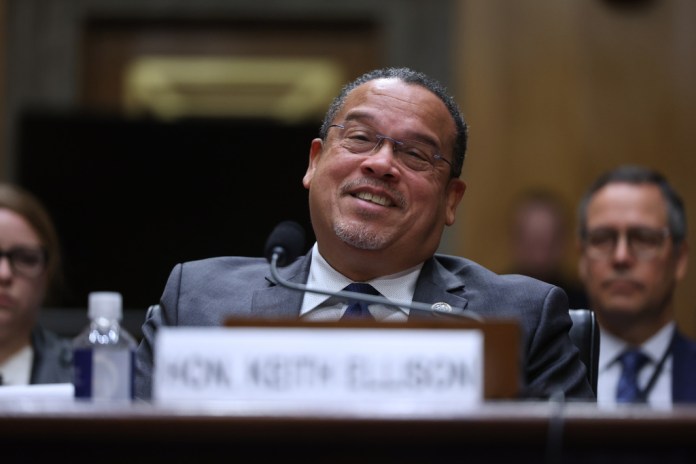
Minnesota's Attorney General, Keith Ellison, has initiated a federal lawsuit seeking to prevent the Trump administration from continuing its suspension of a significant portion of federal Medicaid funding allocated to the state. The legal action, filed on Monday in the U.S. District Court in Minneapolis, specifically targets the pause on approximately $243 million in healthcare funding, which the lawsuit contends is an illegal withholding. Attorney General Ellison, a Democrat, has also requested a temporary restraining order to immediately block the funding suspension, expressing profound concern over the potential adverse effects this financial cut could have on Minnesotans who rely on these critical healthcare services. This legal challenge underscores a growing tension between the state and the federal government regarding the allocation and control of vital social welfare programs, with state officials emphasizing the necessity of these funds for their vulnerable populations.
The federal government's decision to pause the funding stems from an announcement made last week by Vice President JD Vance. According to reports, Vance indicated that over $259 million in Medicaid funding would be withheld from Minnesota due to allegations that state officials were not adequately addressing widespread fraud within the state's social services programs. The Trump administration reportedly provided the state with a 60-day window to respond to these concerns and demonstrate corrective actions. In a swift reaction to this federal directive, Minnesota Governor Tim Walz, also a Democrat, unveiled a series of proposed anti-fraud legislative measures just one day after Vice President Vance's announcement. These proposals aim to enhance detection and oversight mechanisms, bolster investigative and enforcement authorities, and increase criminal penalties for fraudulent activities, signaling the state's commitment to addressing the federal government's concerns.
Attorney General Ellison's legal filing and accompanying statements articulate a strong rebuke of the administration's actions. He characterized the Trump administration's approach as a pattern of
This federal lawsuit represents more than just a dispute over funding; it symbolizes a broader ideological and political clash between a Democratic-led state and the Republican federal administration. Analysts suggest that the outcome of this case could establish significant precedents for other states facing similar challenges regarding federal funding for social services and healthcare. The allegations of rampant fraud, while a legitimate concern for federal oversight, are also viewed by some observers as a potential point of leverage in political negotiations over state-managed programs. The delicate balance between federal responsibility to ensure proper use of taxpayer money and states' autonomy in managing their programs is at the heart of this legal battle. Should the temporary restraining order be granted, it would offer Minnesota a crucial reprieve, allowing the state to continue receiving funds while the court examines the legality of the federal government's actions. Conversely, a denial would place immediate and considerable financial pressure on Minnesota's healthcare infrastructure.
In summary, Minnesota has escalated its opposition to the Trump administration's decision to pause a substantial portion of its Medicaid funding by filing a federal lawsuit. Attorney General Keith Ellison maintains that the withholding of approximately $243 million is illegal and detrimental to state residents, while the administration, through Vice President JD Vance, cites concerns over widespread fraud in Minnesota's social services. The immediate focus will be on the court's decision regarding the temporary restraining order, which could temporarily halt the funding pause. Beyond this initial ruling, observers will closely monitor the administration's formal response to the lawsuit and the legislative progress of Governor Tim Walz's proposed anti-fraud measures. This ongoing legal and political confrontation highlights the persistent tensions between federal oversight and state autonomy, particularly concerning the funding and administration of vital public health programs.