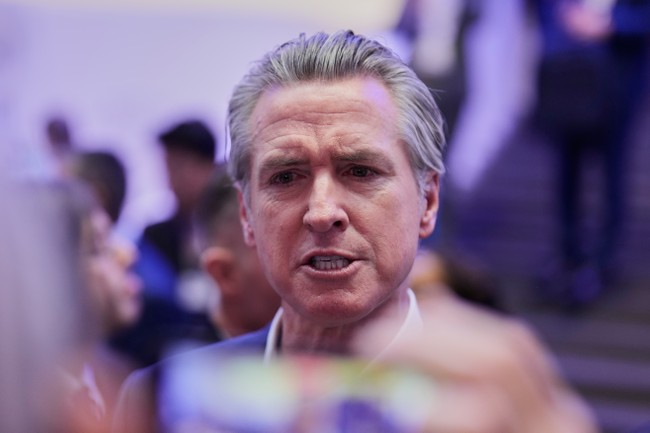
California Governor Gavin Newsom, a prominent Democrat widely speculated to harbor presidential ambitions, faced significant political fallout following an attempt to criticize President Trump regarding domestic gas prices. This social media broadside occurred in the immediate aftermath of "Operation Epic Fury," a joint military action by the United States and Israel that reportedly neutralized Iran's Supreme Leader Ayatollah Ali Khamenei and a substantial portion of the Islamic Republic regime's leadership early Saturday morning. Newsom's outreach, which included a post on February 28, 2026, highlighting California's recent gas price stability, was swiftly met with sharp rebukes from various quarters, particularly from energy industry representatives. Critics, including the Gas Association, quickly pointed out the Golden State's long-standing issue with the nation's highest fuel costs, suggesting the governor's remarks were ill-timed and detached from reality. The incident, according to political observers, underscored the risks of leveraging complex international events for domestic political gain, especially when a politician's home state faces persistent challenges in the very area of critique.
The backdrop to Governor Newsom's controversial social media activity was the highly sensitive "Operation Epic Fury," a series of coordinated airstrikes that dramatically reshaped the geopolitical landscape of the Middle East. This audacious military operation, conducted jointly by U.S. and Israeli forces, reportedly targeted and eliminated key figures within Iran's leadership structure, including its supreme religious authority. The mission immediately drew intense scrutiny and condemnation from many within the Democratic party, who characterized the actions as "illegal," "dangerous," and "criminal," according to various reports. Governor Newsom, whose political standing had reportedly seen a decline in 2026 following a series of perceived missteps, was widely believed to be seeking an opportunity to bolster his profile. Sources close to his administration suggested the governor or his communications team aimed to capitalize on the international conflict by publicly challenging the President, a move that ultimately backfired due to its perceived insensitivity and factual inaccuracies regarding California's energy market. This context highlights a calculated, albeit flawed, political maneuver by a figure often linked to future presidential aspirations.
The specific content of Governor Newsom's social media engagement quickly became a focal point of the controversy. On February 28, 2026, his press office issued a statement via social media asserting that "Average gas prices in California have stayed below $5 for nearly two years." This was followed by another post suggesting, "Trump’s new war is already rattling markets. We’re watching this space. Closely." These statements were widely interpreted as an attempt to draw a direct correlation between the recent military actions and potential market instability, while simultaneously defending California's energy policies. However, the response from industry experts and critics was immediate and severe. Reports indicate that the governor's communications team, described by some as "juvenile," was "savaged" for its perceived disconnect from economic realities. Critics, notably from the Gas Association, swiftly highlighted that California consistently registers the highest gasoline prices nationwide, often by a significant margin. Furthermore, concerns were raised about the ongoing exodus of refineries from the state and the potential for a proposed mileage tax to further burden residents, making the governor's claims about stable prices seem disingenuous to many observers.
Political analysts have offered various perspectives on the implications of Governor Newsom's ill-fated social media strategy. Experts suggest that attempting to "troll" an incumbent president, particularly during a period of significant international military engagement, carries substantial risks, especially when the critique touches upon an area where the critic's own state faces chronic issues. For Newsom, whose presidential ambitions are frequently discussed, this incident could further erode public trust and damage his political "stock," which reports indicate had already been declining in 2026. The episode underscores the critical importance of strategic and fact-based communication for high-profile political figures. Furthermore, the strong reaction from the energy sector, including the Gas Association, brings renewed attention to California's complex energy landscape. The ongoing departure of refineries, coupled with the debate around a potential mileage tax, points to deeper structural issues that critics argue are exacerbated by state policies, rather than being solely attributable to federal actions or international conflicts. This incident, therefore, not only reflects on Newsom's political judgment but also spotlights persistent economic challenges within California itself.
In conclusion, Governor Gavin Newsom's attempt to leverage the geopolitical fallout from "Operation Epic Fury" to criticize President Trump on domestic gas prices proved to be a significant miscalculation. His social media posts, intended to highlight California's gas price stability and link market volatility to the President's actions, were met with an immediate and sharp backlash from industry groups and political commentators. The incident served as a stark reminder of California's enduring struggle with the nation's highest fuel costs and the broader economic implications of its energy policies, including refinery closures and potential new taxes. For Governor Newsom, this episode could further complicate his rumored presidential aspirations, emphasizing the need for carefully considered and well-substantiated public statements, particularly during times of national and international tension. Moving forward, observers will be watching how this event impacts Newsom's political trajectory and whether it reignites more substantive debates about California's long-term energy strategy and economic resilience.