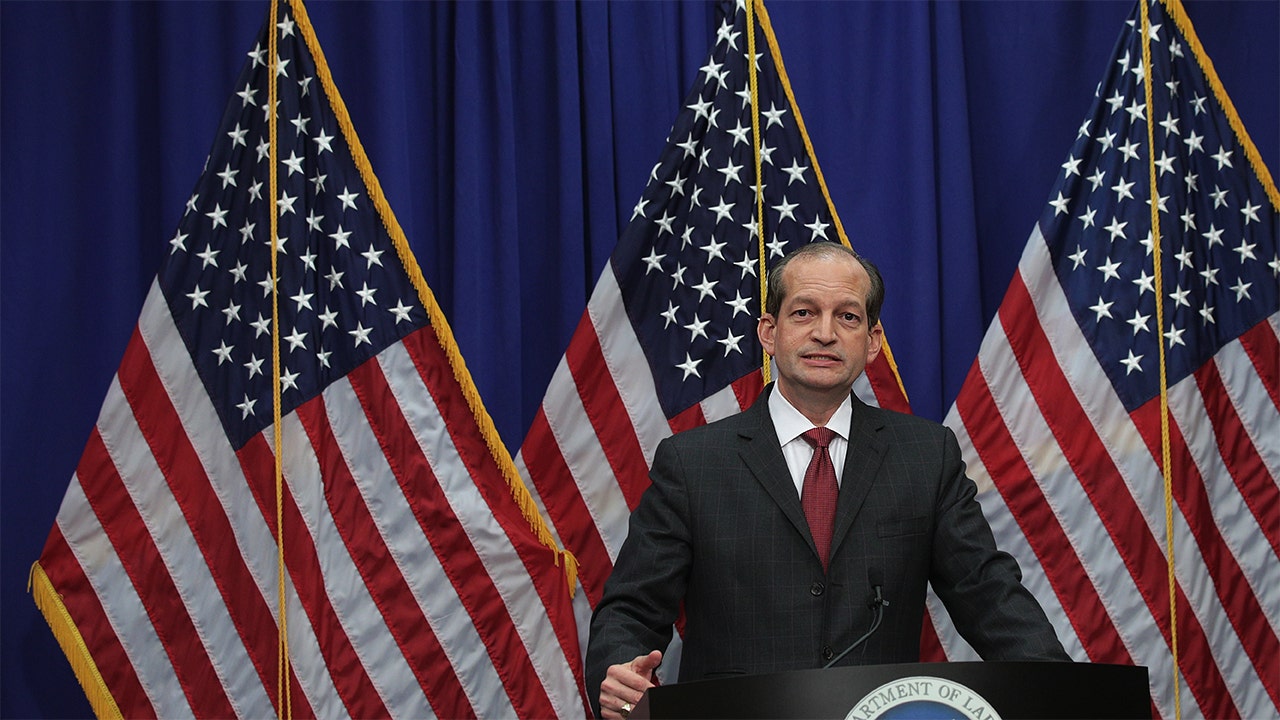
Freshly disclosed documents pertaining to the late financier Jeffrey Epstein have cast renewed and intense scrutiny on Alex Acosta, a former U.S. Attorney for the Southern District of Florida who later served in the Trump administration. These revelations, made public under the Epstein Transparency Act, detail the extensive efforts Epstein undertook to cultivate a powerful network, particularly within South Florida's legal and political spheres, including the Justice Department itself. According to reports, this intricate web of connections enabled Epstein to secure preferential treatment and an unusually lenient plea agreement in 2007, despite a growing number of disturbing allegations from victims. The new information, which includes a transcript of Acosta's testimony to the House Oversight Committee and details of a significant 'data gap' on his computer during the critical period of the plea negotiations, has prompted a fresh wave of questions regarding the integrity of the initial federal investigation and the accountability of those involved in its resolution. Observers and lawmakers alike have expressed shock over the extent of the influence peddling and the apparent failures in leadership that allowed Epstein to seemingly operate above the law for years.
The context surrounding these new disclosures underscores a long-standing concern about how Epstein managed to evade more severe consequences for his alleged crimes for so long. For decades, the disgraced financier meticulously built a coterie of influential relationships, leveraging these ties to navigate legal challenges and, according to various accounts, secure favorable outcomes. This strategy was particularly effective in South Florida, where his connections reportedly extended to individuals directly responsible for upholding justice. The documents released through the Epstein Transparency Act illustrate how these powerful friendships and significant lapses in oversight converged, creating what some have described as a protective network that shielded Epstein. This 'web of inoculation' allowed him to continue his activities despite an increasing volume of victim reports, which were consistently chilling in their details. The 2007 plea deal, negotiated and approved by Acosta, has long been a focal point of criticism, seen by many as a 'sweetheart' arrangement that granted Epstein and his co-conspirators undue leniency and immunity from further federal prosecution, effectively curtailing a broader investigation into his extensive criminal enterprise.
Among the most striking details emerging from the recently published materials are those concerning the specific actions and circumstances surrounding Alex Acosta's involvement. While Acosta's role in negotiating the controversial 2007 plea deal is not a new revelation, the depth of the newly available information has intensified calls for accountability. Reports highlight a critical 'data gap' on Acosta's computer, spanning nearly a full year from May 2007 to April 2008. This timeframe is particularly significant as it precisely coincides with the period when Epstein's defense attorneys were aggressively lobbying federal prosecutors to terminate the federal case against him. Furthermore, the documents and subsequent reports have brought to light alleged relationships between Epstein's defense lawyers and former prosecutors within the Southern District, raising further questions about potential conflicts of interest and undue influence. Acosta's testimony to House Oversight Committee lawmakers last year, the transcript of which is now available, has been scrutinized anew, with external observers and legislators pressing for detailed explanations regarding his decisions and the circumstances surrounding the highly unusual agreement that ultimately benefited Epstein.
The implications of these newly surfaced details are profound, sparking a renewed debate about the integrity of the justice system and the potential for powerful individuals to manipulate it. Experts suggest that the alleged 'data gap' and the reported connections between legal teams raise serious questions about the transparency and fairness of the judicial process, particularly when high-profile defendants are involved. This situation, according to legal analysts, underscores the critical importance of robust oversight and stringent ethical guidelines within the Department of Justice to prevent such perceived compromises. The revelations also highlight the enduring struggle for victims of Epstein's alleged crimes, whose pursuit of justice has been repeatedly hampered by what appears to be a systemic failure of accountability. Observers note that the renewed scrutiny on Acosta and the Justice Department could lead to further investigations, potentially uncovering additional layers of influence and complicity that allowed Epstein to operate with apparent impunity for so long, eroding public trust in the institutions meant to protect the vulnerable.
In conclusion, the recent release of Jeffrey Epstein documents under the Epstein Transparency Act has reignited a critical examination of how the late financier leveraged his extensive network to secure an unusually favorable plea deal in 2007. The focus remains sharply on Alex Acosta, the former U.S. Attorney who negotiated the agreement, with new questions arising from a significant 'data gap' on his computer during the crucial negotiation period and alleged connections between legal teams. These revelations underscore the persistent concerns regarding the influence of power and wealth within the justice system and the profound impact on Epstein's victims. As the public and lawmakers continue to digest these details, the pressure for transparency and accountability within the Justice Department is expected to intensify, signaling a continued pursuit of answers regarding the systemic failures that allowed a notorious predator to escape full justice for years.