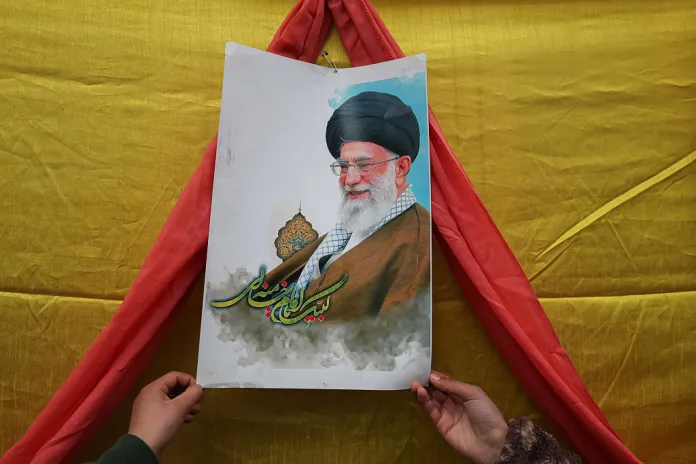
Iran is poised to select its next Supreme Leader within a remarkably swift timeframe, potentially in "one or two days," according to an announcement made by Iranian President Masoud Pezeshkian on Sunday. This urgent transition follows the death of Ayatollah Ali Khamenei, who was reportedly killed in a series of joint U.S. and Israeli military strikes. President Pezeshkian emphasized that the process for leadership succession is already in motion, even as the region grapples with ongoing U.S.-Israeli aerial assaults and retaliatory actions from Iran. The sudden vacancy at the pinnacle of Iranian power has ignited intense speculation both domestically and internationally. Adding to the complexity, former U.S. President Donald Trump has alluded to potential candidates for the role, remarking that "There are some good candidates," suggesting external interest in the outcome of this critical leadership change during a period of heightened geopolitical tension.
The demise of Ayatollah Ali Khamenei marks a profound turning point for Iran, given his extensive 37-year tenure as the nation's supreme authority. His death, occurring during what has been described as the initial phase of a U.S.-Israel military campaign, has plunged Iran into a significant leadership vacuum and crisis. In accordance with Iran's constitutional framework, an interim leadership body has temporarily assumed the responsibilities of the Supreme Leader to ensure continuity of governance. This caretaker council comprises key figures including President Pezeshkian, judiciary chief Mohseni Ejei, and Alireza Arafi, a prominent cleric from the Guardian Council. The responsibility for selecting a permanent successor rests with the Assembly of Experts, an influential 88-member clerical assembly. This body is constitutionally mandated to act with dispatch following the death of a Supreme Leader, underscoring the urgency of the current situation and the need to stabilize the political landscape amidst ongoing regional hostilities.
The selection process for Iran's new Supreme Leader is designed for speed and discretion, reflecting both constitutional imperatives and the pressing need for stability during a period of active military conflict. The Assembly of Experts, the clerical body tasked with this crucial decision, is expected to convene behind closed doors. During these private deliberations, members will assess and choose from a pool of qualified senior clerics, ultimately announcing their decision to the nation. Iranian authorities have concurrently declared a period of national mourning while also actively coordinating military responses to continued Israeli strikes, highlighting the dual challenges of internal transition and external defense. Reports from CENTCOM indicate that three U.S. service members have been killed in operations against Iran, further underscoring the volatile nature of the current regional engagements. President Pezeshkian's assurance that the leadership transition is proceeding despite ongoing U.S.-Israeli airstrikes and Iranian retaliatory attacks across the region aims to project an image of resilience and controlled succession.
The rapid succession process, unfolding amidst a backdrop of intense military conflict and internal uncertainty, carries significant implications for Iran's future trajectory and its role in regional dynamics. The task of replacing a figure as long-serving and influential as Ayatollah Khamenei presents an immense challenge, potentially altering the balance of power within the Islamic Republic. Observers are closely watching for any shifts in Iran's foreign policy or military posture that might emerge under new leadership. Meanwhile, opposition figures, such as former Crown Prince Reza Pahlavi, who has previously expressed readiness to lead a transitional government, remain a factor in the broader political landscape. Pahlavi, whose family governed Iran before the 1979 revolution, has not yet secured an endorsement from former President Trump, indicating the complex interplay of internal and external forces at play. The compressed timeline for selection underscores the leadership's imperative to demonstrate unwavering continuity and control in a highly volatile environment, both to its populace and to international actors.
In summary, Iran faces a critical juncture as it moves swiftly to appoint a new Supreme Leader following the death of Ayatollah Ali Khamenei. The process, guided by the Assembly of Experts and overseen by an interim council, is unfolding with remarkable speed, driven by constitutional requirements and the urgent need for stability amidst ongoing U.S.-Israeli military operations and Iranian retaliatory actions. The coming days will be crucial as the world watches for the announcement of Khamenei's successor and the immediate implications for Iran's domestic and foreign policies. The outcome of this leadership transition will undoubtedly shape the future of the Islamic Republic and significantly impact the already tense geopolitical landscape of the Middle East, making it a pivotal event in contemporary Iranian history.