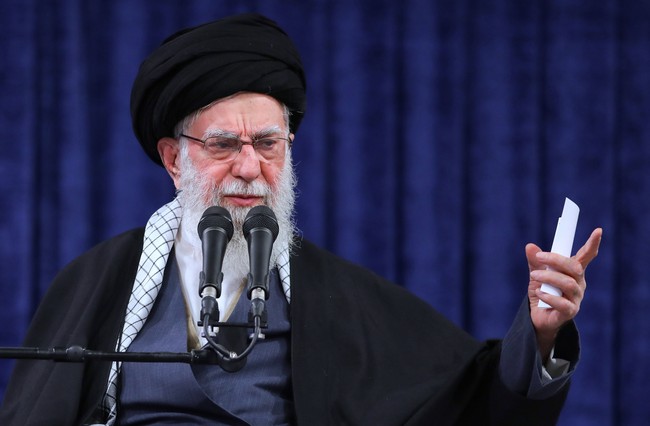
Ayatollah Ali Khamenei, the long-serving Supreme Leader of Iran, reportedly died at the age of 86 following U.S.-Israeli military strikes, an event that quickly became a focal point for international discussion. However, the immediate aftermath on Saturday, March 1, 2026, was dominated by a significant controversy surrounding The New York Times' initial obituary-style headline. The prominent newspaper ran with the headline, "Ayatollah Ali Khamenei, Hard-Line Cleric Who Made Iran a Regional Power, Is Dead at 86." This specific phrasing ignited an immediate and widespread backlash across social media platforms and among various commentators, who accused the publication of downplaying the leader's widely reported brutal legacy. Critics argued that the headline's emphasis on Khamenei's role in making Iran a "Regional Power" offered a subtly positive spin, failing to adequately reflect the numerous allegations of repression, terrorism, and anti-Western aggression associated with his decades-long rule, thereby sparking a heated debate about journalistic responsibility in reporting on controversial global figures.
Khamenei's tenure as Iran's second Supreme Leader spanned several decades, during which he consolidated immense power and profoundly shaped the nation's domestic and foreign policies. According to numerous international reports, his leadership was characterized by a severe crackdown on internal dissent, with countless political opponents and activists reportedly facing imprisonment, torture, or execution. Simultaneously, under his guidance, Iran significantly expanded its influence across the Middle East, often through proxies, leading to increased regional tensions and direct challenges to the dominance of rivals like Saudi Arabia. This expansion, while seen by some as a strategic achievement for Iran, was widely condemned by Western nations and human rights organizations as destabilizing and supportive of various terrorist groups. The reported elimination of such a central figure through U.S.-Israeli military actions marks a monumental shift in the geopolitical landscape, promising significant implications for the future stability of the region and Iran's internal dynamics, with some observers suggesting it could pave the way for a new era for the Iranian populace.
The core of the criticism leveled against The New York Times' headline centered on its perceived failure to adequately contextualize Khamenei's controversial actions. Many commentators, including prominent voices on social media, expressed outrage that the phrase "Made Iran a Regional Power" could be interpreted as a commendation, especially when juxtaposed against the widely documented human rights abuses and state-sponsored terrorism attributed to his regime. This framing drew immediate comparisons, as noted by numerous critics, to The Washington Post's heavily criticized obituary headline for Abu Bakr al-Baghdadi, the former leader of the Islamic State group, which famously described him as an "austere religious scholar." While The New York Times' subsequent text, or sub-header, did offer a more critical perspective—stating that "As Iran’s second supreme leader, he brutally crushed dissent at home and expanded Iran’s footprint abroad, challenging Saudi Arabia for regional dominance"—critics argued that this crucial context was often lost in social media shares and search engine results, where only the main headline is prominently displayed, thereby diminishing its impact and potentially misleading readers about the full scope of Khamenei's legacy.
The intense public reaction to The New York Times' headline underscores a persistent tension in modern journalism: how to report factually on the death of a brutal authoritarian figure without inadvertently sanitizing their legacy or appearing to legitimize their actions. Experts in media ethics often debate the fine line between objective reporting and the moral responsibility to reflect the full, often grim, impact of a leader's rule. In an era dominated by rapid information consumption and social media sharing, headlines frequently become the sole takeaway for many readers, shaping public perception more profoundly than the detailed articles they introduce. This incident highlights how seemingly minor linguistic choices in prominent publications can trigger widespread accusations of media bias and a perceived 'soft-pedaling' of figures responsible for significant human rights violations and international aggression. Such controversies can contribute to a broader erosion of public trust in traditional news outlets, fueling narratives that question the impartiality and integrity of legacy media institutions, particularly when reporting on complex geopolitical events and controversial leaders.
The death of Ayatollah Ali Khamenei, reportedly at the hands of U.S.-Israeli military forces, marks a pivotal moment for Iran and the Middle East, but the ensuing media controversy has equally underscored critical challenges facing contemporary journalism. The debate surrounding The New York Times' headline illustrates the profound impact of framing on public perception and the ongoing struggle for news organizations to encapsulate complex, often brutal, legacies in concise, impactful language. As the world watches for the geopolitical ramifications of Khamenei's demise, this incident serves as a stark reminder of the public's demand for comprehensive, unvarnished reporting on figures implicated in widespread repression and violence. The discussion will undoubtedly continue to influence how major media outlets approach the sensitive task of memorializing controversial leaders, emphasizing the critical balance between factual accuracy and ethical responsibility in a fragmented and rapidly consuming digital news landscape.