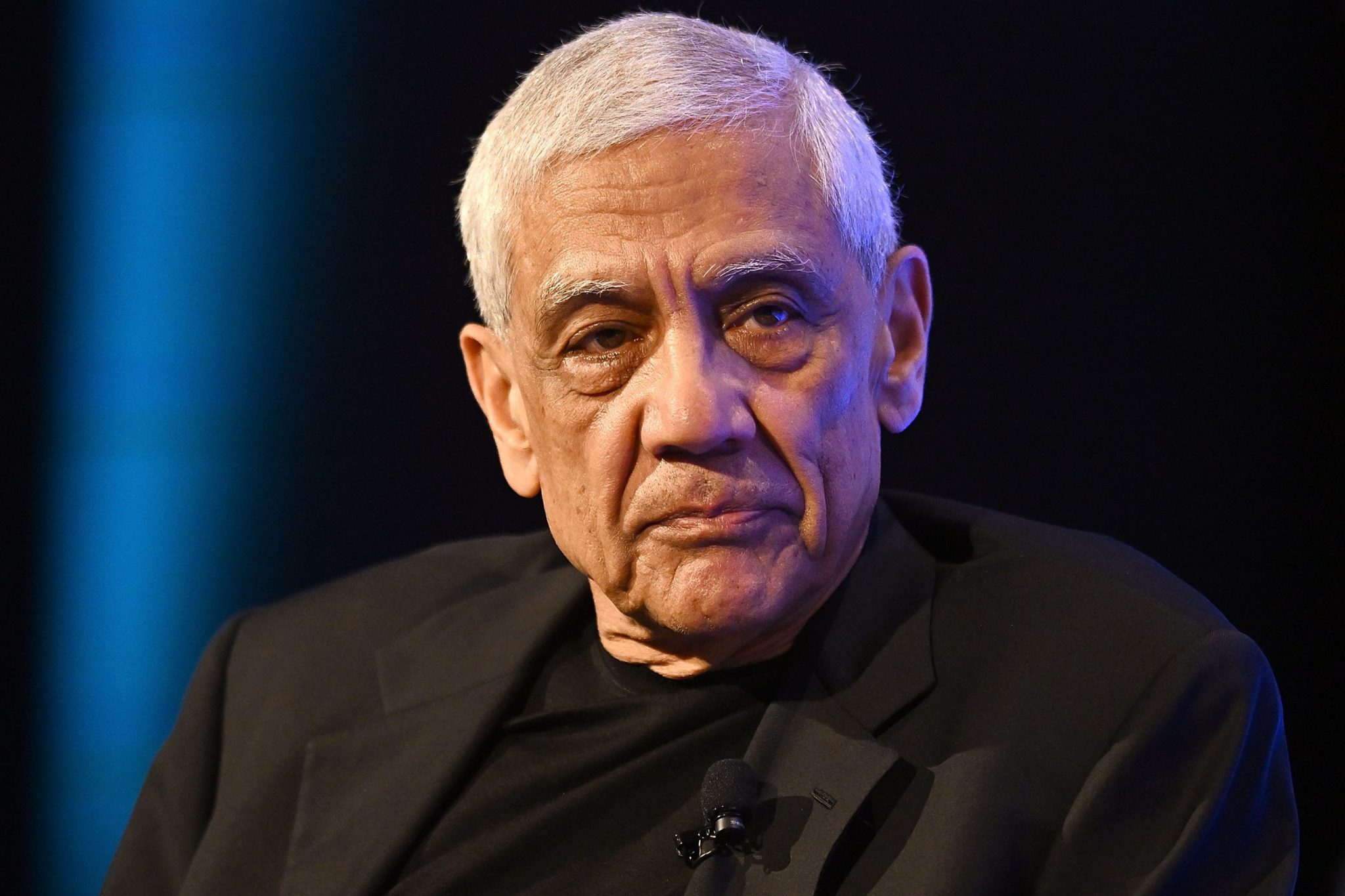
A profound transformation in the global labor market is on the horizon, according to prominent venture capitalist Vinod Khosla, an early backer of OpenAI. Khosla recently articulated a bold vision, suggesting that the current generation of five-year-olds may never need to seek traditional employment due to the rapid advancement of artificial intelligence. Speaking on Fortune Editor-in-Chief Alyson Shontell's 'Titans and Disruptors of Industry' podcast, Khosla projected that AI technology will soon be capable of performing an overwhelming majority—up to 80%—of all existing job functions. This includes highly skilled professions such as physicians and radiologists, alongside roles like accountants and salespeople. This anticipated widespread displacement by AI is expected to dramatically reduce labor costs, potentially driving them to near zero, which in turn would make a vast array of goods and services significantly more affordable for the general populace. Khosla's outlook paints a picture of a future where the conventional pursuit of a college degree for career advancement, or indeed the necessity of a job itself, becomes obsolete for today's youngest individuals.
Khosla's predictions stem from a deep engagement with the artificial intelligence sector, where his firm, Khosla Ventures, played a pivotal role as one of the initial institutional investors in OpenAI back in 2019. This early strategic investment positions Khosla as a key figure with insights into the trajectory and potential of AI technologies. His perspective is not merely speculative but informed by direct involvement with companies at the forefront of AI innovation. The concept of AI fundamentally reshaping the economy and societal structures has been a topic of increasing discussion among technologists and economists alike. However, Khosla's assertion regarding the complete eradication of the need for employment for an entire generation represents one of the most optimistic, yet potentially disruptive, forecasts to date. This vision suggests a paradigm shift far beyond simple automation, envisioning a future where human labor is largely decoupled from economic production, leading to an abundance of goods and services previously unimaginable.
Delving deeper into the implications of this technological revolution, Khosla elaborated on the anticipated economic shifts. He emphasized that the elimination of labor costs would not only make products and services cheaper but would also fundamentally alter traditional economic metrics. According to Khosla, a significant portion of the U.S. Gross Domestic Product (GDP), potentially as much as $15 trillion, could effectively 'go away' as labor costs approach zero. He suggested that GDP itself might become a less relevant indicator of economic prosperity in an AI-driven future. While such a scenario might typically signal a deflationary economy, Khosla argued that this would not necessarily be a negative outcome. He envisions a future where production costs plummet, partly due to the widespread deployment of advanced robotics, including an estimated billion bipedal robots within the next decade. This abundance of cheap, automated labor would lead to significantly lower prices for goods and services, reducing the financial burden on a population that, hypothetically, would no longer need to work for income.
Khosla's analysis suggests a radical re-evaluation of economic success and individual purpose. The traditional link between work, income, and consumption would be severed, leading to what he describes as an 'abundance of goods and services' at 'very, very low prices.' This perspective challenges conventional economic wisdom, which often views unemployment as a societal ill. Instead, Khosla frames it as a liberation from the necessity of labor, allowing individuals to pursue activities driven by passion rather than financial imperative. While some experts express concerns about the social and psychological impacts of widespread joblessness, Khosla maintains an optimistic outlook, viewing these changes as an exciting evolution for humanity. The transition, he predicts, will unfold over the next decade, fundamentally overhauling the economic landscape and redefining the relationship between humans and work. This vision raises critical questions about social safety nets, education systems, and the very definition of human contribution in a post-labor economy.
In summary, Vinod Khosla, a key investor in OpenAI, presents a compelling and optimistic vision of an AI-powered future where the necessity of work is largely eliminated for future generations. His predictions, shared on a recent podcast, highlight AI's potential to perform 80% of jobs, drastically reduce labor costs, and make goods and services exceptionally affordable. This transformation, he suggests, will render traditional economic metrics like GDP less meaningful and allow individuals to pursue passions rather than employment. While such a future presents immense opportunities for human flourishing and abundance, it also necessitates a profound re-thinking of societal structures, economic models, and the very purpose of human endeavor. The coming decade, according to Khosla, will be crucial in observing the initial stages of this unprecedented economic and social overhaul.