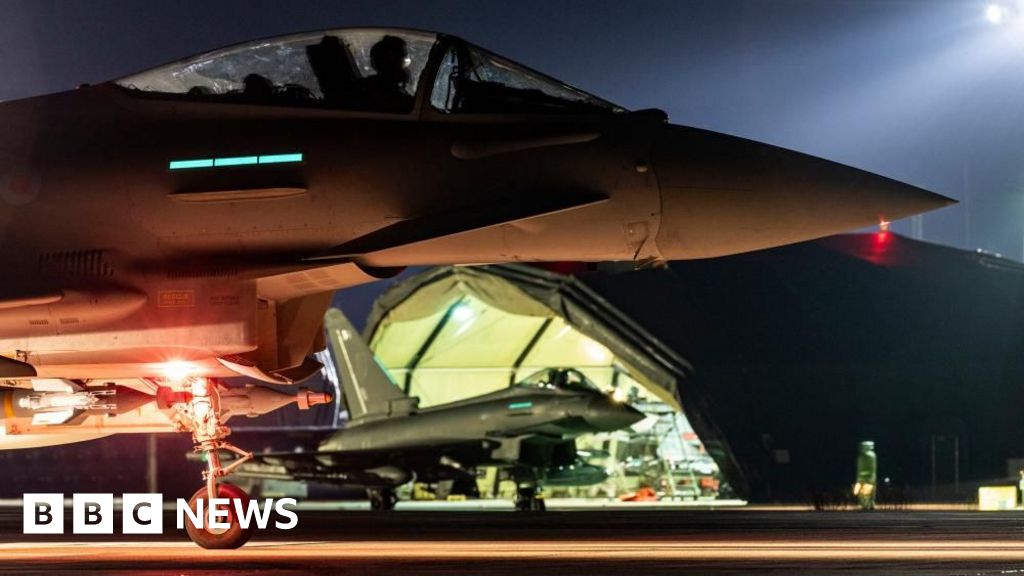
The United Kingdom's Ministry of Defence (MoD) has confirmed that a British Royal Air Force (RAF) base situated in Cyprus was the target of a suspected drone strike late on Sunday evening. The incident, which occurred at RAF Akrotiri around midnight local time (22:00 GMT), prompted an immediate response from the armed forces stationed at the facility. While the MoD acknowledged the attack, initial reports, including those understood by the BBC, indicate that there were fortunately no casualties among personnel or significant damage sustained during the alleged strike. This event unfolds amidst a period of heightened geopolitical tension across the broader Middle East, directly following the UK's recent agreement to facilitate American military operations from its regional bases. Officials within the MoD have emphasized that the level of force protection across the region remains at its highest, with the base's defensive systems actively engaged to safeguard its personnel and assets against potential threats.
The suspected assault on the Cypriot base is understood to be a direct consequence of a rapidly intensifying conflict in the Middle East. Just prior to this incident, Prime Minister Sir Keir Starmer had publicly confirmed the UK's agreement to a request from the United States. This agreement permits the use of British military facilities for what were described as "defensive" strikes aimed at Iranian missile sites. The current wave of hostilities commenced on Saturday morning when a "massive" and ongoing offensive was launched by Israel and the United States against key Iranian leadership and military targets. This operation reportedly resulted in the death of Iran's Supreme Leader, Ayatollah Ali Khamenei. In response, Iran has unleashed a barrage of ballistic missiles and drones, targeting various US assets and allied nations throughout the region, including Israel, Bahrain, Kuwait, Qatar, the United Arab Emirates, and Jordan, marking a significant escalation in regional tensions.
Following the suspected drone incident, the Ministry of Defence released a statement underscoring the robust security posture at RAF Akrotiri. Officials stated that "force protection in the region is at the highest level," and that "the base has responded to defend our people." This assertion highlights the preparedness of British forces in a volatile operational theatre. Earlier on Sunday, Defence Secretary John Healey had voiced serious concerns regarding the safety of British military personnel and civilians stationed across the Middle East. According to Healey, these individuals were facing increased peril from what he termed "indiscriminate attacks" originating from Iran. Furthermore, Healey had previously reported a separate incident where two ballistic missiles were launched in the direction of Cyprus. While he expressed a degree of certainty that Cyprus itself was not the intended target of these earlier projectiles, the proximity of such events underscores the heightened risk environment now impacting the island nation, which hosts critical UK military installations.
The targeting of a British military installation, even without casualties, signifies a critical escalation in the ongoing Middle East conflict, directly drawing the United Kingdom further into the fray. Analysts suggest this suspected drone strike could be interpreted as a retaliatory action against the UK's decision to allow its bases to be used for US-led "defensive" operations against Iran. This incident fundamentally alters the risk calculus for British forces and assets in the region, moving from a general threat assessment to a direct engagement scenario. Experts believe that while the immediate impact might be contained, the long-term implications could involve a more sustained campaign of harassment or direct attacks against UK interests, particularly if the broader conflict continues to intensify. This development also places increased pressure on the UK government to reassess its strategic posture and potentially bolster defensive capabilities, not only in Cyprus but across all its regional deployments, as the conflict demonstrates a clear willingness by parties to target international allies.
The suspected drone strike on RAF Akrotiri represents a critical development in the rapidly escalating Middle East crisis, directly implicating a key British military asset and its personnel. While initial assessments confirm no casualties, the incident starkly underscores the severe and immediate risks now confronting UK forces and facilities within a region increasingly engulfed by conflict. This attack appears to be a direct and potentially retaliatory consequence of the broader hostilities unfolding between Iran and a US-Israel coalition, with the United Kingdom's strategic support for American operations seemingly positioning it as a direct target. Moving forward, international attention will be keenly focused on the UK government's official response to this breach of security, any further intelligence that emerges regarding the precise origin and perpetrators of the attack, and how this event might influence the ongoing diplomatic and military strategies being pursued in the Middle East. The incident serves as a potent and sobering reminder of the volatile nature of the current geopolitical landscape and the ever-present potential for rapid escalation that could impact a wide array of international actors.