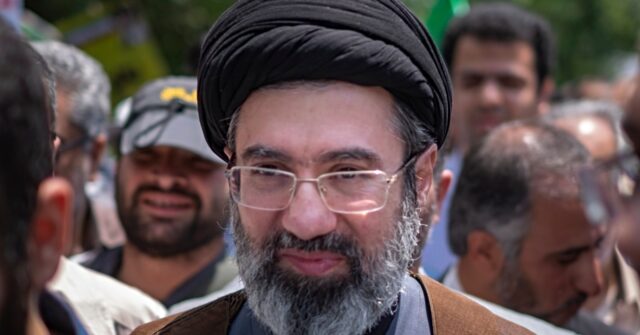
Mojtaba Khamenei, the son of Iran's recently deceased Supreme Leader Ayatollah Ali Khamenei, is reportedly being positioned to assume the nation's highest spiritual and political office. This potential ascension comes despite his apparent lack of prior electoral or governmental appointments, suggesting a succession primarily based on familial lineage rather than a conventional political career. Reports indicate that the mid-level Shiite cleric is expected to inherit the powerful role, a development confirmed by multiple news outlets. His father, the 86-year-old Ayatollah Ali Khamenei, was reportedly killed in an Israeli airstrike targeting the Supreme Leader's offices last Saturday, an operation identified as 'Epic Fury.' Since that incident, the younger Khamenei has not been observed publicly. However, according to two Iranian sources speaking to Reuters on Wednesday, he is understood to have survived the strike and is now seen by the establishment as the firm candidate to become the next Supreme Leader.
The mechanism for selecting Iran's Supreme Leader resides with the Assembly of Experts, a formidable body comprising 88 Islamic religious scholars. These scholars undergo a rigorous vetting process by the Guardian Council, ensuring their unwavering loyalty to the existing leadership structure. Their constitutional mandate is to both appoint and oversee the Supreme Leader. In the current context, Iranian officials informed the New York Times that Mojtaba Khamenei, aged 56, emerged as the primary candidate following two distinct meetings of this influential Assembly. This process underscores the unique blend of religious authority and political power inherent in Iran's governance system, where the Supreme Leader holds ultimate sway over all major state policies. The anticipated succession of Mojtaba Khamenei, a figure not previously holding elected office, highlights the dynastic tendencies within a system that formally vests power in a council of religious experts, yet is heavily influenced by internal power dynamics.
Further details surrounding Mojtaba Khamenei's reported selection reveal significant internal pressures influencing the decision. According to Iran International, an independent news outlet, the choice to elevate Mojtaba Khamenei was made subsequent to considerable pressure exerted by the Islamic Revolutionary Guard Corps (IRGC). This powerful military and economic institution plays a critical role in Iranian politics, often acting as a key arbiter of power. The 56-year-old cleric's public absence since last Saturday, following the Israeli airstrike that reportedly claimed his father's life, has added to the intensity of speculation surrounding the transition. While his father was confirmed deceased in the strike, Mojtaba Khamenei is reported to have survived the attack. Social media discussions have also noted his alleged past connections to the United Kingdom, details that could become relevant as he potentially steps into a role with profound international implications.
The impending succession of Mojtaba Khamenei carries significant implications for Iran's domestic and international trajectory. His rise, largely seen as an inheritance rather than a democratic mandate, could solidify the influence of conservative factions and the IRGC within the country's power structure. This non-electoral path to leadership contrasts sharply with the circulation of alternative figures in Western media, such as Reza Pahlavi, son of the former Shah, and Maryam Rajavi, the exiled leader of the National Council of Resistance of Iran (NCRI). However, assessing the genuine popularity of these alternatives within Iran itself remains exceedingly difficult, given the regime's stringent control and suppression of dissent, which effectively prevents any accurate gauging of public sentiment. The nature of this transition, occurring amidst heightened regional tensions following the Israeli airstrike, could further shape international perceptions of the Iranian regime. President Trump, for instance, previously stated to CBS News that countries are unifying against Iran because its regime is perceived as 'evil,' reflecting a broader international skepticism that Mojtaba Khamenei will now inherit.
As Iran navigates this critical leadership transition, the focus remains firmly on Mojtaba Khamenei and the implications of his anticipated ascension. His reported selection by the Assembly of Experts, under the alleged influence of the IRGC, signals a continuation of the established political and religious order, albeit with a new figure at its helm. The circumstances of his father's death in a targeted Israeli strike, coupled with Mojtaba's lack of prior government experience, introduce an element of unpredictability into the future direction of Iranian policy. Observers will be closely watching for official confirmation of his appointment, any potential shifts in internal power dynamics, and how this new leadership will engage with regional and global challenges, particularly in the aftermath of 'Operation Epic Fury' and ongoing international scrutiny of Iran's nuclear program and regional activities. The coming weeks are expected to clarify the trajectory of the Islamic Republic under its potentially new Supreme Leader.