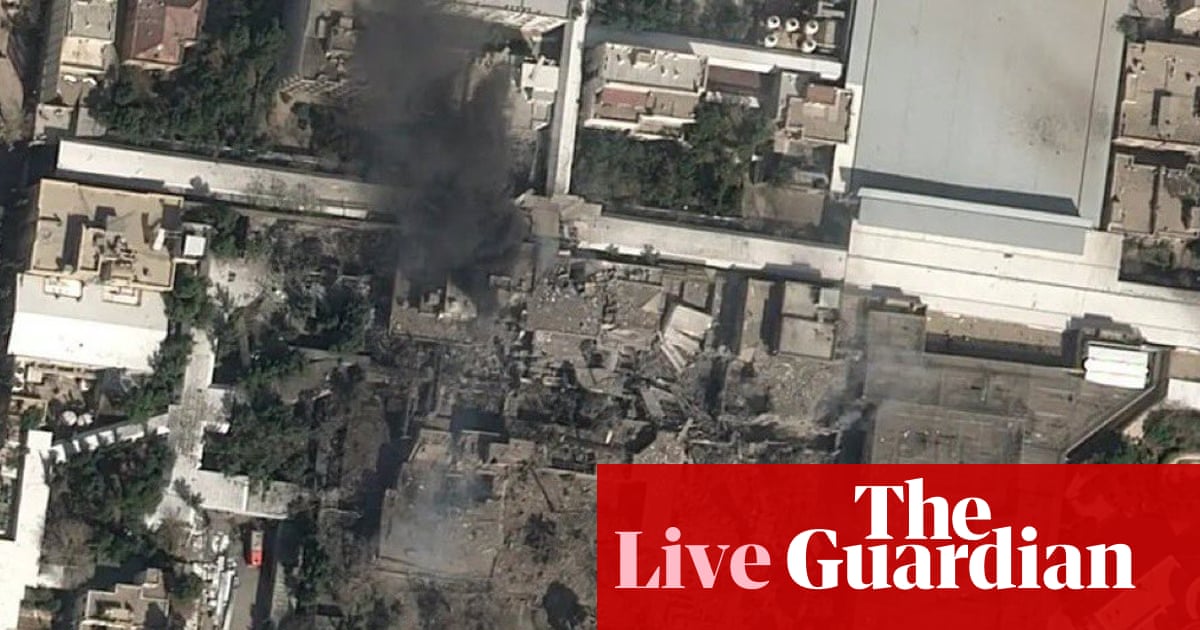
Former US President Donald Trump has publicly indicated his belief that reports concerning the death of Iran's Supreme Leader, Ayatollah Ali Khamenei, are accurate. Speaking to US media outlets, Trump appeared to corroborate earlier assertions from Israeli sources suggesting that Khamenei was killed in recent airstrikes. During an interview with NBC News, Trump stated, "We feel that that is a correct story," regarding the Supreme Leader's alleged demise. He further claimed that a substantial portion of Iran's senior leadership had been eliminated, asserting, "The people that make all the decisions, most of them are gone." When questioned by ABC News about the fate of Iranian leadership in these strikes, Trump responded, "A lot of it is, yeah. But we don’t know all, but a lot of it is. Was a very powerful strike." These statements from the former president, made amidst a period of heightened tensions under the designation 'Operation Epic Fury,' underscore the gravity of the situation, though independent verification of these claims remains unavailable.
The alleged targeting and elimination of Iran's top leadership, if confirmed, would represent a seismic shift in the geopolitical landscape of the Middle East, particularly within the context of the long-standing animosity between Iran, the United States, and Israel. Ayatollah Ali Khamenei, who assumed the role of Supreme Leader in 1989 following the death of Ayatollah Ruhollah Khomeini, has been the ultimate authority on all major state policies in Iran, wielding immense religious and political power. His death would undoubtedly trigger a complex succession process and could lead to significant internal instability or a power vacuum, with profound implications for regional stability. The current reports emerge against a backdrop of escalating military actions, attributed to a joint US-Israeli effort, aimed at dismantling key elements of Iran's strategic capabilities and command structure. The significance of such a blow to Iran's leadership cannot be overstated, potentially altering the course of future diplomatic and military engagements in the region for years to come.
Further details emerging from various sources corroborate the extent of the alleged casualties among Iran's top echelons. A Fox News reporter, citing an unnamed US official, indicated that American intelligence believes Khamenei is indeed deceased, alongside an estimated five to ten other high-ranking Iranian leaders who were reportedly killed in an initial Israeli strike. This aligns with earlier declarations from an Israel Defense Forces (IDF) spokesperson, who stated that "a number of the most senior leaders of Iran" had been "targeted" and "eliminated" during the recent operations. Among the specific individuals named by the IDF spokesperson were Ali Shamkhani, a key adviser for security affairs; Mohammad Pakpour, the commander of the Iranian Revolutionary Guard Corps; and Aziz Nasirzadeh, Iran's minister of defence. Former President Trump reinforced these assertions on his Truth Social platform, describing Khamenei as "one of the most evil people in history" and declaring his death as "not only justice for the people of Iran, but for all Great Americans." Trump also claimed that Khamenei and other deceased leaders "was unable to avoid our Intelligence and Highly Sophisticated Tracking Systems and, working closely with Israel, there was not a thing he, or the other leaders that have been killed along with him, could do."
The implications of these unconfirmed reports are vast, suggesting a potential turning point in the protracted conflict between the US, Israel, and Iran. Experts suggest that if the deaths of Khamenei and other senior officials are verified, Iran could face an unprecedented leadership crisis, potentially leading to a period of internal power struggles and uncertainty. This situation could either pave the way for a more moderate political landscape, as suggested by Trump who stated, "This is the single greatest chance for the Iranian people to take back their Country," or it could provoke a more aggressive and unpredictable response from remaining hardline elements within the Iranian establishment. The absence of independent verification, however, means that the international community remains in a state of high alert, carefully monitoring official statements from Tehran, Washington, and Jerusalem. The strategic targeting of such high-value individuals, if true, indicates a significant escalation in the ongoing 'Operation Epic Fury,' raising questions about the rules of engagement and the potential for broader regional destabilization.
In summary, former President Donald Trump has lent significant weight to unverified reports claiming the death of Iran's Supreme Leader Ayatollah Ali Khamenei and numerous other senior Iranian officials in recent US-Israel strikes. While Israeli military sources have also indicated the successful targeting of high-ranking Iranian figures, including key security and military leaders, independent confirmation from Iranian authorities or neutral international bodies remains elusive. The profound implications of such an event, from a potential power vacuum in Tehran to a dramatic reshaping of Middle Eastern geopolitics, underscore the critical need for verified information. The world now watches for official Iranian responses, further intelligence disclosures, and any visible shifts within Iran's leadership structure that could either confirm or refute these momentous claims, with the potential for either unprecedented change or intensified conflict looming large.