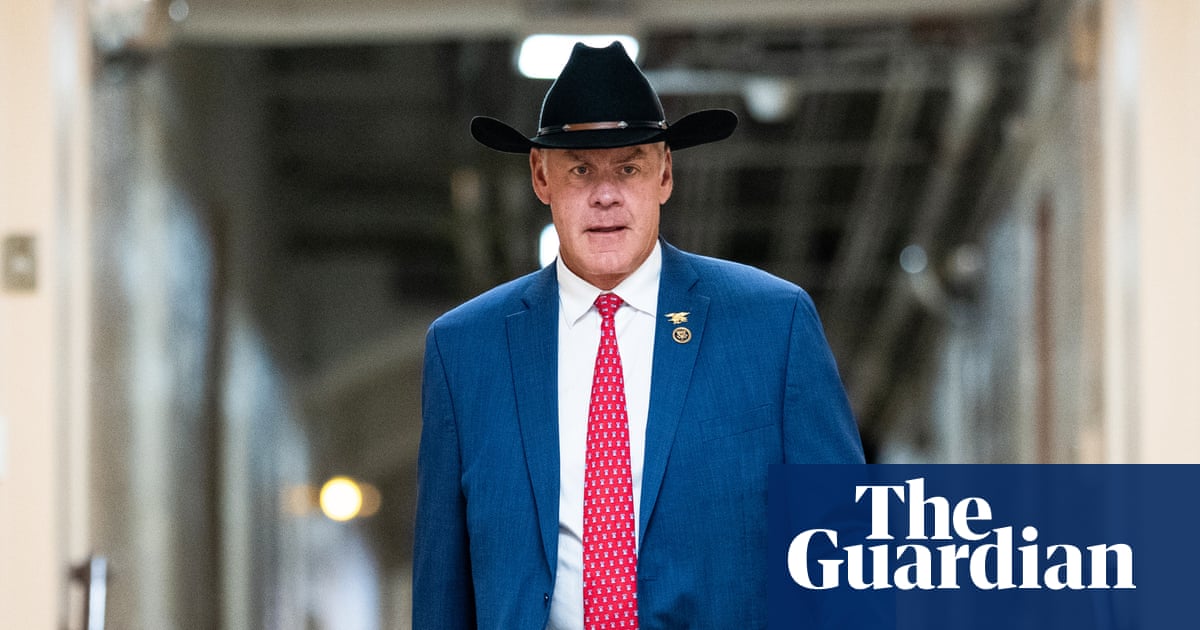
Ryan Zinke, a prominent Montana Republican who previously held the position of Interior Secretary during the initial term of the Trump administration, has declared his intention not to pursue a fifth term in the United States House of Representatives. Citing personal health challenges as the primary reason for his decision, Zinke's departure from the upcoming electoral race creates an unexpected vacancy. This development, according to political observers, introduces a potential opening for the Democratic Party to contest a House seat in a state that has, over the past decade, shown a discernible shift towards conservative political leanings. Zinke's announcement marks a significant moment for Montana's political landscape, setting the stage for a potentially more competitive contest than might have otherwise occurred with an incumbent seeking re-election. His decision, as reported, was driven by personal considerations regarding his well-being, leading him to step back from the demands of congressional service.
Zinke's political career has been notable, marked by his tenure as a representative for Montana's at-large congressional district before his appointment to President Donald Trump's cabinet. During his time as Interior Secretary, he oversaw a vast portfolio of federal lands, natural resources, and national parks, a role that often placed him at the center of national policy debates concerning environmental protection, energy development, and public land management. His return to the House after his cabinet service underscored his continued commitment to representing his home state. Montana, while historically having periods of split political representation, has in recent years, according to electoral data, demonstrated a clear trend towards supporting Republican candidates at both state and federal levels. This shift makes Zinke's decision particularly impactful, as an open seat in a state trending right typically favors the incumbent party, but without a sitting representative, the dynamics of the race become inherently less predictable and potentially more contested for both major parties.
The unexpected withdrawal of an incumbent from a congressional race frequently reconfigures the political calculus for both major parties. In this instance, Ryan Zinke's decision, attributed to health concerns, transforms what might have been a relatively straightforward re-election bid for the Republican Party into an open contest. While Montana has increasingly supported Republican candidates in recent election cycles, an open seat often presents a more viable pathway for the challenging party. According to political strategists, without the inherent advantages of incumbency—such as name recognition, established campaign infrastructure, and fundraising networks—the playing field levels considerably. This situation could prompt a robust primary season for both Republicans and Democrats as they vie for the opportunity to represent the state's congressional district. The specific numbers and data points regarding Montana's voting patterns over the last decade indicate a consistent lean towards the right, yet the absence of a familiar name on the ballot could energize the Democratic base and attract a wider array of candidates, potentially leading to a more expensive and closely watched election.
Political analysts are now closely examining the potential implications of Zinke's departure for the broader electoral map, particularly concerning the balance of power in the U.S. House of Representatives. While a single seat may seem minor, in a closely divided Congress, every race holds significant weight. Experts suggest that an open seat in a state like Montana, despite its recent conservative lean, could become a battleground. The Democratic Party, facing an 'outside chance' as reports indicate, will likely invest resources into identifying and supporting a strong candidate capable of appealing to a diverse electorate, including independent voters and disaffected Republicans. Conversely, the Republican Party will be keen to retain the seat, ensuring a robust field of candidates emerges from their primary to maintain their stronghold. The nature of the upcoming campaigns, including the key issues candidates choose to emphasize—ranging from economic policy to natural resource management, topics often central to Montana politics—will be crucial in determining who ultimately succeeds Zinke.
In conclusion, Ryan Zinke's announcement to step down from his congressional duties, citing health reasons, marks a pivotal moment for Montana's political future. His decision not to seek a fifth term immediately opens up a House seat that was previously held by a well-known Republican figure. This development, as political observers highlight, creates an unexpected opportunity for the Democratic Party in a state that has trended conservative over the past decade. The upcoming election for this congressional district is now poised to be a more competitive and closely watched contest, drawing significant attention and resources from both national parties. All eyes will be on Montana as candidates from both sides emerge, vying to fill the void left by Zinke and shape the state's representation in the U.S. House.